Ants
A reusable, UV-tough PETG bait station you refill yourself — indoors and out.
Ants are the ultimate team players — one scout finds a crumb and within the hour there's a conga line marching across your kitchen bench. In New Zealand homes the usual suspects are Argentine ants, white-footed house ants and Darwin's ants, and they're all after the same three things: sugar, water, and a way inside.
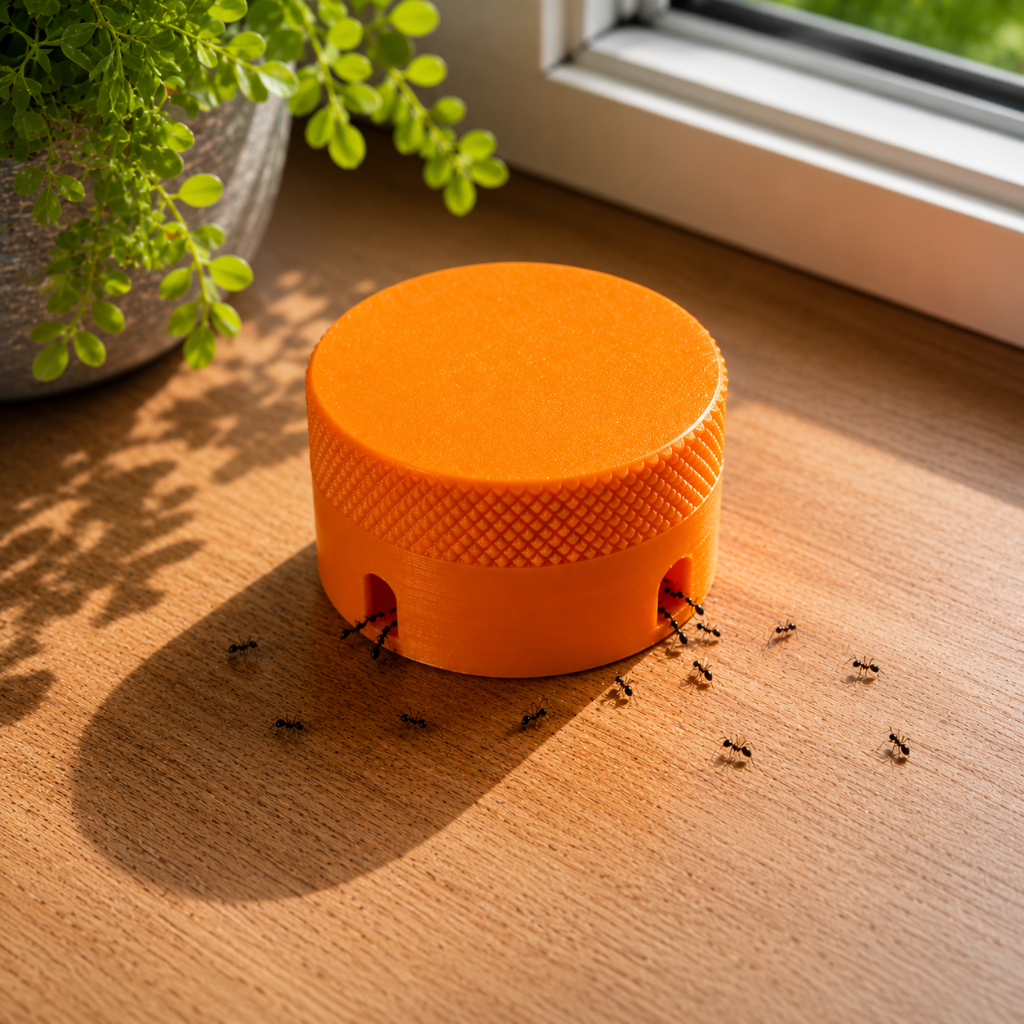
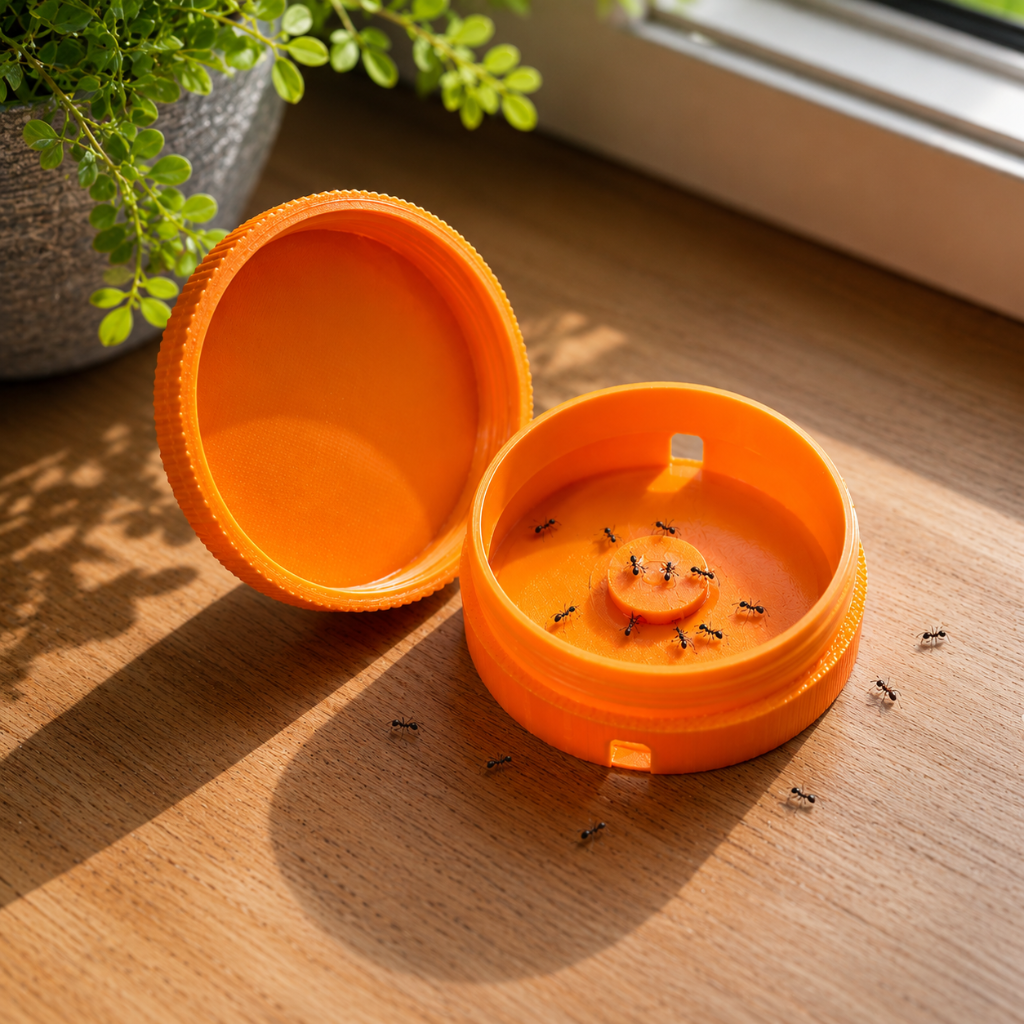
Sprays only kill the ants you can see and barely dent the colony. The real trick is bait: the workers carry it back to the nest and share it around — queen and all. Our reusable PETG ant bait station holds a small dish of your chosen ant poison in the middle. Think of it as a tiny restaurant where the ants order takeaway and hand-deliver it to the queen. Refill it season after season, indoors and out.
 Ask Buzzy
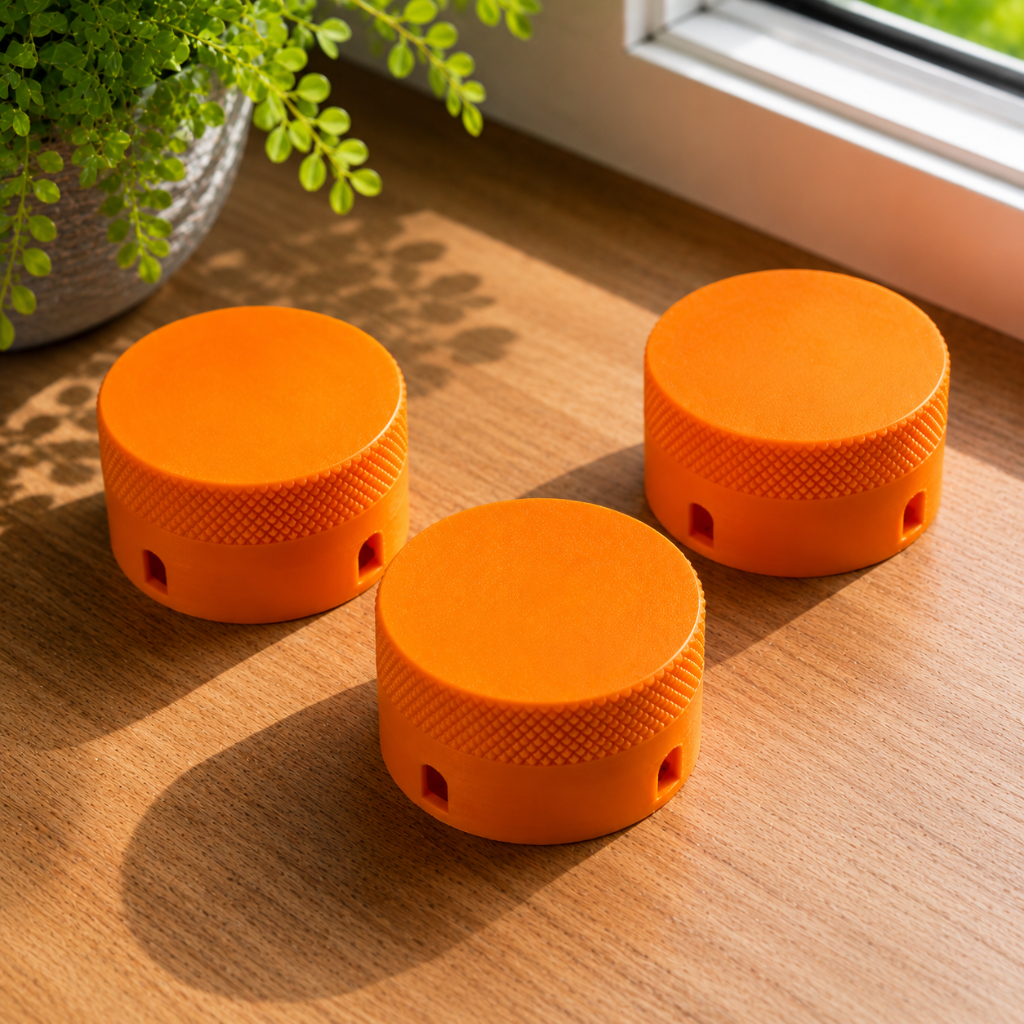
Refillable, UV-stabilised PETG ant bait station for indoors and out. Add your own ant poison, reuse for years.
Three refillable, UV-stabilised PETG ant bait stations with 10% off — cover the kitchen, the patio and the garden at once.
How to spot an ant trail
Ants are small, six-legged insects with a narrow waist (the petiole) between thorax and abdomen, elbowed antennae, and a social structure built around a queen. The giveaway in a home is the trail — a steady two-way line of workers following a scent path between the nest and a food or water source.
- •Argentine ant — small (2–3 mm), light to dark brown; forms massive multi-queen colonies with thick, fast-moving trails.
- •White-footed house ant — tiny (2–3 mm), dark brown/black with pale yellow feet; loves kitchens and bathrooms.
- •Darwin's ant — tiny (~2 mm), light brown; smells of coconut when squashed, nests in potted plants.
- •Any ant trail along a skirting board, window sill or pipe is a motorway to a nest — follow it to find the source.
Are ants harmful?
Mostly a nuisance, but not harmless. Ants walk across waste, pet food and bins, then crawl over your bench and pantry — spreading bacteria in much the same way flies do. Some, like the Argentine ant, are invasive and threaten native insects. A few people react to ant bites, though our common house ants rarely bite.
Life cycle & fun facts
An ant colony centres on a queen who lays all the eggs, tended by sterile female workers. Eggs hatch into larvae, which pupate into adults. A colony can number from hundreds to hundreds of thousands, and some species — like the Argentine ant — run "supercolonies" with many queens that don't fight each other, which is exactly why they spread so fast.
Fun fact: Ants can carry up to 50 times their own body weight — the equivalent of you hauling a small car up the driveway. No wonder one scout can spirit away an entire sugar cube, one crumb at a time.
What ants eat
Ants are omnivores with a serious sweet tooth. Sugar, honey, spilled soft drink, fruit, crumbs and pet food are the main attractions in a Kiwi kitchen. Protein — meat scraps, dead insects and pet food — feeds the larvae. That sweet-and-protein diet is exactly why a liquid or gel bait in a refillable station works so well.
How to keep ants out
Remove the food and water they're after, block the ways in, and use a refillable bait station to take the colony down at the source.
Remove the attraction
- ✓Wipe up spills, crumbs and sticky residues straight away — ants follow scent trails to food.
- ✓Take out the kitchen bin daily and rinse sugary residue off recycling.
- ✓Store pantry food in sealed containers, not open packets.
- ✓Don't leave pet food out all day — it's an ant magnet.
- ✓Fix dripping taps and wipe sinks dry; ants come in for water too.
Block them out
- ✓Seal gaps around windows, doors, skirting boards and pipes with silicone.
- ✓Trim plants and branches back so they don't form bridges to the house.
- ✓Place a GotchaPest refillable ant bait station where you see the trail.
- ✓Refill the bait dish with ant poison from your local hardware store and let the workers carry it home.
Frequently asked questions
Trap smarter with GotchaPest
UV-tough, NZ-made, reusable traps — paired with the app and Buzzy, the world's first AI Trap Buddy.
Types of Ants in New Zealand
Deep-dive guides to every ants species we cover — identification, behaviour, and the bee-safe control that works in Aotearoa.
Argentine Ant
Linepithema humile
The invasive supercolony ant that takes over Kiwi homes by force of numbers.
White-Footed House Ant
Technomyrmex albipes
The tiny dark ant with pale feet that loves Kiwi kitchens and bathrooms.
Darwin's Ant
Doleromyrma darwiniana
The tiny brown ant that smells of coconut when squashed.
Other pests we solve
Explore more NZ-specific pest guides and the bee-safe, reusable traps behind each one.
Flies
NZ-made, UV-tough traps that knock down flies without sprays.
Wasps
Bee-safe wasp traps that lure wasps, not our precious pollinators.
Fruit Flies
Reusable fruit fly traps using everyday pantry bait — no chemicals.
Fungus Gnats
Tiny black flies around your houseplants — beat them for good.
Mosquitoes
Reduce backyard biting with simple, chemical-free traps.
Moths
Pantry and clothes moth traps — stop the flutter, find the source.