Flies
NZ-made, UV-tough traps that knock down flies without sprays.
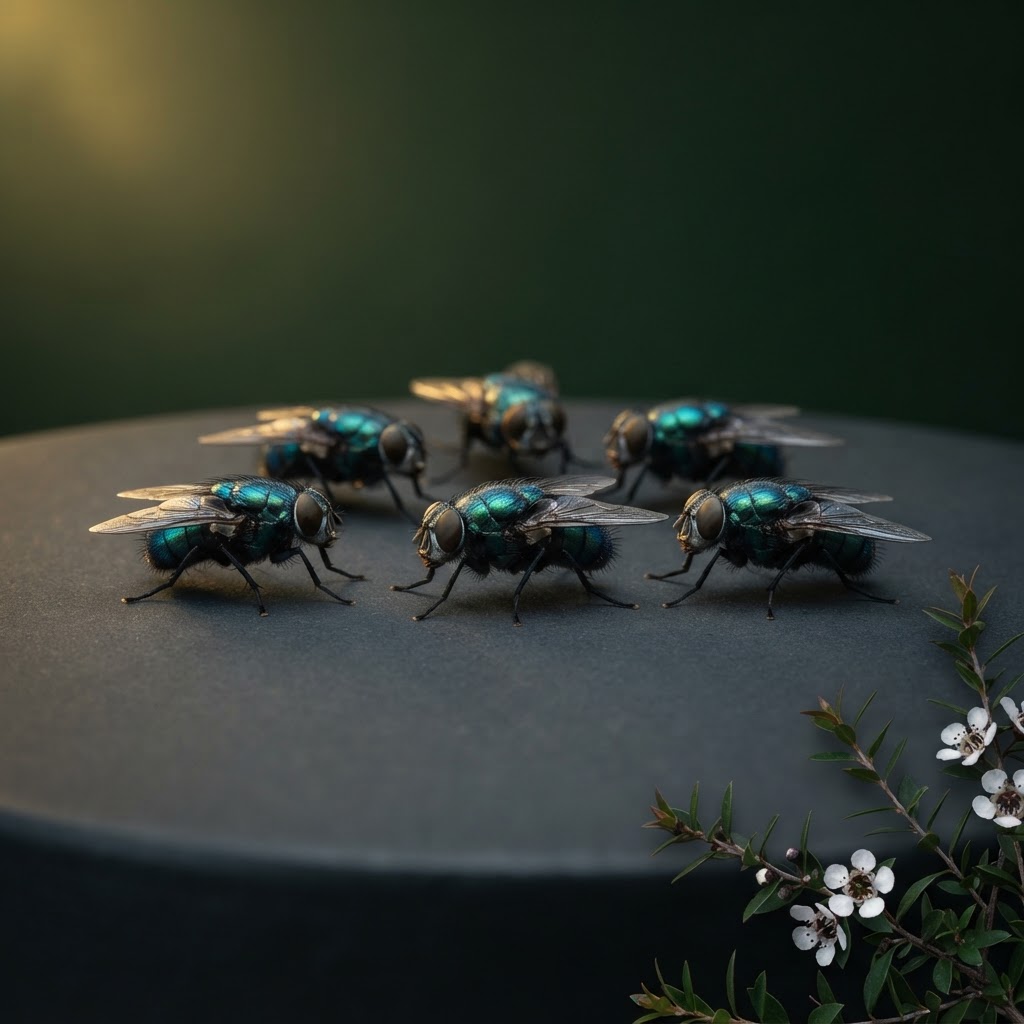
Few things test a Kiwi's patience like a fly that won't quit circling the kitchen bench, the barbecue, or your face. From house flies that land on your food to blowflies that zero in on the bin, and cluster flies that pile up on sunny windows in autumn — flies are everywhere in Aotearoa.
Most are harmless in small numbers, but they breed fast, carry bacteria on their feet, and spoil food. The good news? A few simple habits and a well-placed reusable trap keep them under control all summer — no harsh chemicals required.
 Ask Buzzy

Screw-On Bottle Trap — NZ-made, reusable fly control for homes, cafés, farms and food prep areas.
How to spot a fly
Every true fly has just two wings (most other insects have four), six legs, and a straw-like mouth for slurping liquids. The tell-tale pair of wings is the fastest way to separate a real fly from a bee, wasp, or moth look-alike.
- •House fly — dull grey with dark stripes on the thorax; the classic kitchen pest.
- •Blow fly — shiny metallic blue or green; loves rubbish and dead animals.
- •Cluster fly — golden-brown, sluggish, gathers in masses on warm windows in autumn.
- •Fruit fly — tiny (3–4 mm), tan body, red eyes; hovers around ripe produce.
- •Drain fly — moth-like, fuzzy wings; hangs around sinks and drains.
Are flies actually dangerous?
They can be. Flies walk across waste, dung, and rotting food, then land on your dinner. House flies regurgitate to liquefy food and leave bacteria behind. Worldwide, flies are linked to the spread of more than 60 illnesses, including food poisoning, dysentery, and eye infections. Keeping them out of your kitchen is about health, not just comfort.
Life cycle & fun facts
A female fly can lay hundreds of eggs in rotting matter; the larvae (maggots) feed, then pupate into adults in as little as a week in warm weather. Adult house flies typically live 2–4 weeks, but can stretch to two months when conditions suit.
Fun fact: A fly's back wings shrank over millions of years into tiny knobs called halteres — they act like gyroscopes, giving flies their famous mid-air agility.
What flies eat
Adult flies feed on liquids — overripe fruit, nectar, sugars, and the moisture in waste. Their maggots tackle the solids: decaying plant matter, dung, and carrion. A few species (like horse flies) cut skin to drink blood, but the flies that bother most Kiwi homes are after your food scraps and rubbish.
How to keep flies out
Sanitation and exclusion do the heavy lifting. Remove what attracts them and block the ways they get in.
Remove the attraction
- ✓Wipe up food and drink spills straight away.
- ✓Take the bin out often and keep outside bins lidded.
- ✓Rinse and disinfect your indoor and outdoor bins regularly.
- ✓Clear pet waste from the yard and litter trays.
- ✓Flush and clean drains so organic sludge doesn't build up.
Block them out
- ✓Fix torn flyscreens on doors and windows.
- ✓Seal gaps around vents, pipes, and window frames.
- ✓Hang a reusable GotchaPest trap near entry points and the bin area.
- ✓Keep compost covered and turn it often in summer.
- ✓Rinse recyclables before they go in the crate.
Frequently asked questions
Deep-dive guides on Flies
Trap smarter with GotchaPest
UV-tough, NZ-made, reusable traps — paired with the app and Buzzy, the world's first AI Trap Buddy.
Types of Flies in New Zealand
Deep-dive guides to every flies species we cover — identification, behaviour, and the bee-safe control that works in Aotearoa.
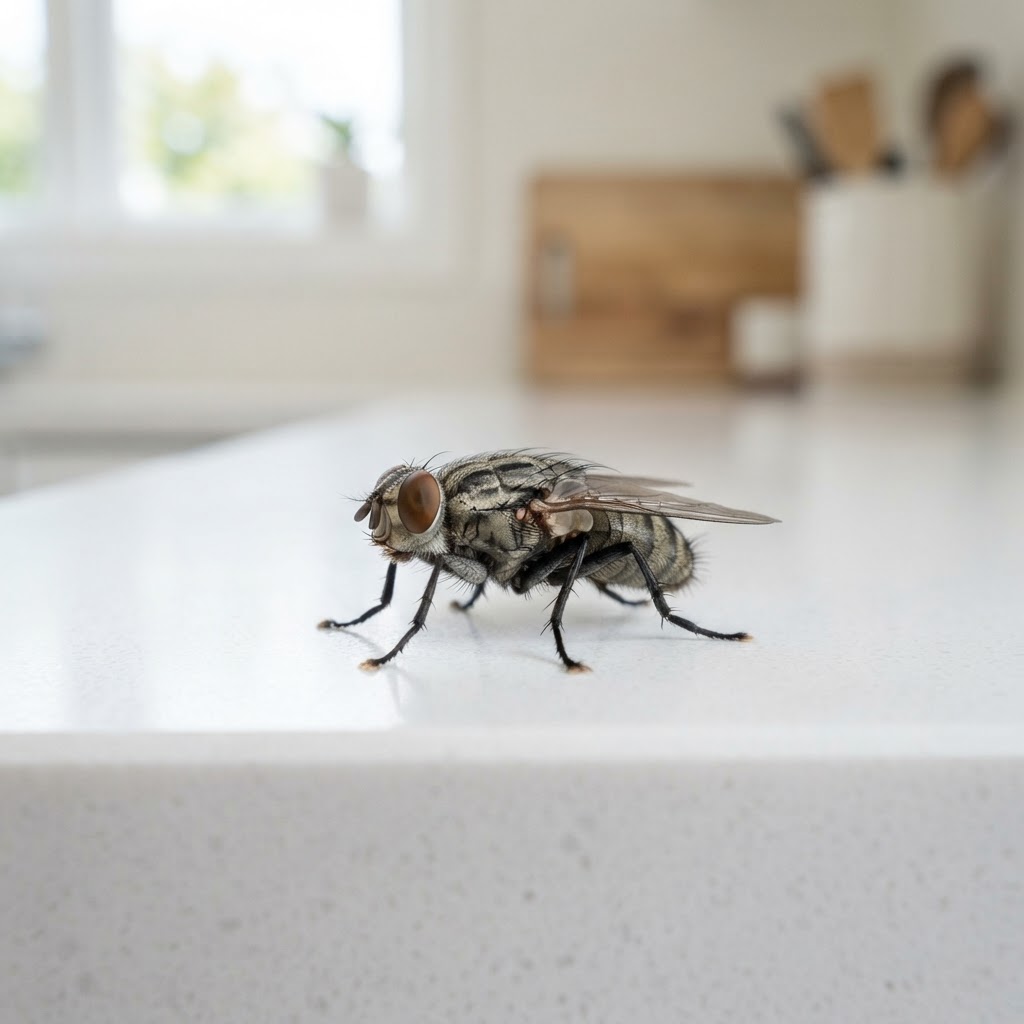
House Fly
Musca domestica
The classic Kiwi kitchen fly — and a carrier of bacteria.
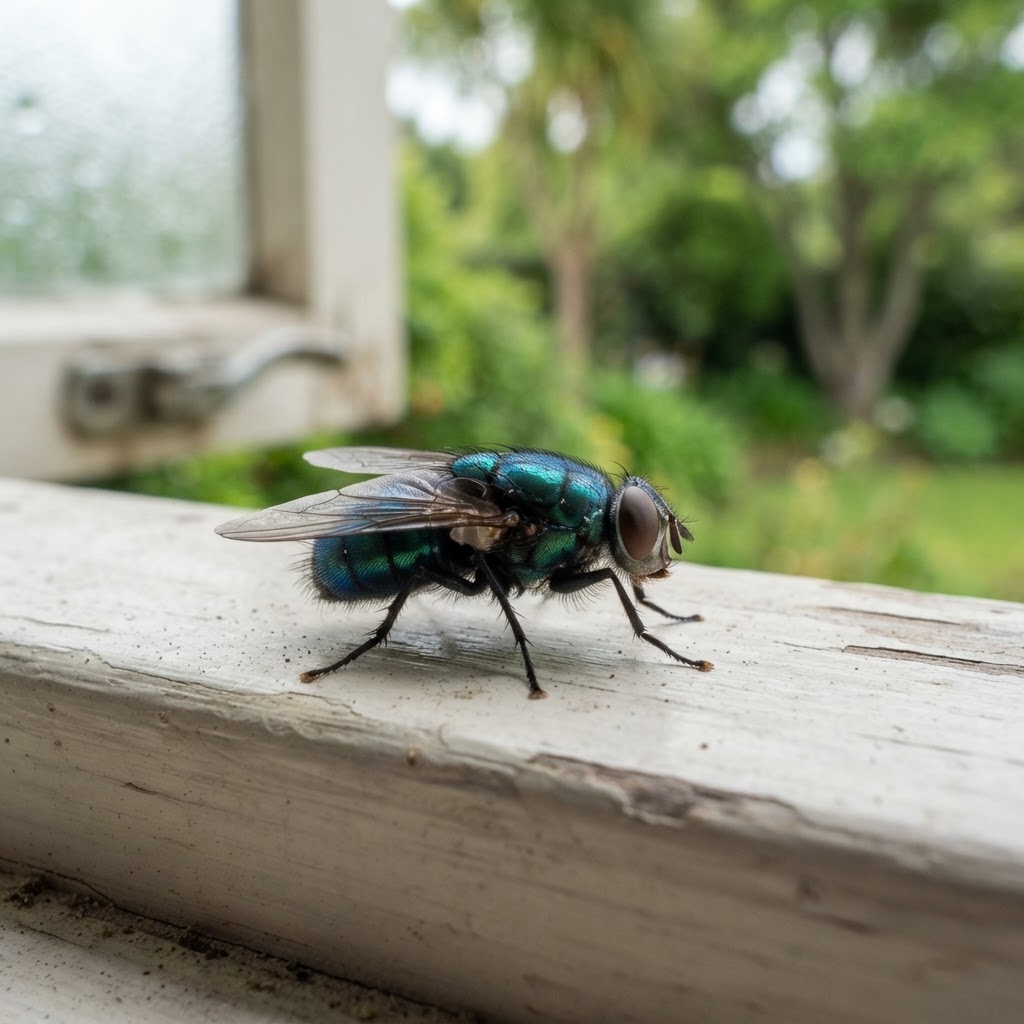
Blow Fly
Family Calliphoridae
The shiny bluebottle that finds the bin — and worse.
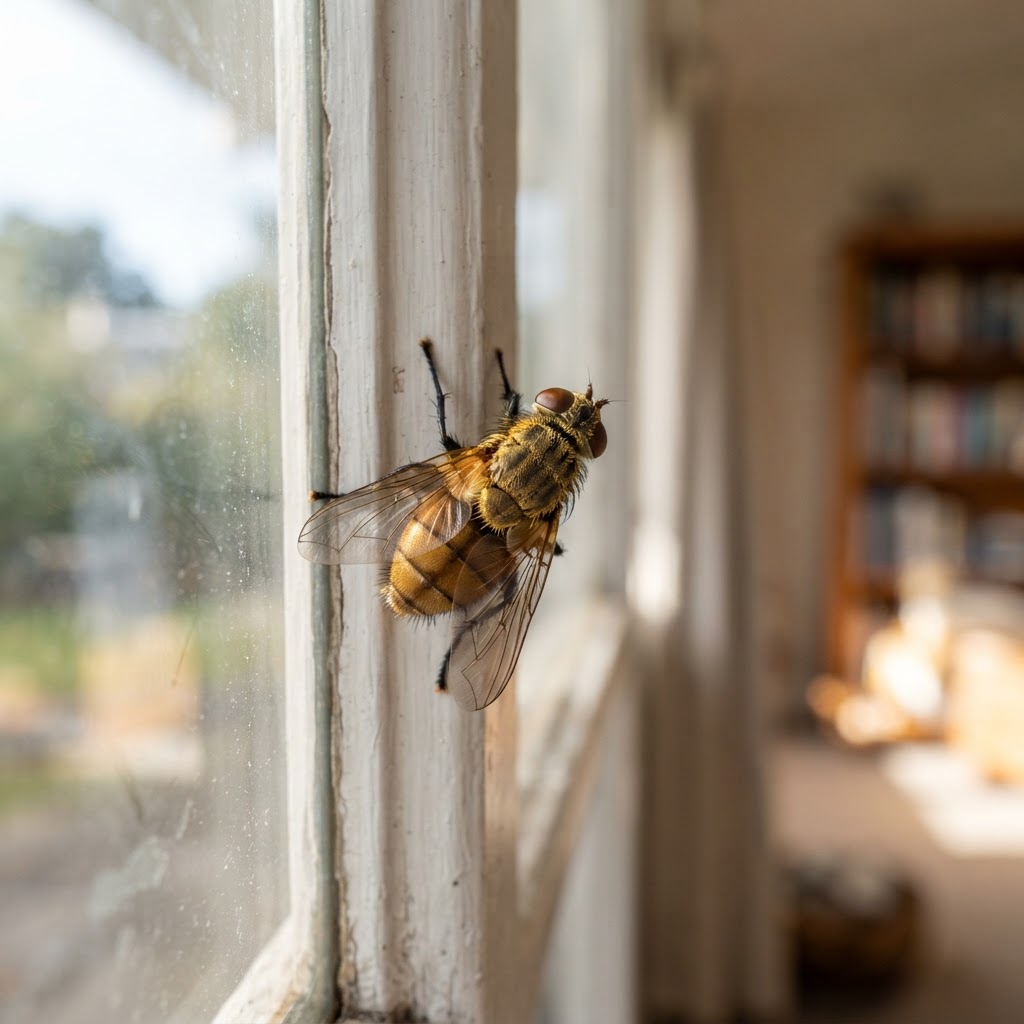
Cluster Fly
Pollenia rudis
Sluggish golden-brown flies that pile up on sunny windows.
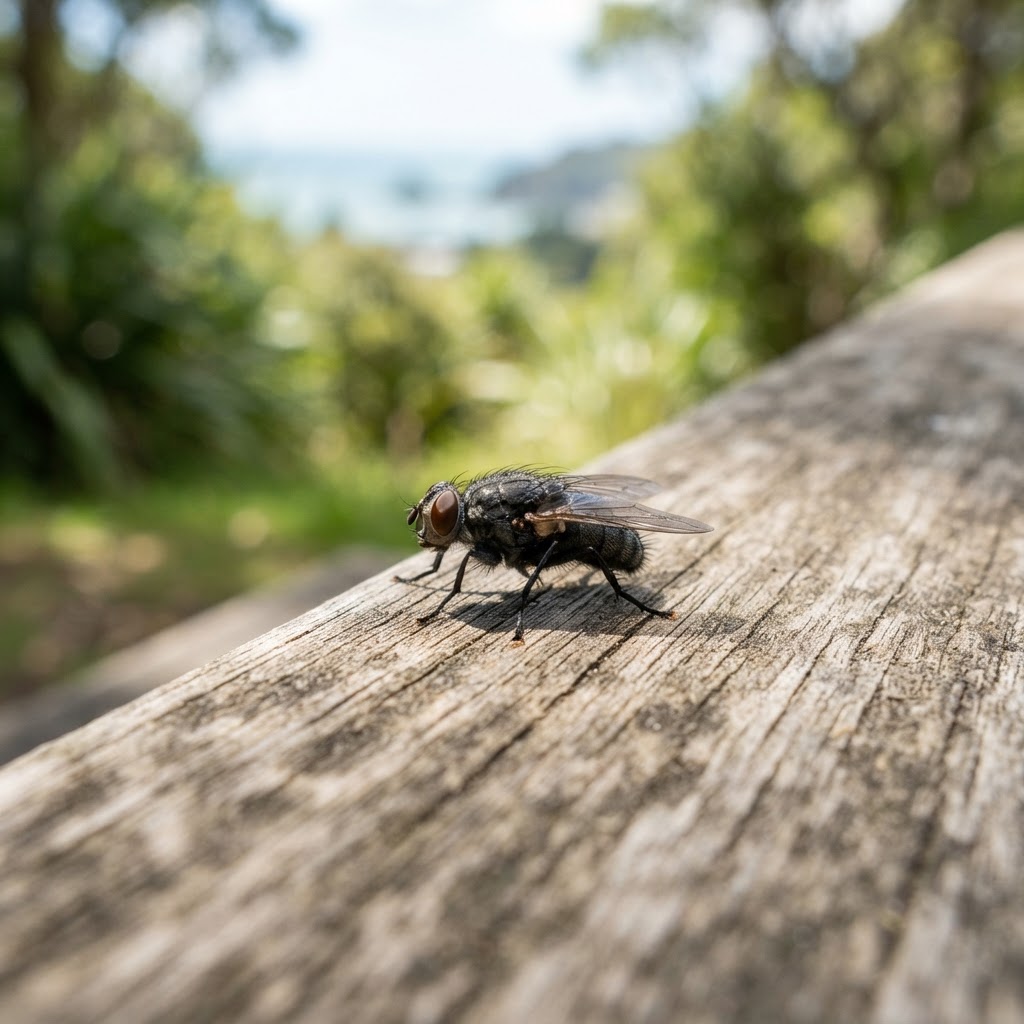
Bush Fly
Musca vetustissima
The persistent outdoor fly that swarms people and stock.
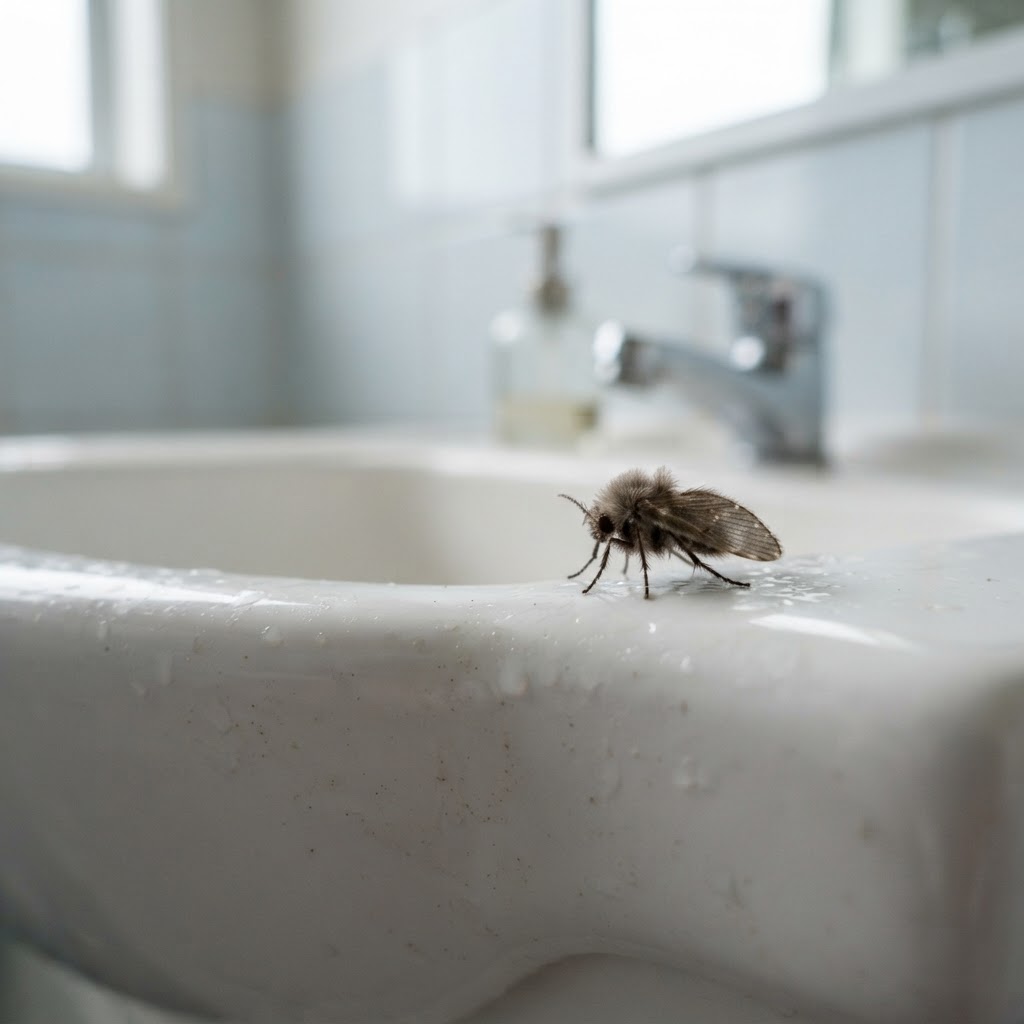
Drain Fly
Family Psychodidae
Tiny moth-like flies that live in your sinks and drains.
Horse Fly
Family Tabanidae
The big, biting fly that draws blood in a New Zealand summer.
Other pests we solve
Explore more NZ-specific pest guides and the bee-safe, reusable traps behind each one.
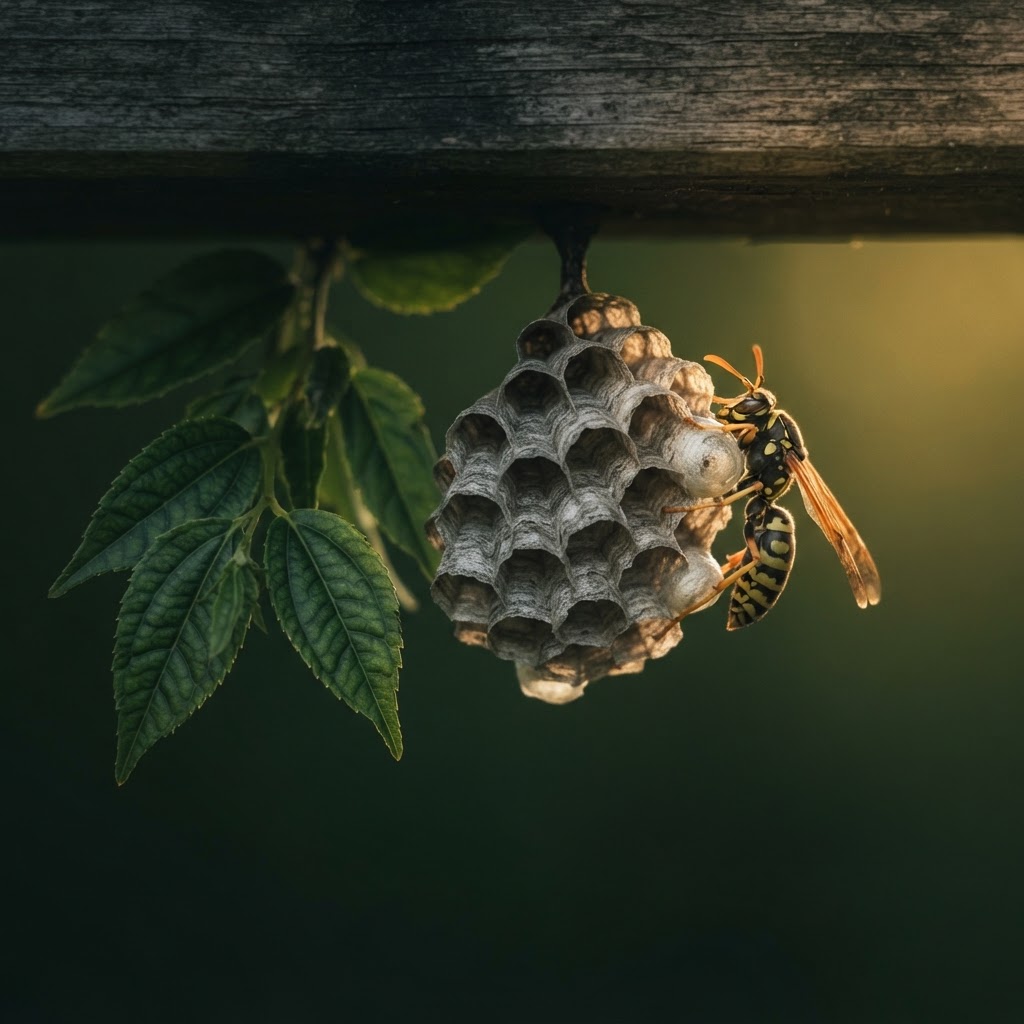
Wasps
Bee-safe wasp traps that lure wasps, not our precious pollinators.
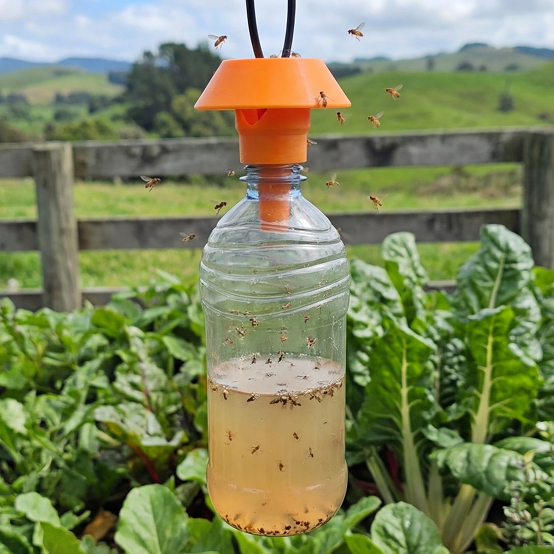
Fruit Flies
Reusable fruit fly traps using everyday pantry bait — no chemicals.
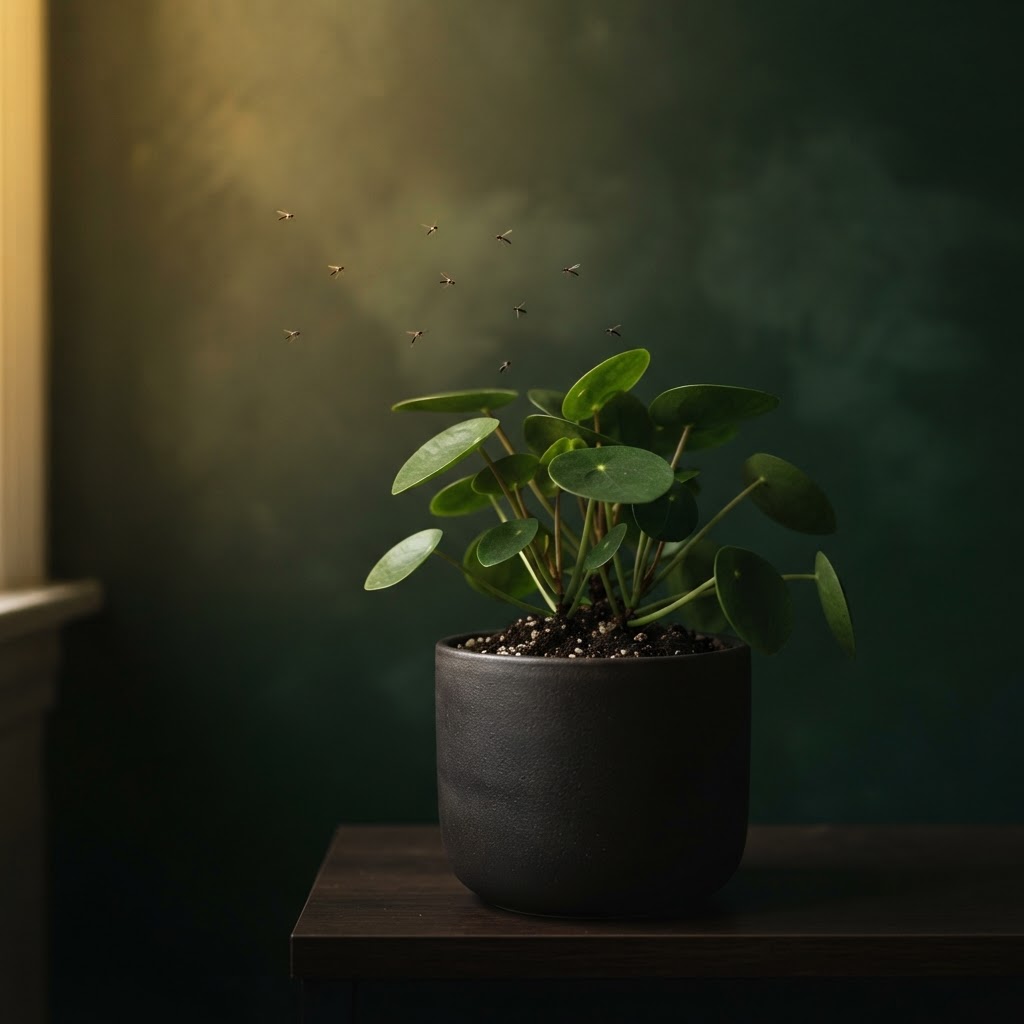
Fungus Gnats
Tiny black flies around your houseplants — beat them for good.
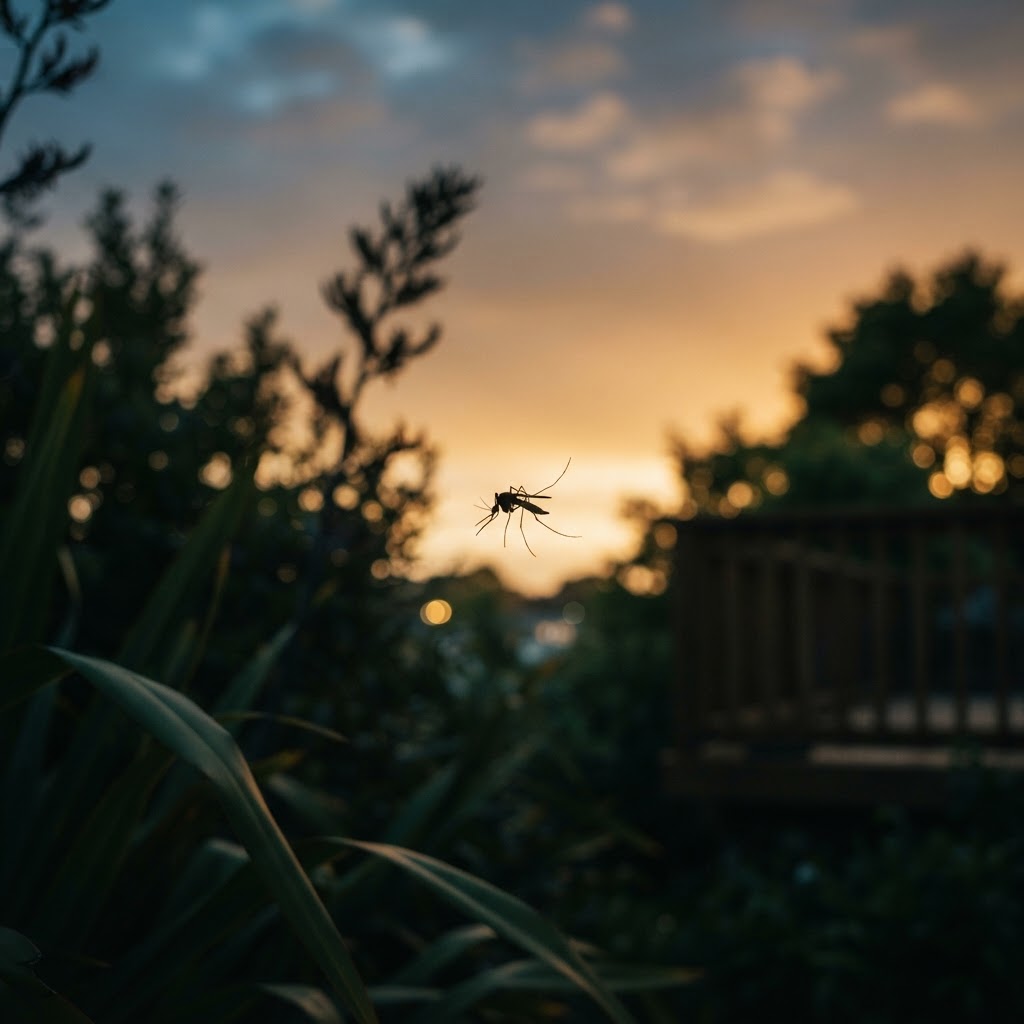
Mosquitoes
Reduce backyard biting with simple, chemical-free traps.
Moths
Pantry and clothes moth traps — stop the flutter, find the source.