Horse Fly
The big, biting fly that draws blood in a New Zealand summer.
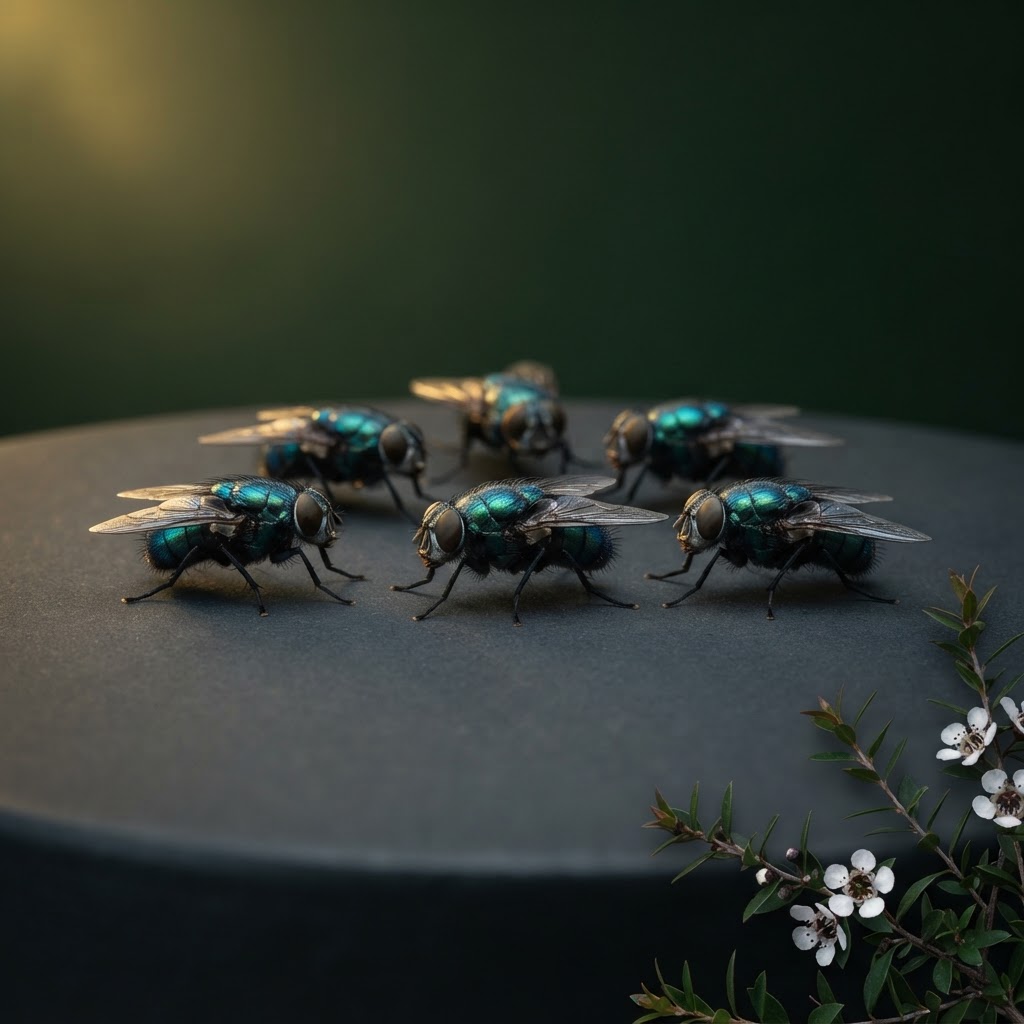
Horse flies are the large, stout-bodied flies whose females cut the skin to drink blood. In a New Zealand summer they are a persistent and painful biter around farmland, wetlands, lakes and beaches, and a single fly can chase you for hundreds of metres.
Only the females bite — they need blood to develop their eggs — while the males live on nectar and harm no one. Horse flies are strong, fast fliers and their bite is genuinely painful, so understanding when and where they are active is the key to avoiding them.
 Ask Buzzy
How to identify a horse fly
A horse fly is a big, robust fly, often 10–25 mm, with a stout dark or mottled body, large often green- or purple-striped eyes, and broad wings. In flight it sounds heavier and buzzier than a house fly. The females have a wide space between the eyes; in males the eyes meet at the top.
- •Large robust fly, 10–25 mm, dark or mottled grey-brown.
- •Big, often brightly striped eyes — green, purple or copper.
- •Stout body and broad wings; a heavy, buzzing flight.
- •Females have a gap between the eyes; males eyes meet at the top.
How dangerous is a horse fly?
The bite is painful and draws blood because the female cuts the skin with blade-like mouthparts rather than piercing like a mosquito. The bite can swell and itch for days, and a small number of people react strongly. Scratching can lead to secondary infection. Around livestock, large numbers can distress animals and, overseas, horse flies spread disease — in New Zealand they are mainly a painful nuisance rather than a major disease vector.
Life cycle & fun facts
Females lay batches of eggs on plants overhanging water or wet mud. The larvae drop into the mud or water and develop there, often taking a year or two to mature before pupating. Adults are most active on warm, still, sunny days.
Fun fact: A female horse fly needs a blood meal before she can lay eggs — without it her eggs will not develop. Males, by contrast, never bite and live only on nectar.
What horse flies eat
Males feed only on nectar. Females drink nectar for energy but need a blood meal to develop their eggs, which they get by cutting the skin of mammals — including people, horses and cattle — and lapping the blood that pools.
How to avoid horse fly bites
Horse flies are drawn to movement, dark colours, warmth and carbon dioxide — so avoidance and protective clothing do more than any bait trap.
Remove the attraction
- ✓Avoid wetland, lake and paddock edges on warm, still, sunny days when horse flies are most active.
- ✓Wear light-coloured, loose clothing — horse flies favour dark moving shapes.
- ✓Use a repellent on exposed skin during peak hours.
- ✓Keep moving; horse flies are attracted to still, warm bodies.
Block them out
- ✓Fit fine screens on windows and doors of rural homes near wetland.
- ✓Our reusable fly trap catches house flies and blowflies around the home, but horse flies are best managed by avoidance — see our fly traps page.
- ✓Wear long sleeves and trousers in paddocks and around horses in summer.
- ✓For livestock, talk to your vet about targeted horse-fly control.
Frequently asked questions
Deep-dive guides on Horse Fly
Trap smarter with GotchaPest
UV-tough, NZ-made, reusable traps — paired with the app and Buzzy, the world's first AI Trap Buddy.
Other flies in New Zealand
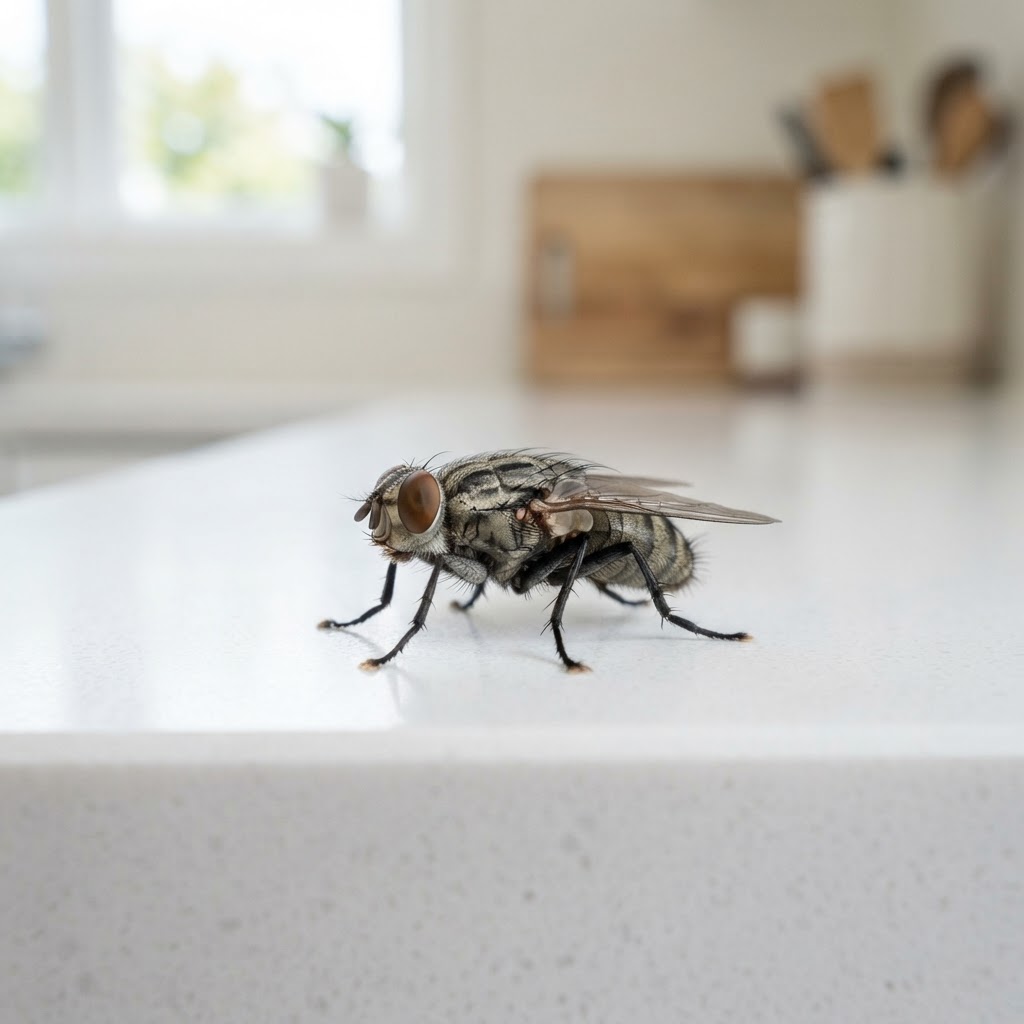
House Fly
Musca domestica
The classic Kiwi kitchen fly — and a carrier of bacteria.
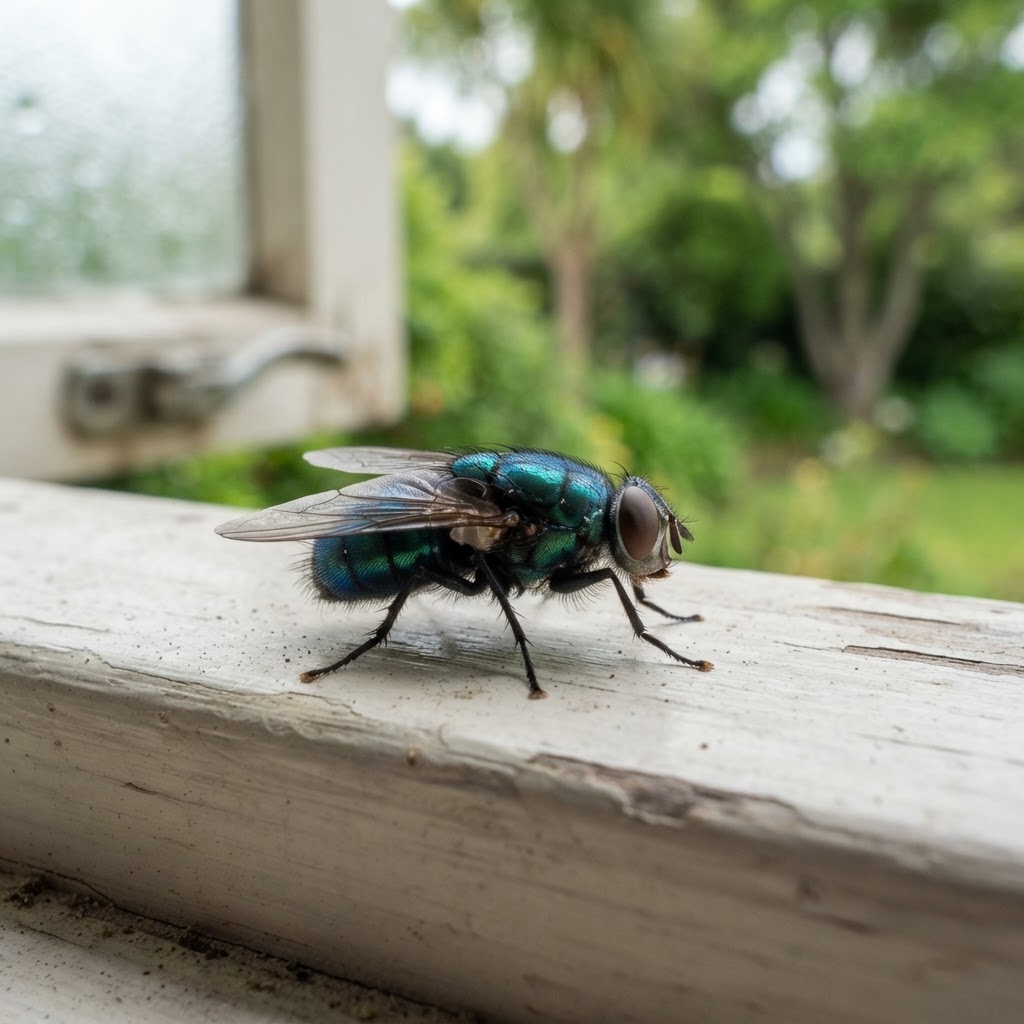
Blow Fly
Family Calliphoridae
The shiny bluebottle that finds the bin — and worse.
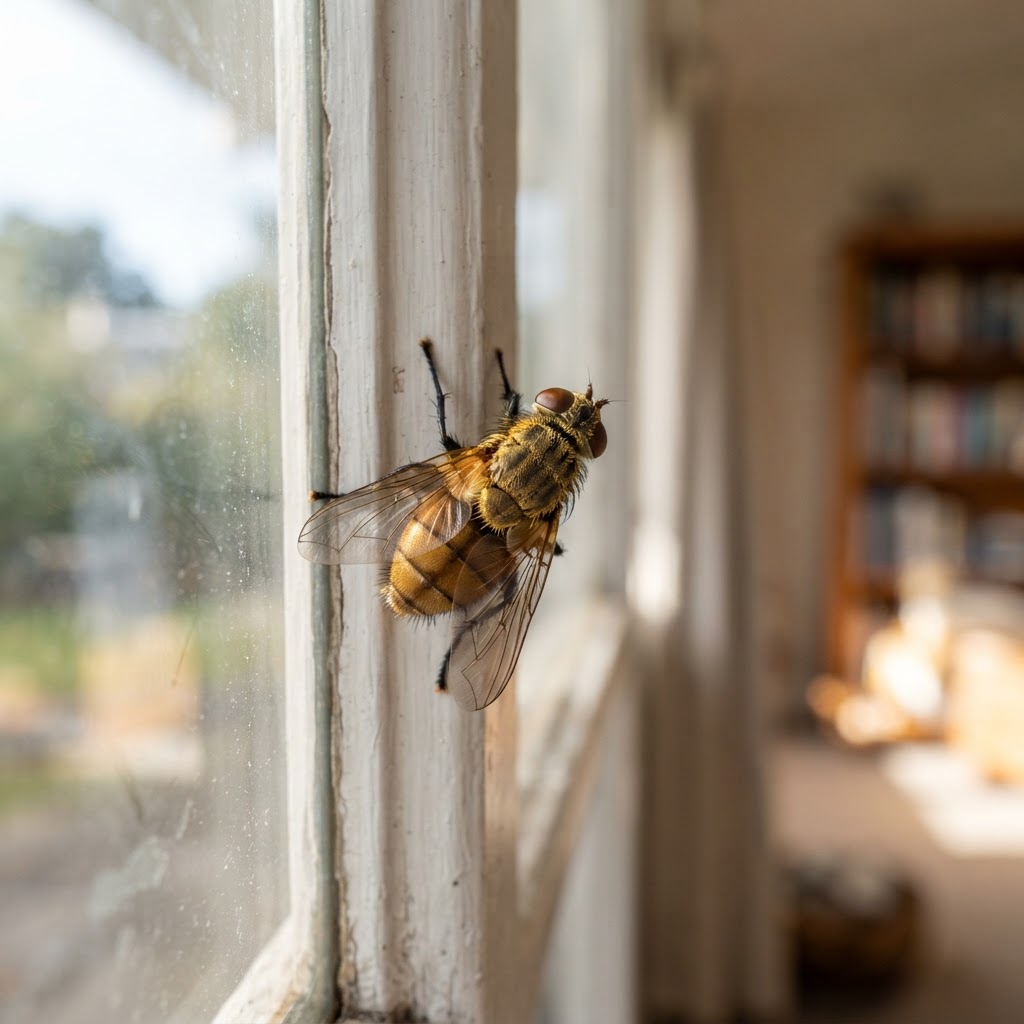
Cluster Fly
Pollenia rudis
Sluggish golden-brown flies that pile up on sunny windows.
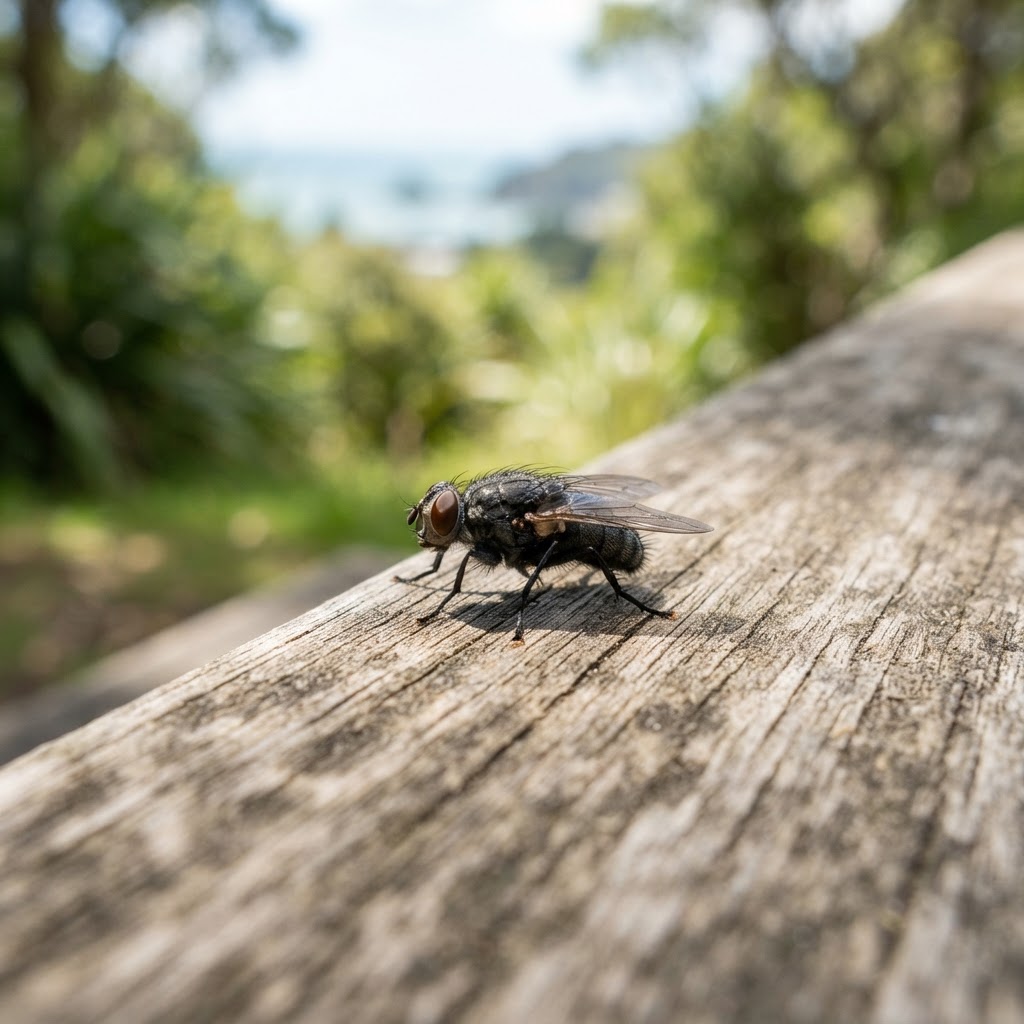
Bush Fly
Musca vetustissima
The persistent outdoor fly that swarms people and stock.
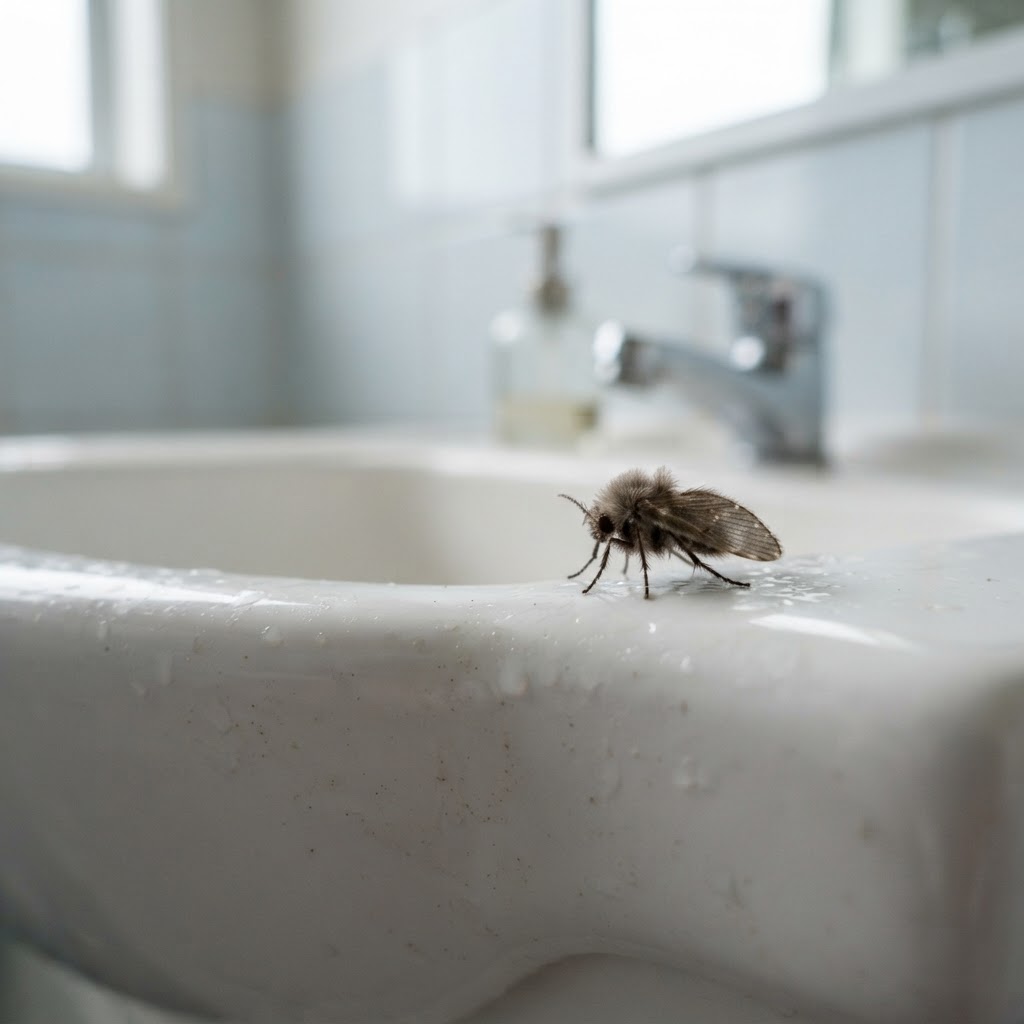
Drain Fly
Family Psychodidae
Tiny moth-like flies that live in your sinks and drains.
Other pests we solve
Explore more NZ-specific pest guides and the bee-safe, reusable traps behind each one.
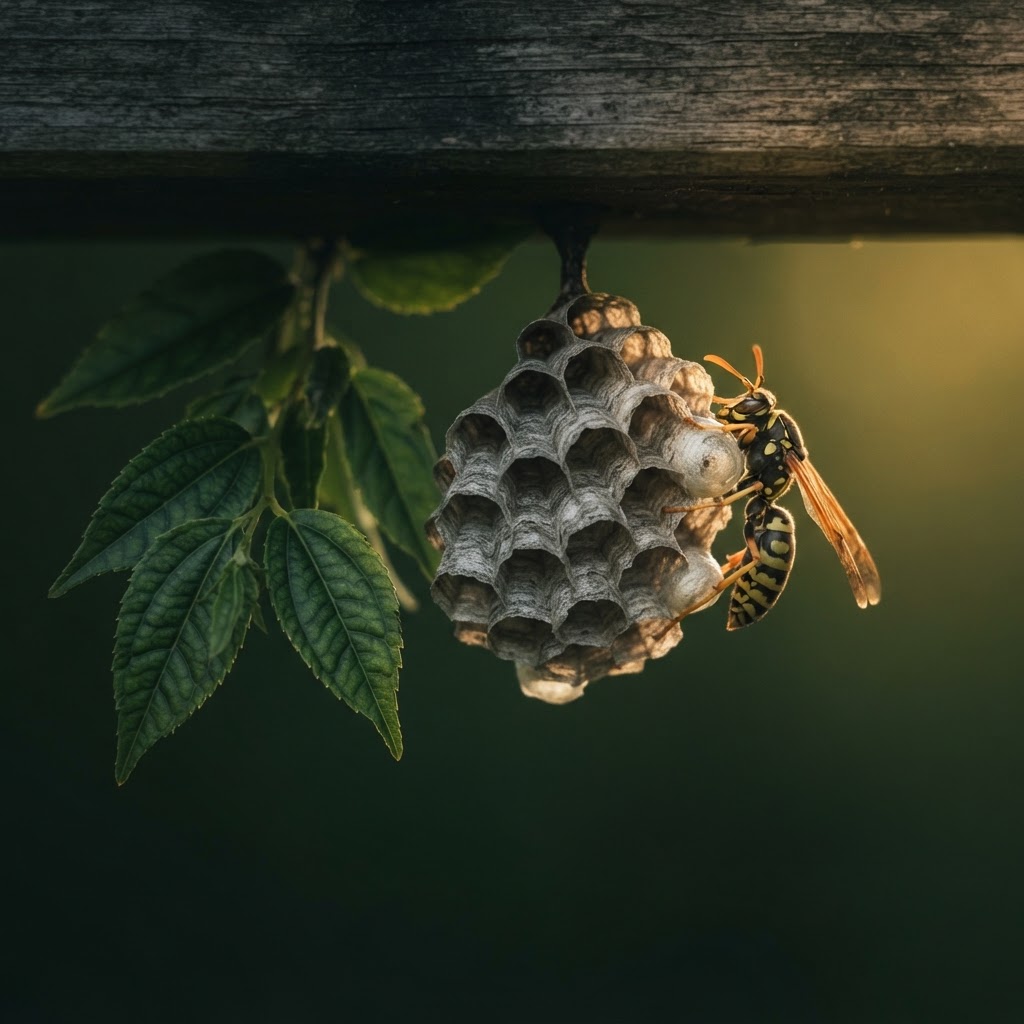
Wasps
Bee-safe wasp traps that lure wasps, not our precious pollinators.
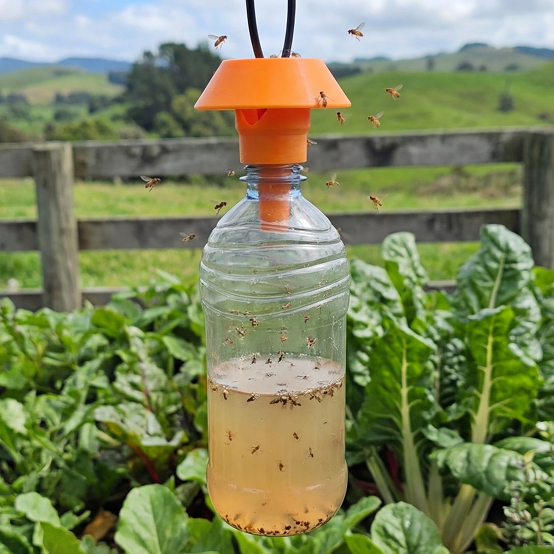
Fruit Flies
Reusable fruit fly traps using everyday pantry bait — no chemicals.
Fungus Gnats
Tiny black flies around your houseplants — beat them for good.
Mosquitoes
Reduce backyard biting with simple, chemical-free traps.
Moths
Pantry and clothes moth traps — stop the flutter, find the source.