Drain Fly
Tiny moth-like flies that live in your sinks and drains.
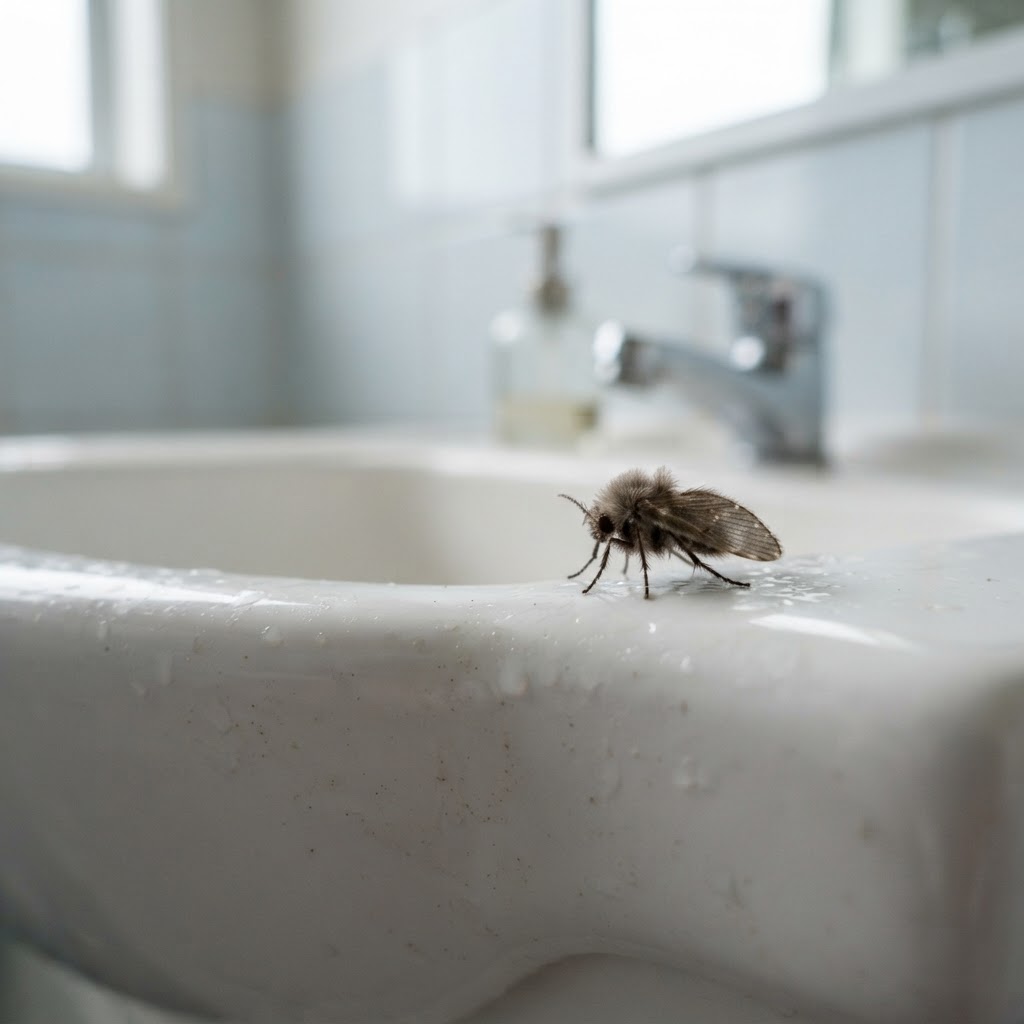
Drain flies — also called moth flies or sewage flies — are the tiny, fuzzy-winged insects you sometimes see sitting in a dark, damp spot near a sink, shower or floor drain. They look more like tiny moths than flies, with wings held tent-like over the body.
They breed in the slimy organic film that builds up inside drains, where larvae feed on the sludge. They do not bite and are not a major disease vector, but an untreated drain can produce steady numbers of them. The fix is cleaning the drain, not spraying the adults.
 Ask Buzzy

Screw-On Bottle Trap — NZ-made, reusable fly control for homes, cafés, farms and food prep areas.
How to identify a drain fly
Very small, grey or tan, with a fuzzy, moth-like appearance and wings held roof-like over the body at rest. They are weak, fluttering fliers and tend to stay close to the drain they emerged from.
- •Adult about 2 mm, covered in fine hairs — moth-like.
- •Wings held tent-like over the body when at rest.
- •Weak, fluttery flight near sinks, showers and floor drains.
- •A dark, slimy film inside the drain is the breeding ground.
Are drain flies dangerous?
Not in the way house flies are. They do not bite and are not significant disease carriers, but their presence points to a build-up of organic sludge in your drains, and large numbers can be a real nuisance in bathrooms and kitchens.
Life cycle & fun facts
Eggs are laid in the gelatinous film lining drains; larvae feed on the organic sludge, then pupate at the surface. The cycle can run in two to three weeks, so a drain left uncleaned will keep producing flies.
Fun fact: Drain flies are covered in water-resistant hairs — they can survive being flushed and simply climb back up the slimy drain wall.
What drain flies feed on
Larvae feed on the organic sludge and bacteria in drains, sewers and stagnant water. Adults barely feed — they exist to mate and lay eggs back into the slime.
How to get rid of drain flies
Clean the breeding ground — the drain — and the adults stop.
Remove the attraction
- ✓Scrub inside drains with a stiff brush and enzymatic cleaner.
- ✓Pour boiling water down drains daily for a week.
- ✓Clear the slimy film — bleach alone does not remove the biofilm.
- ✓Clean sink overflow holes and floor drains, not just the plug.
Block them out
- ✓Keep drains flowing freely so sludge does not build up.
- ✓Fix slow or leaking drains.
- ✓Run infrequently used sinks and showers regularly.
- ✓A shallow fruit-fly trap catches stray adults while you clean the drain.
Frequently asked questions
Trap smarter with GotchaPest
UV-tough, NZ-made, reusable traps — paired with the app and Buzzy, the world's first AI Trap Buddy.
Other flies in New Zealand
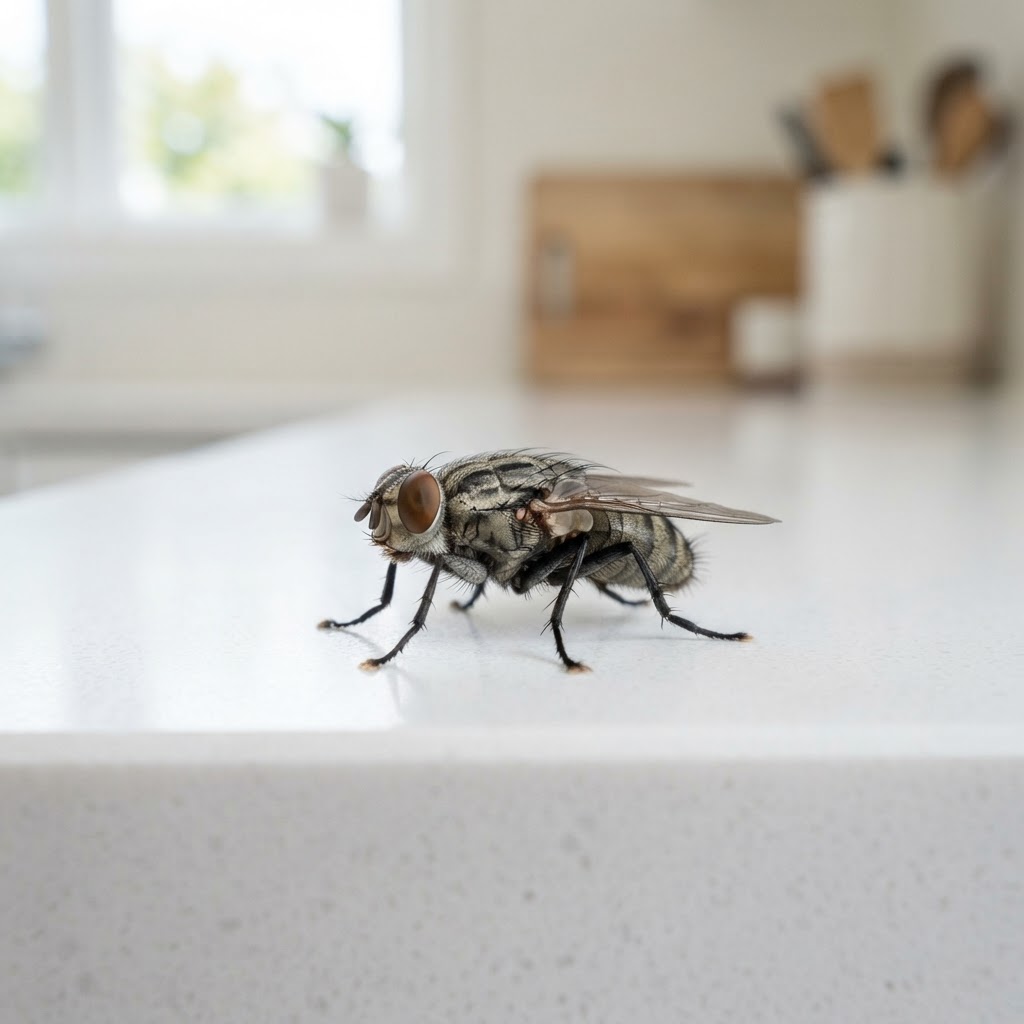
House Fly
Musca domestica
The classic Kiwi kitchen fly — and a carrier of bacteria.
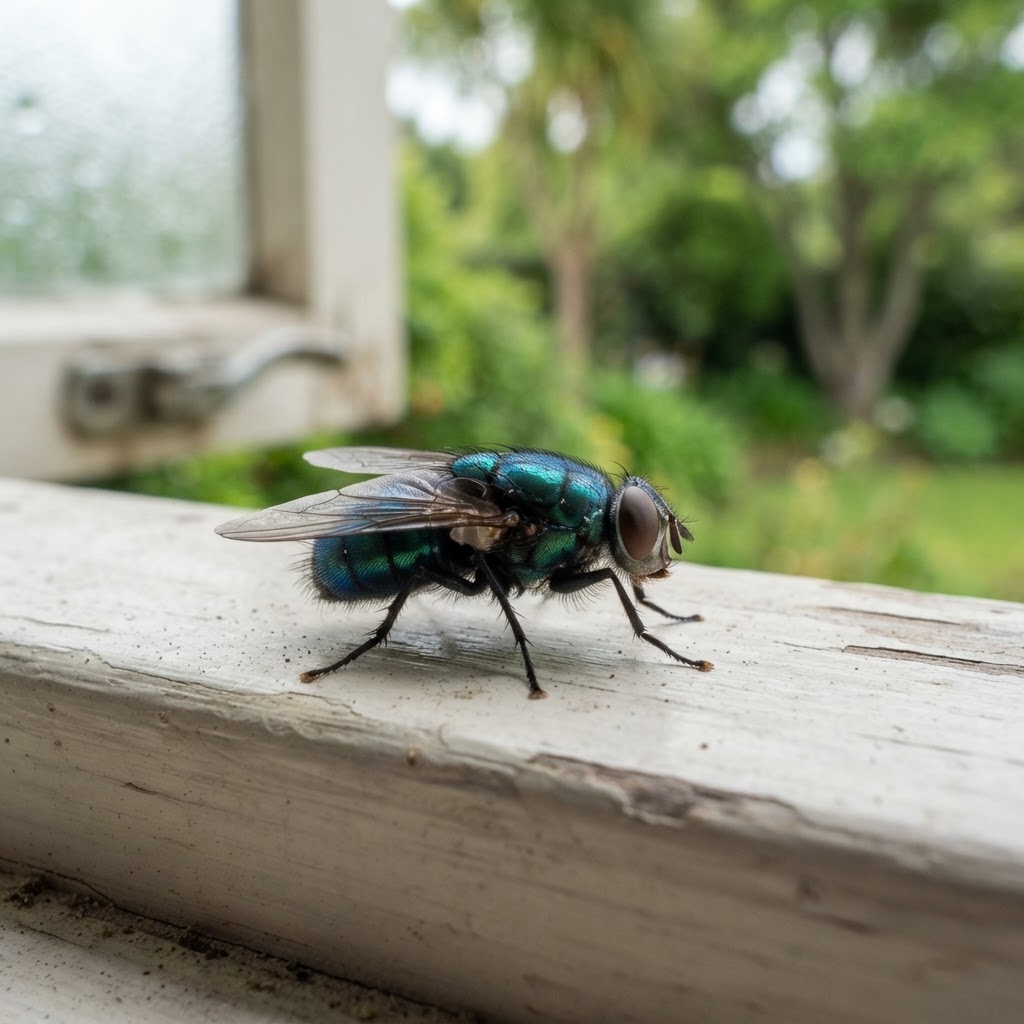
Blow Fly
Family Calliphoridae
The shiny bluebottle that finds the bin — and worse.
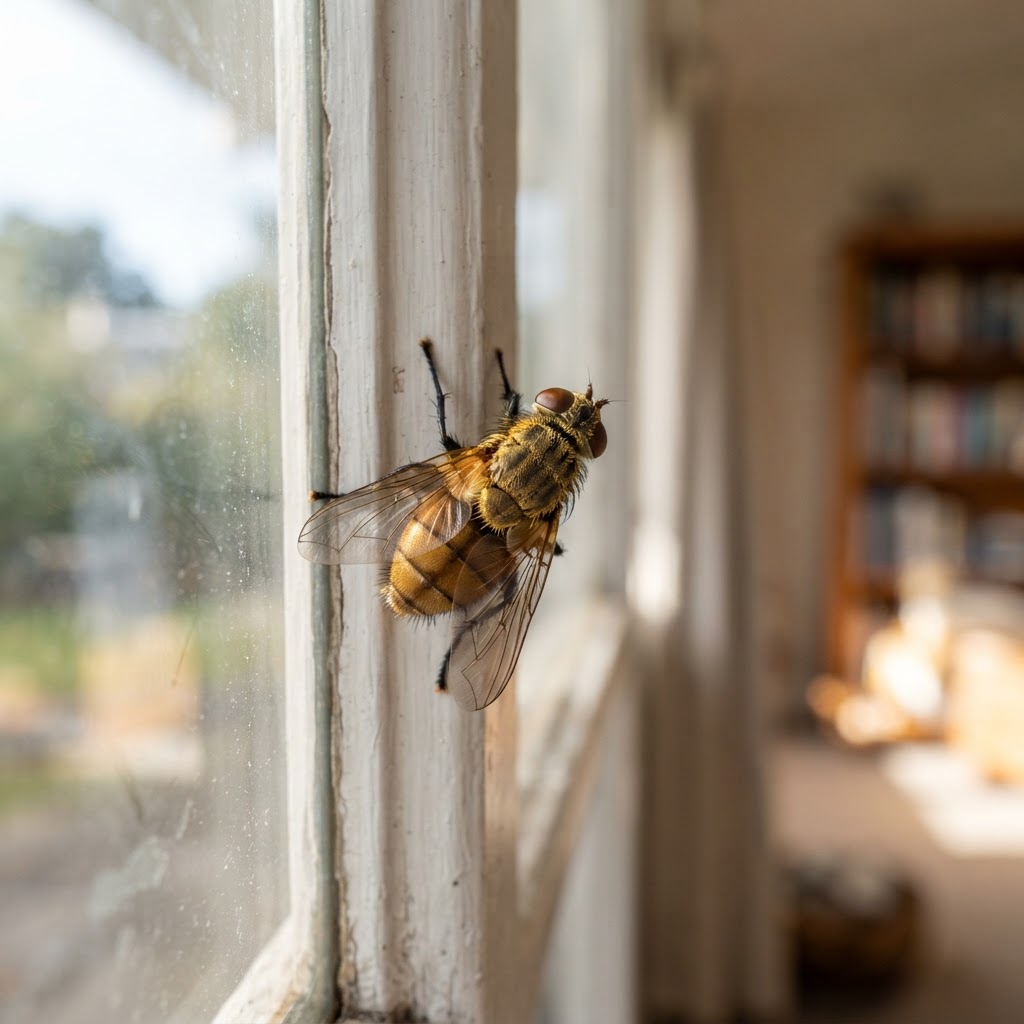
Cluster Fly
Pollenia rudis
Sluggish golden-brown flies that pile up on sunny windows.
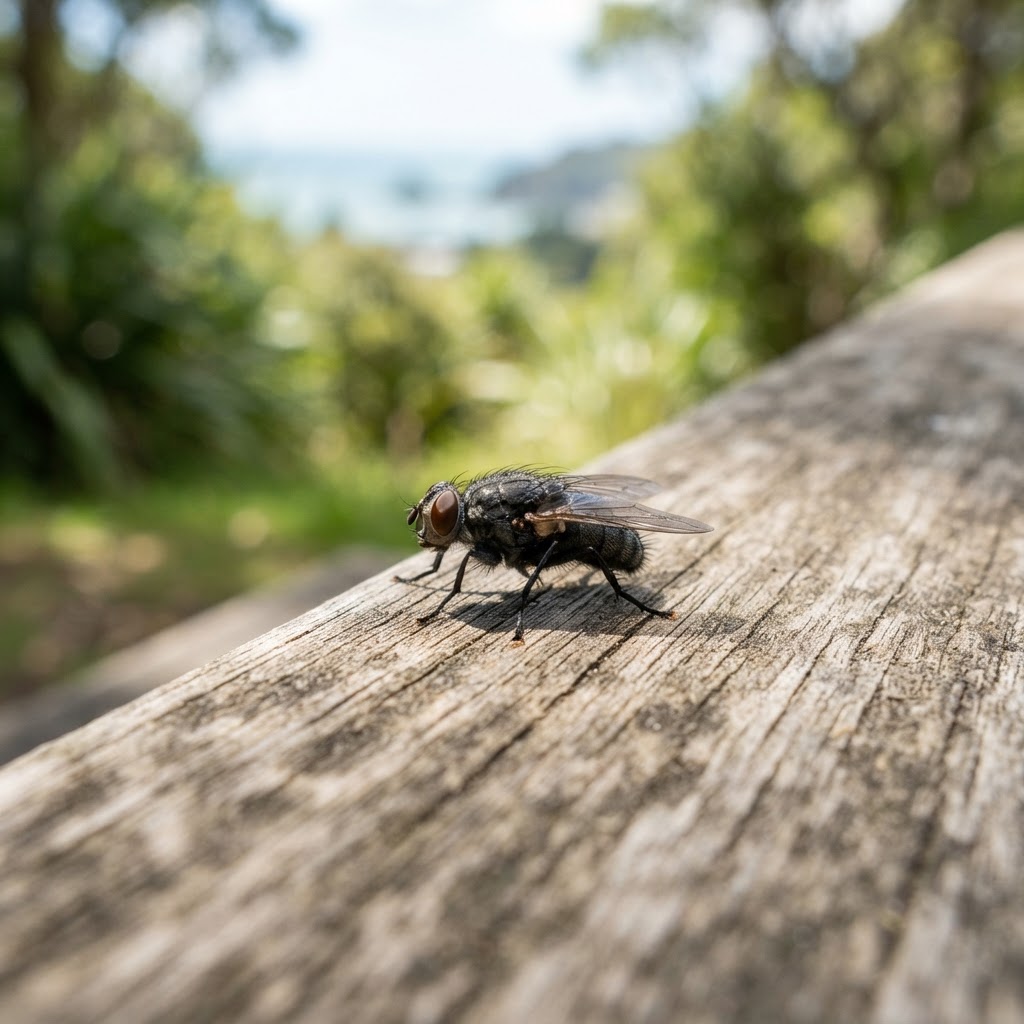
Bush Fly
Musca vetustissima
The persistent outdoor fly that swarms people and stock.
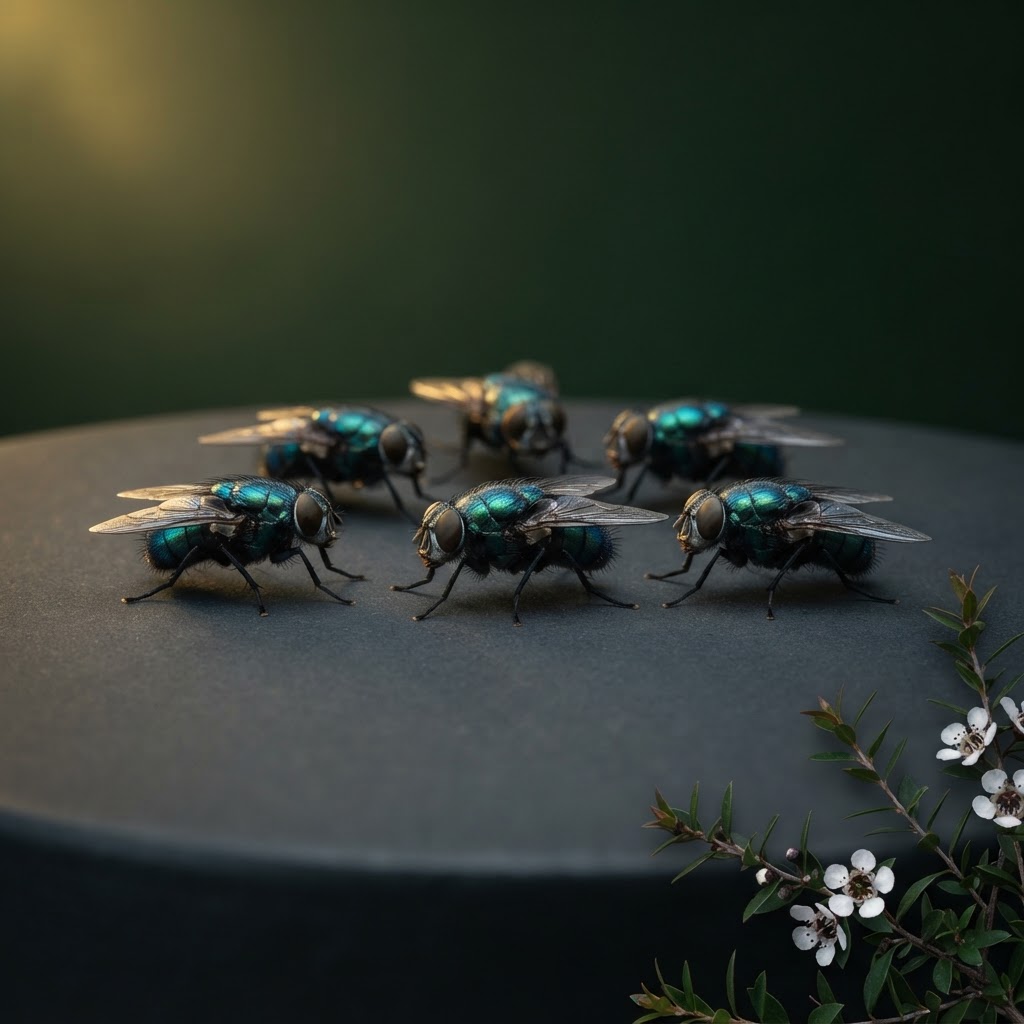
Horse Fly
Family Tabanidae
The big, biting fly that draws blood in a New Zealand summer.
Other pests we solve
Explore more NZ-specific pest guides and the bee-safe, reusable traps behind each one.
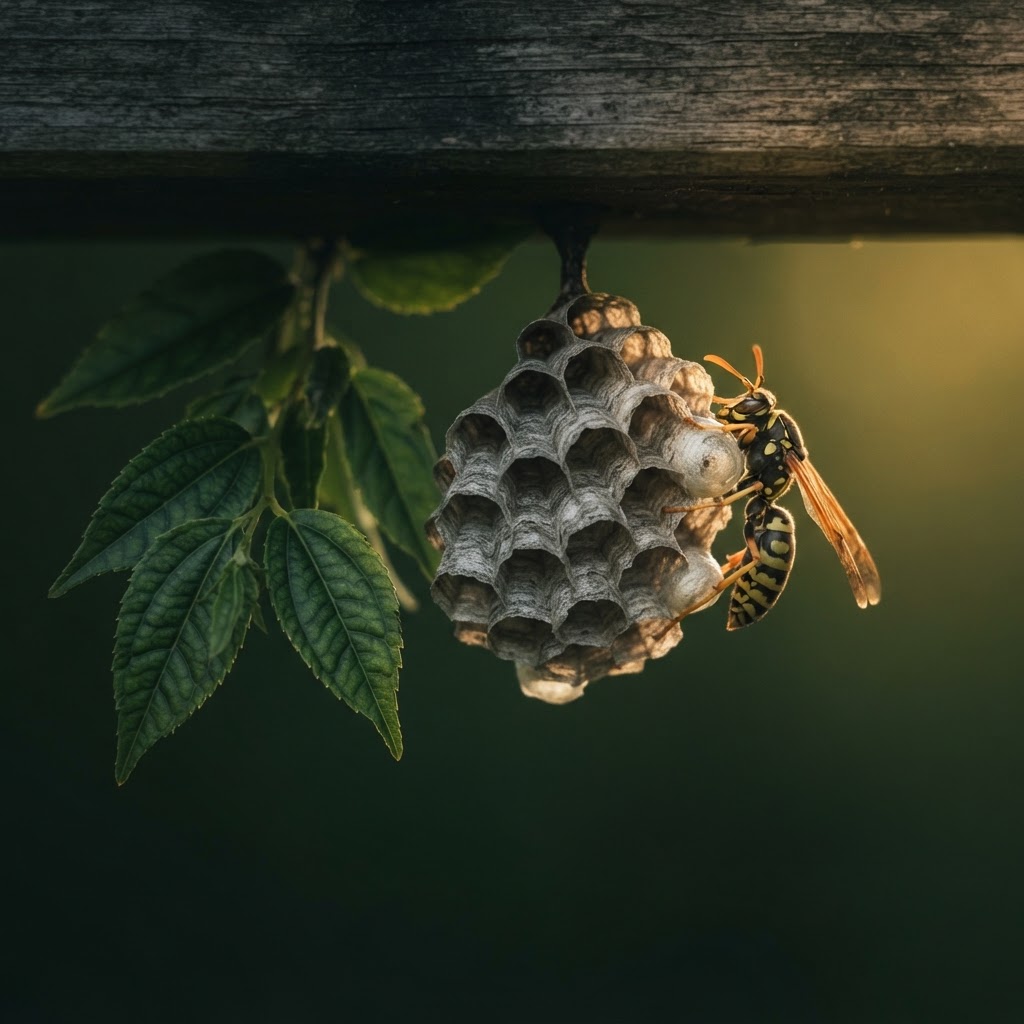
Wasps
Bee-safe wasp traps that lure wasps, not our precious pollinators.
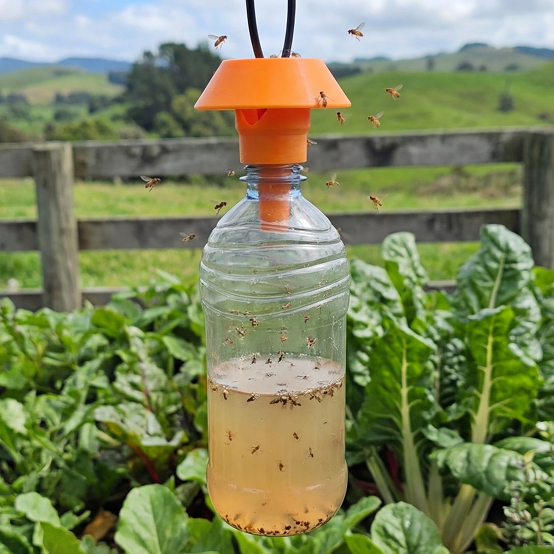
Fruit Flies
Reusable fruit fly traps using everyday pantry bait — no chemicals.
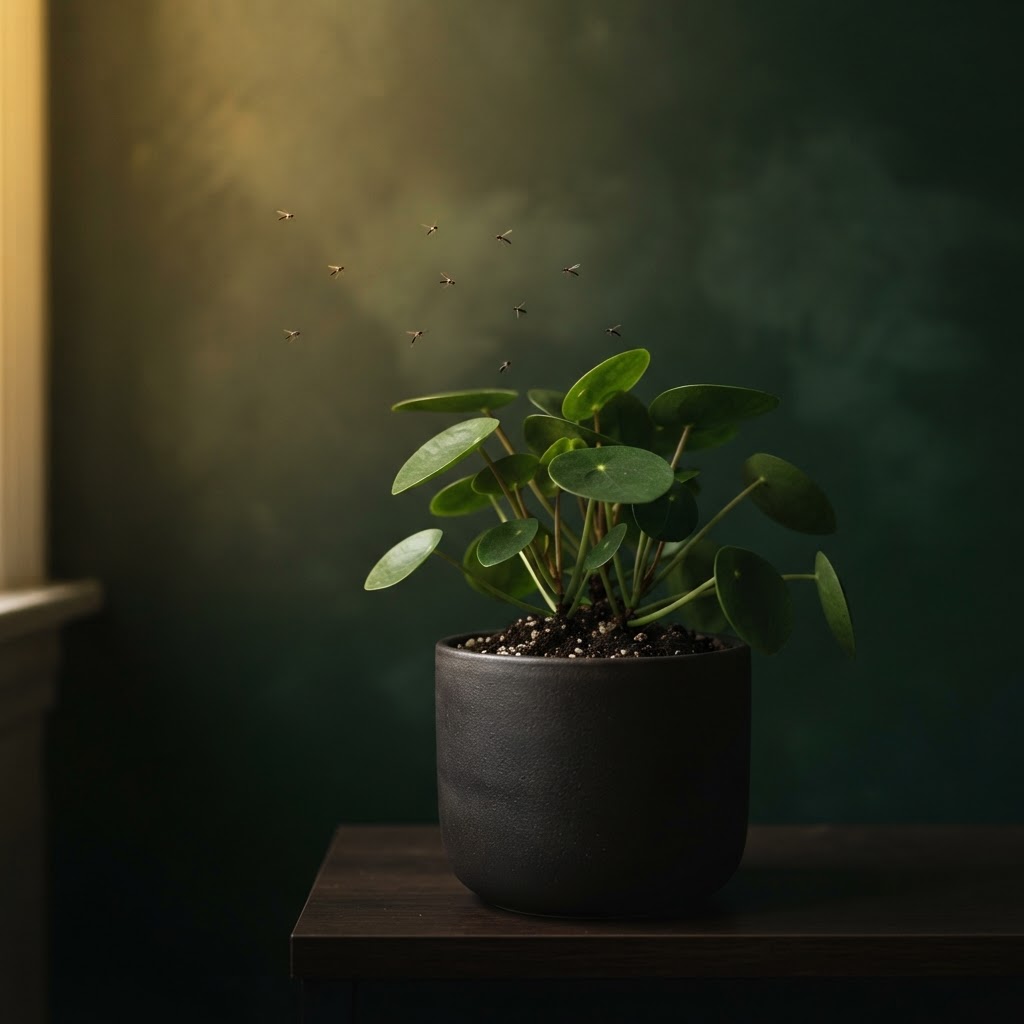
Fungus Gnats
Tiny black flies around your houseplants — beat them for good.
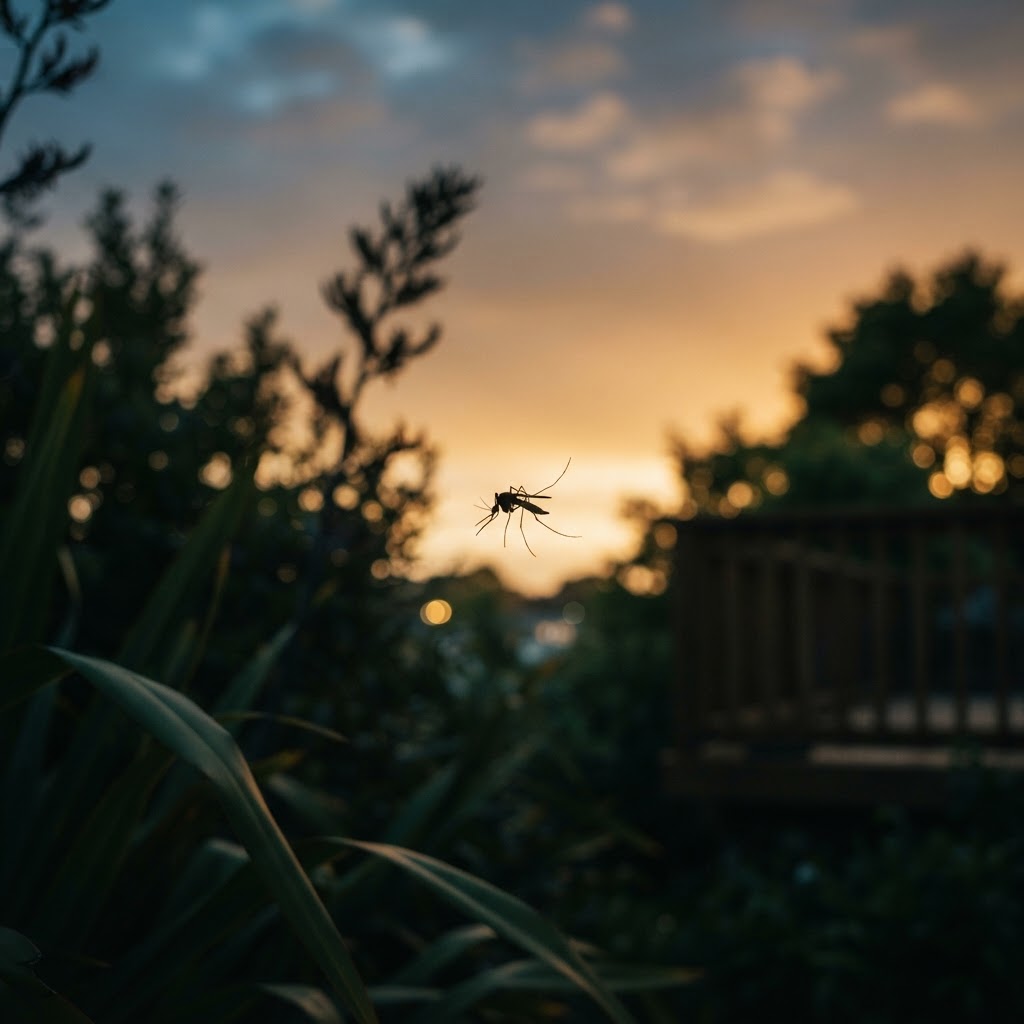
Mosquitoes
Reduce backyard biting with simple, chemical-free traps.
Moths
Pantry and clothes moth traps — stop the flutter, find the source.