Wasps
Bee-safe wasp traps that lure wasps, not our precious pollinators.
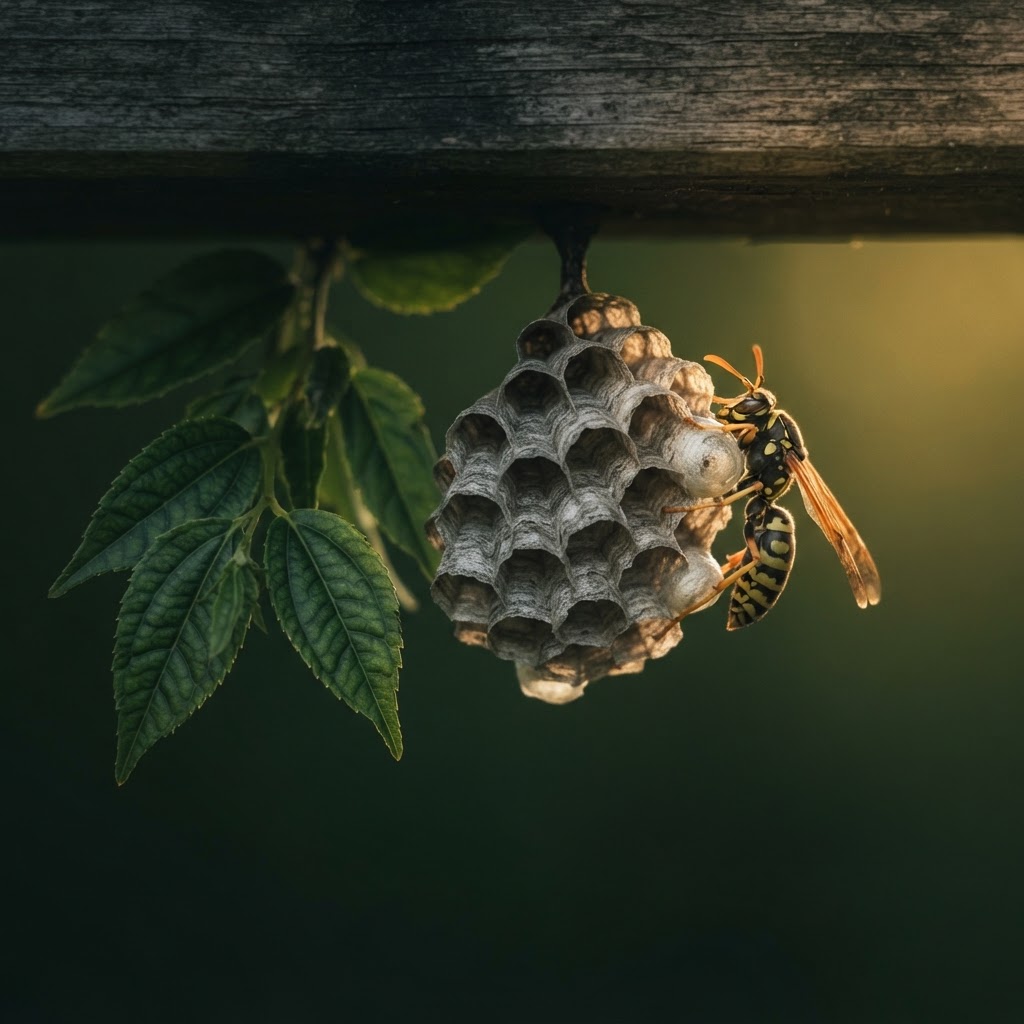
Wasps are the spoilers of a Kiwi summer. One minute you're enjoying a barbecue, the next there's a yellowjacket eyeing your drink and a paper wasp nest under the eaves. German and common wasps are particularly aggressive in New Zealand — and our native bush has some of the highest wasp densities in the world.
Not every wasp is a villain. Many tiny species hunt other pests and never bother people. But when wasps settle near your home, the risk of stings — and serious allergic reactions — means it's time to act. Our bee-safe traps target the problem wasps with a simple beer-and-sugar bait, while leaving bees alone.
 Ask Buzzy

Fast, safe, and seriously effective — NZ-made wasp trap that protects pollinators.
How to tell a wasp from a bee
Wasps are sleek and mostly hairless, with a pinched "waist" between thorax and abdomen, two pairs of wings, and — on females — a smooth stinger they can use more than once (unlike a bee, which loses its stinger and dies).
- •German & common wasps — yellow-and-black, stocky; build paper nests in the ground, walls, or trees.
- •Paper wasps — slender, long legs dangling in flight; open-comb nests under eaves and fences.
- •Asian paper wasp — similar to paper wasp, slightly smaller; an established NZ invader.
- •Mud dauber — solitary, all-black or metallic; builds mud tubes on walls (mostly harmless).
How dangerous are wasps?
They can be very dangerous. Wasps sting repeatedly and some species chase you well beyond the nest. Around 1 in 30 people are allergic, and wasp stings send dozens of Kiwis to hospital each year. If someone shows swelling of the face or throat, wheezing, or dizziness after a sting, call 111 — that's anaphylaxis and it's a medical emergency.
Life cycle & fun facts
A wasp colony dies off each winter except for the queen, who hides and starts a new nest in spring. Workers live only a couple of weeks; queens can last a full year. Nests grow through summer and hit peak aggression in late summer and autumn.
Fun fact: Paper wasps can recognise individual faces — they remember their nestmates and spot intruders by facial markings.
What wasps eat
It depends on the species. Paper wasps hunt caterpillars and flies for their larvae and sip nectar for themselves. German and common wasps go for anything sweet — fruit, your fizzy drink, nectar — plus protein like insects and even raw meat at the barbecue. That sweet-tooth is exactly what makes a sugar-and-beer bait so effective.
How to keep wasps away
Remove what attracts them and block the ways in — then take out small nests early before they grow.
Remove the attraction
- ✓Keep food and drinks covered outdoors, especially sugary things.
- ✓Bin lids tight; rinse sweet residue off recycling.
- ✓Take down hummingbird feeders or bring them inside during peak wasp season.
- ✓Pick up fallen fruit under trees promptly.
Block them out
- ✓Repair screens and seal holes in soffits, vents, and walls.
- ✓Watch eaves, sheds, and fence posts for new small nests in spring — knock them off at night.
- ✓Hang a bee-safe GotchaPest wasp trap away from seating areas to draw wasps away.
- ✓For a large or hidden ground nest, call a professional — don't risk it yourself.
First aid for a wasp sting
- 1Move away from the nest area so you're not stung again.
- 2Wash the sting site with soap and water.
- 3Apply a cold pack wrapped in a cloth — 10 minutes on, 10 off — to ease swelling.
- 4For stings near the face or throat, watch closely for breathing trouble; call 111 if it worsens.
- 5Soothe the itch with a baking-soda-and-water paste, calamine, or an antihistamine cream.
- 6Take paracetamol if the sting is painful; seek medical help for any sign of allergy.
Frequently asked questions
Deep-dive guides on Wasps
Trap smarter with GotchaPest
UV-tough, NZ-made, reusable traps — paired with the app and Buzzy, the world's first AI Trap Buddy.
Types of Wasps in New Zealand
Deep-dive guides to every wasps species we cover — identification, behaviour, and the bee-safe control that works in Aotearoa.
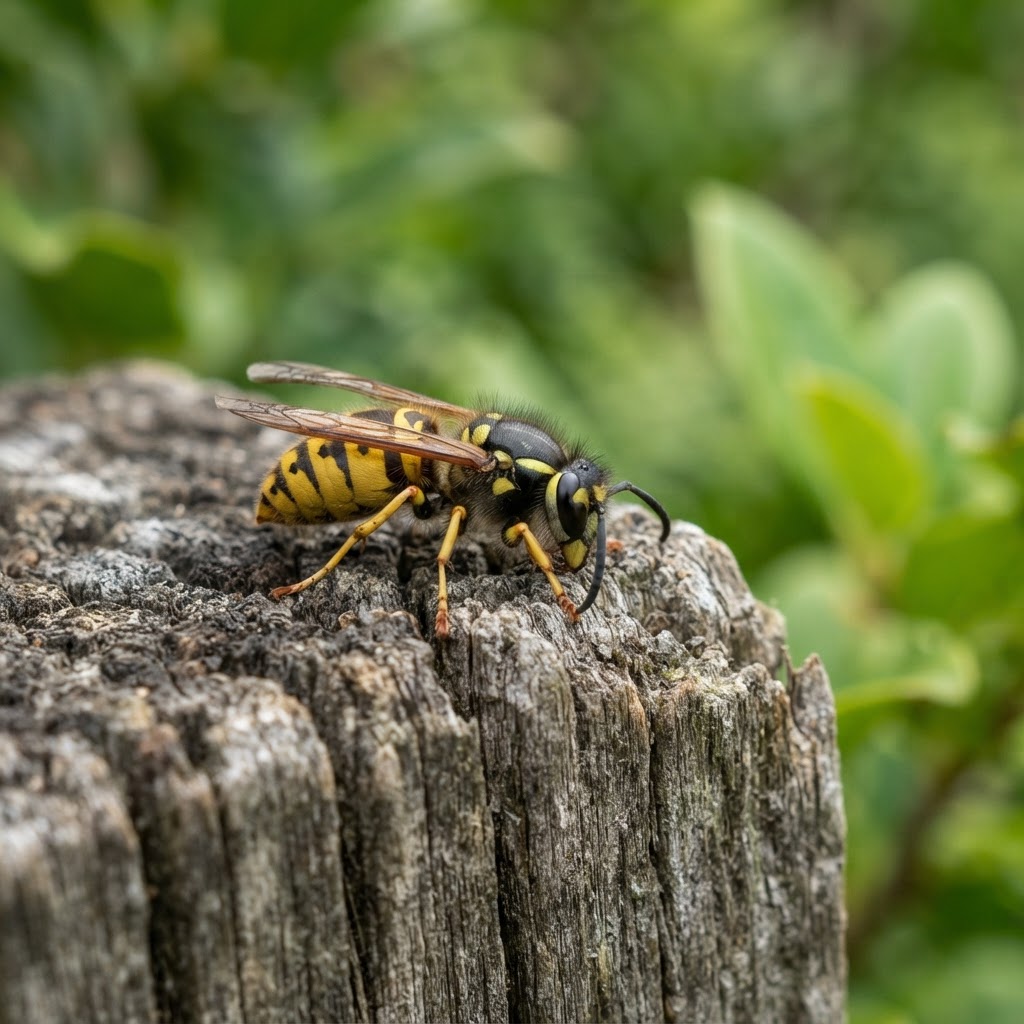
German Wasp
Vespula germanica
New Zealand's most widespread and aggressive garden wasp.
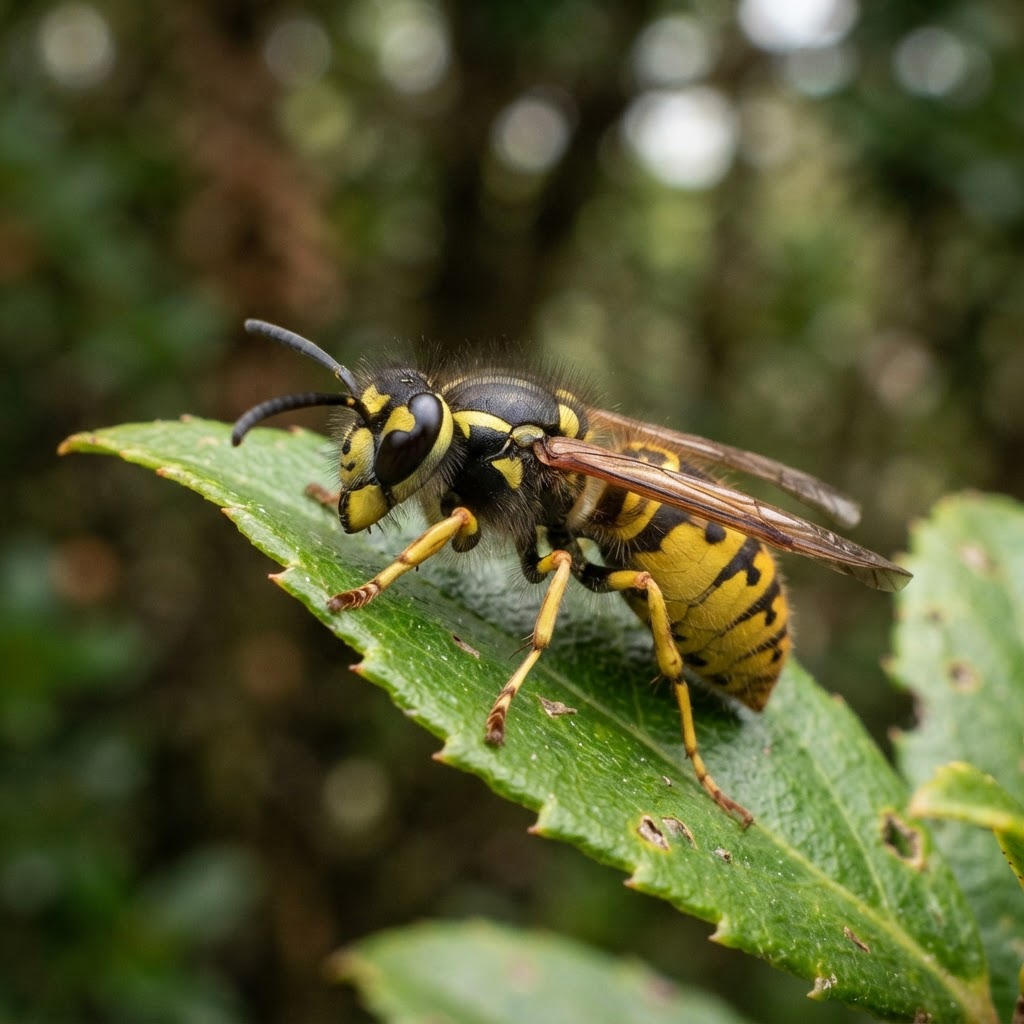
Common Wasp
Vespula vulgaris
The honeydew harvester that dominates NZ beech forest.
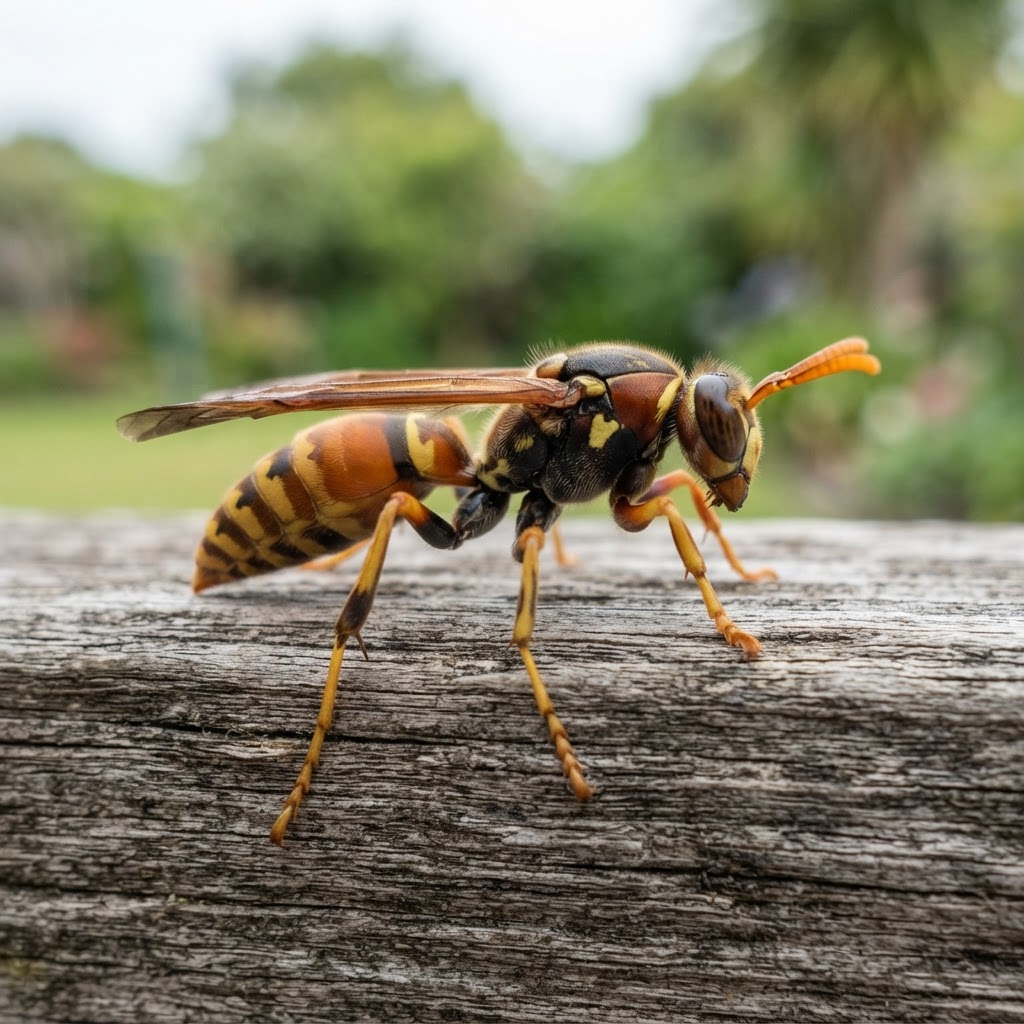
Asian Paper Wasp
Polistes chinensis
Long-legged, open-comb builder under the eaves.
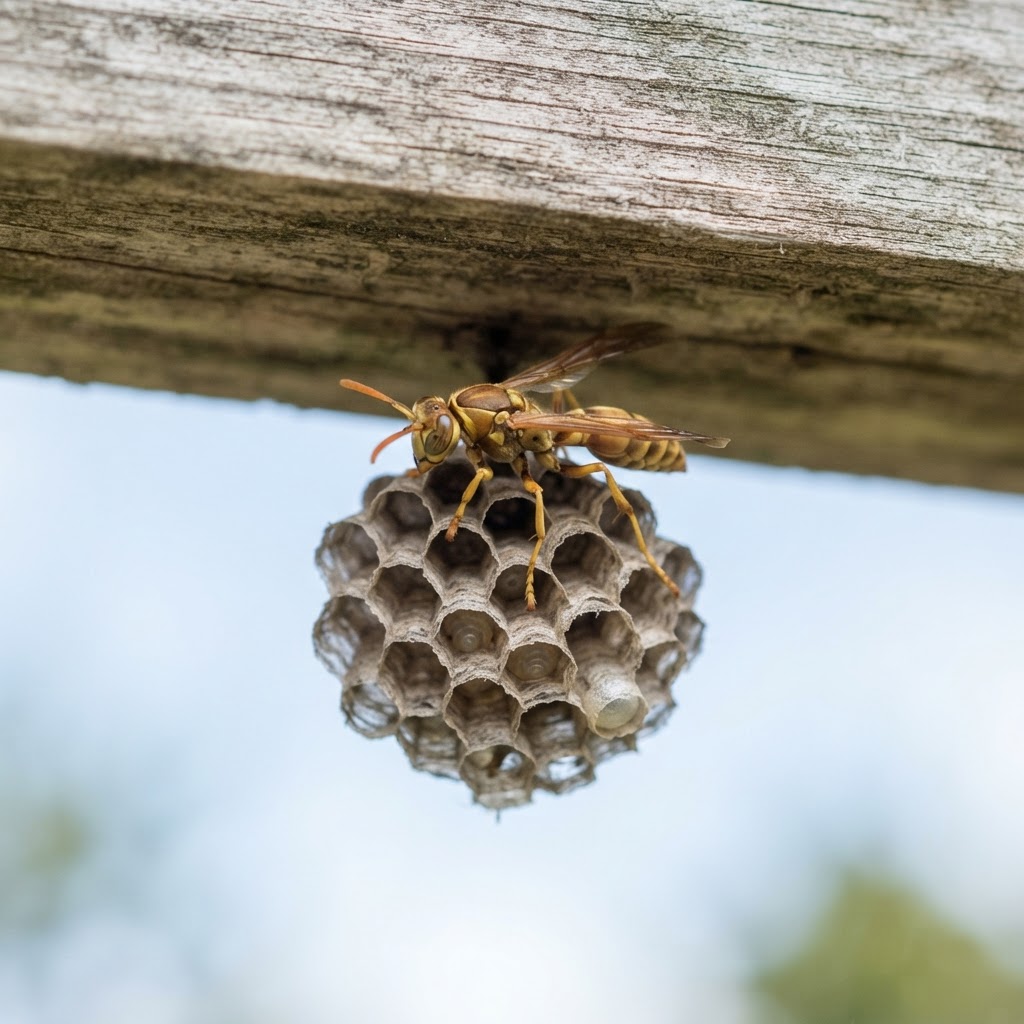
Australian Paper Wasp
Polistes humilis
An early, subtropical NZ arrival with a taste for caterpillars.
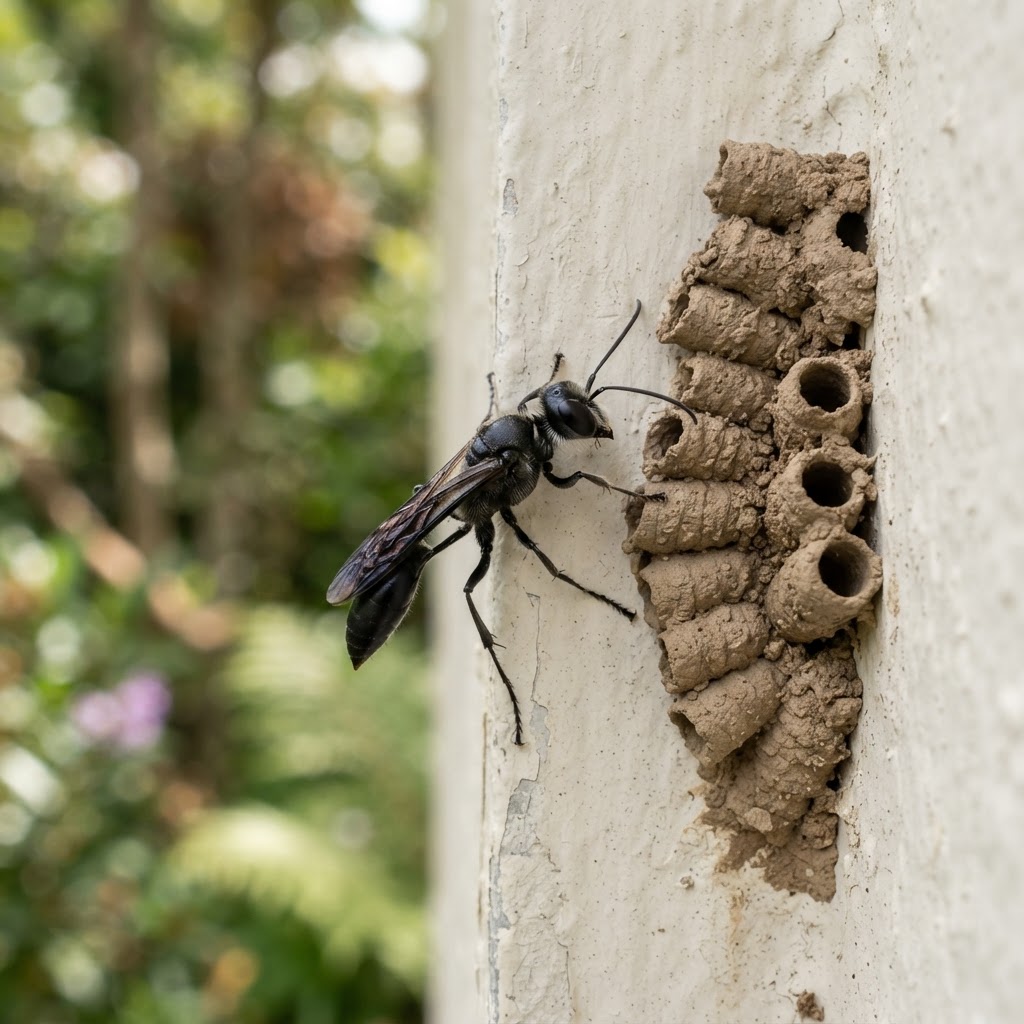
Mud Dauber Wasp
Sceliphron laetum
A solitary, mostly harmless mud-builder that hunts spiders.
Yellow Wasp
Vespula germanica & Vespula vulgaris
The bright yellow-and-black wasps every Kiwi calls a "yellow wasp".
Paper Wasp
Polistes spp.
The slender, long-legged wasps building open combs under NZ eaves.
Wasp Nest
Vespula & Polistes nests
How to find, identify and safely deal with a wasp nest in New Zealand.
Other pests we solve
Explore more NZ-specific pest guides and the bee-safe, reusable traps behind each one.
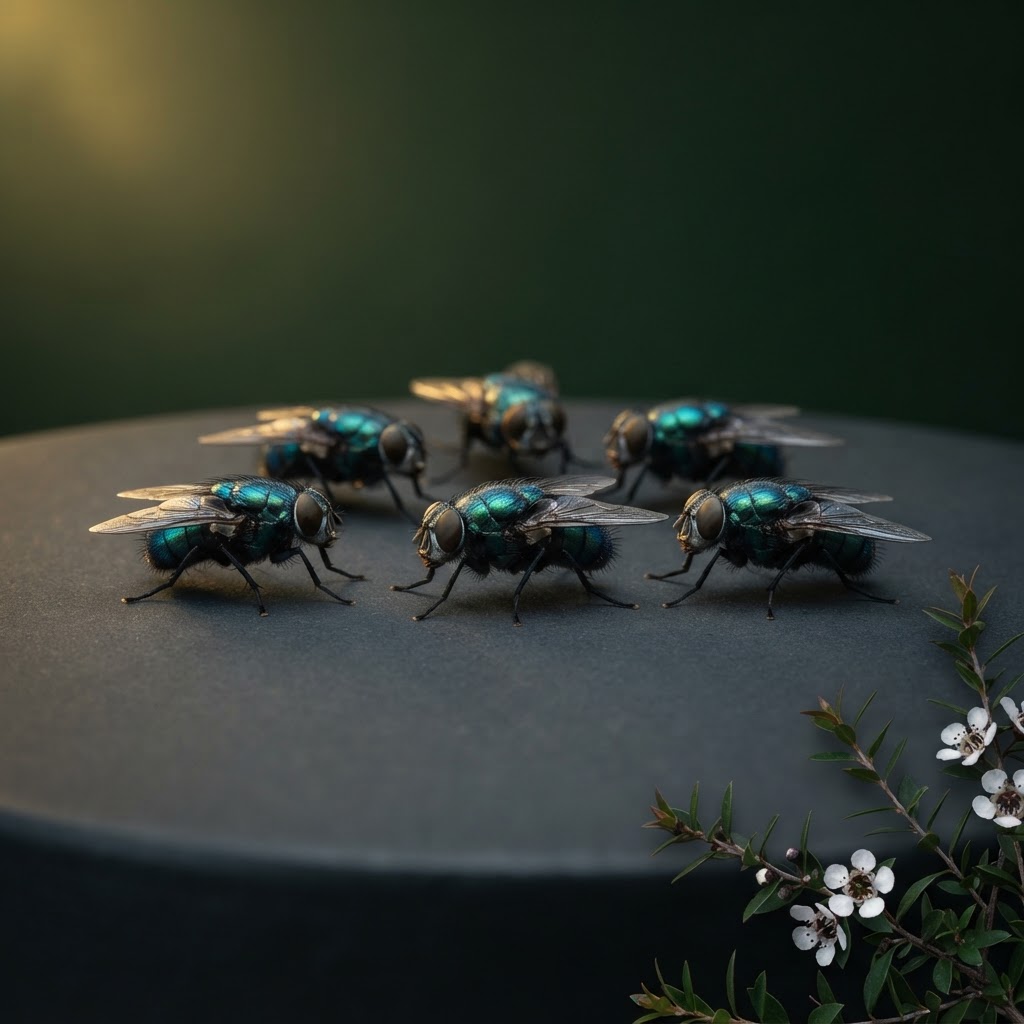
Flies
NZ-made, UV-tough traps that knock down flies without sprays.
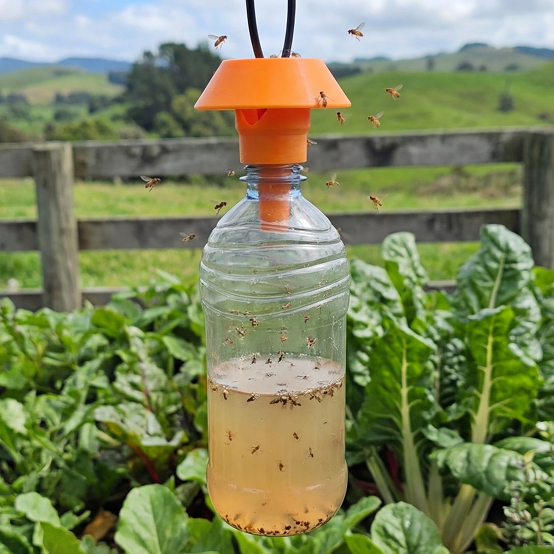
Fruit Flies
Reusable fruit fly traps using everyday pantry bait — no chemicals.
Fungus Gnats
Tiny black flies around your houseplants — beat them for good.
Mosquitoes
Reduce backyard biting with simple, chemical-free traps.
Moths
Pantry and clothes moth traps — stop the flutter, find the source.