German Wasp
New Zealand's most widespread and aggressive garden wasp.
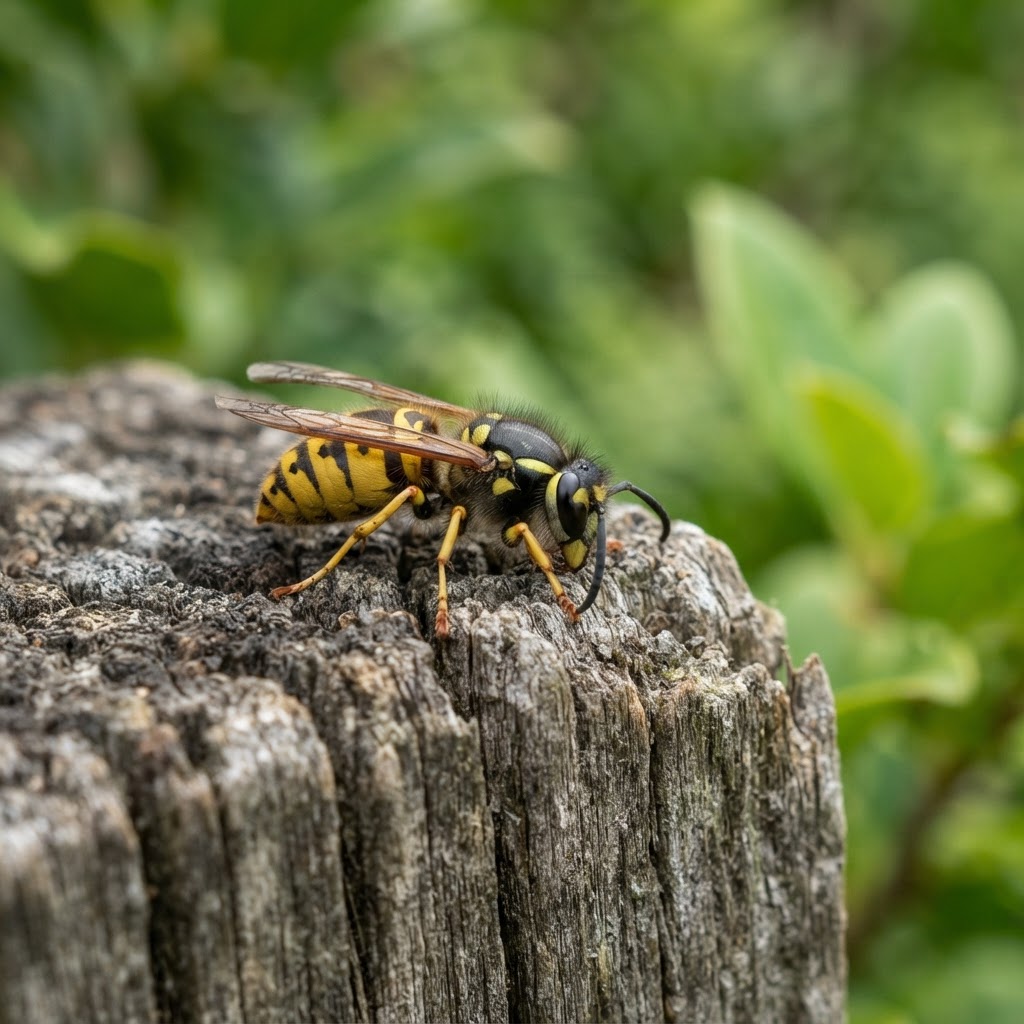
The German wasp is one of the two Vespula species that dominate New Zealand summers. Brought here by accident, it has spread across the country and — alongside the common wasp — built some of the highest wasp densities recorded anywhere in the world in our honeydew beech forests.
German wasps are stocky, bright yellow-and-black, and fiercely defensive of their nest. A colony can hold thousands of workers, and disturbing an entrance is a quick way to get chased and stung repeatedly. They nest in the ground, in walls, in roof cavities, and hanging in trees, and a single queen starts a fresh colony every spring.
 Ask Buzzy

Fast, safe, and seriously effective — NZ-made wasp trap that protects pollinators.
How to identify a German wasp
Look for a robust yellow-and-black body, a clear black mark on the face (often a vertical line or three dots), and a complete yellow band running behind each eye. On the abdomen the black dots usually sit clear of the black rings.
- •Stocky yellow-and-black body, 12–17 mm for workers; queens up to 20 mm.
- •Face carries black dots or a short vertical black line (no anchor shape — that's the common wasp).
- •A solid yellow band wraps right behind the eye when viewed side-on.
- •Nests are grey, made from the fibre of sound, weathered wood, often underground or inside walls.
How dangerous is the German wasp?
Very. German wasps can sting many times and will swarm anyone who threatens the nest. Their venom is painful and, for roughly one in thirty people, triggers a serious allergic reaction. If stung and you notice face or throat swelling, wheezing, or dizziness, call 111 immediately — that is anaphylaxis.
Life cycle & fun facts
Only mated queens survive winter, hiding in sheltered spots. In spring each queen starts a new nest from scratch, raising the first workers herself. The colony grows through summer, peaks in late autumn, then collapses — leaving new queens to overwinter and begin again.
Fun fact: German wasps were first recorded in New Zealand in the 1940s and spread rapidly; today they are one of our most damaging invasive insects, costing the country an estimated $130 million a year.
What German wasps eat
Almost anything sweet or protein-rich: nectar, honeydew, ripe and fallen fruit, your fizzy drink, insects, and raw meat at the barbecue. In beech forest they gorge on honeydew produced by scale insects, which is why densities there explode. Their sweet tooth is exactly what makes a sugar-and-beer bait trap so effective.
How to keep German wasps away
Remove the attractants, seal entry points, and hang a bee-safe trap early in the season.
Remove the attraction
- ✓Keep sugary food and drinks covered outdoors.
- ✓Put tight lids on bins and rinse sweet residue off recycling.
- ✓Pick up fallen fruit under trees daily in late summer.
- ✓Bring hummingbird feeders inside during peak wasp season.
Block them out
- ✓Seal holes in soffits, vents and walls where queens might nest.
- ✓Check eaves, sheds and banks in spring for small new nests.
- ✓Hang a bee-safe GotchaPest wasp trap away from seating to draw them off.
- ✓For a large or hidden ground nest, call a professional — do not tackle it yourself.
Frequently asked questions
Deep-dive guides on German Wasp
Trap smarter with GotchaPest
UV-tough, NZ-made, reusable traps — paired with the app and Buzzy, the world's first AI Trap Buddy.
Other wasps in New Zealand
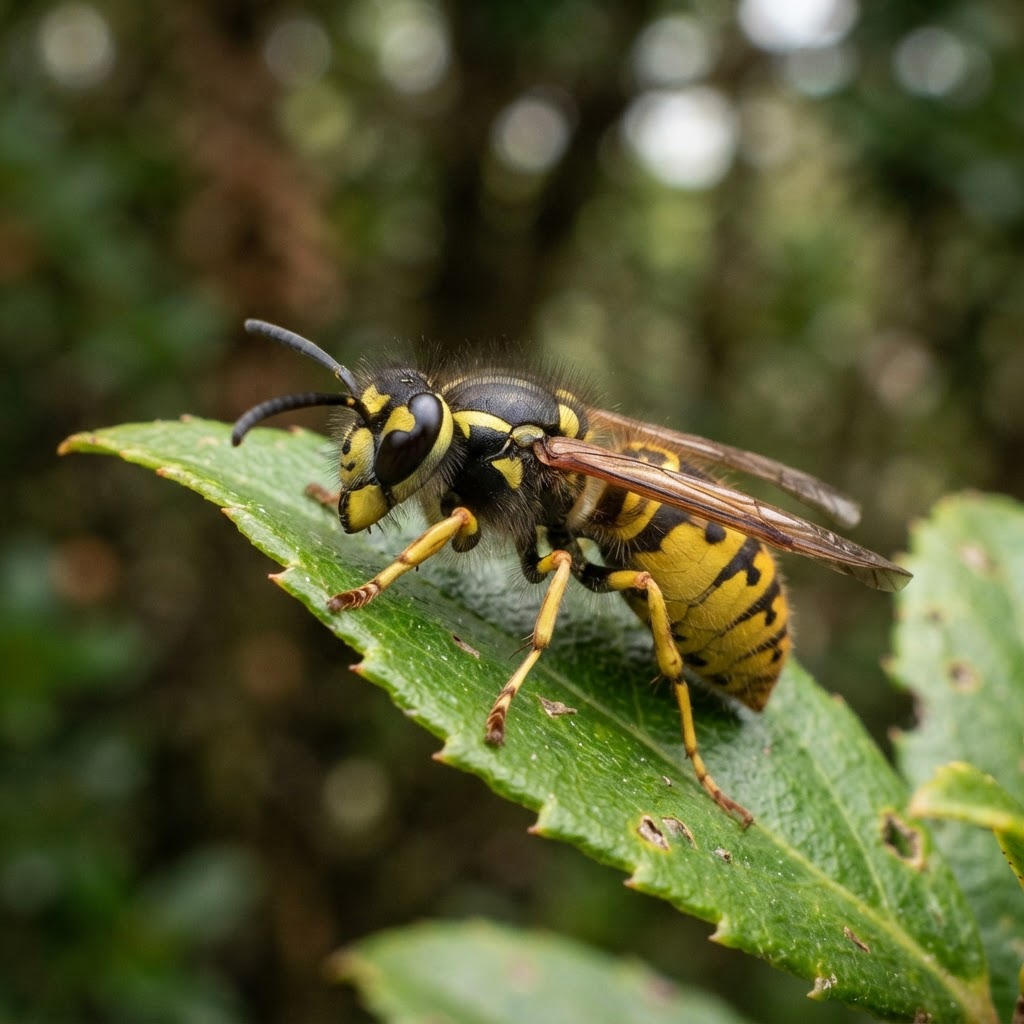
Common Wasp
Vespula vulgaris
The honeydew harvester that dominates NZ beech forest.
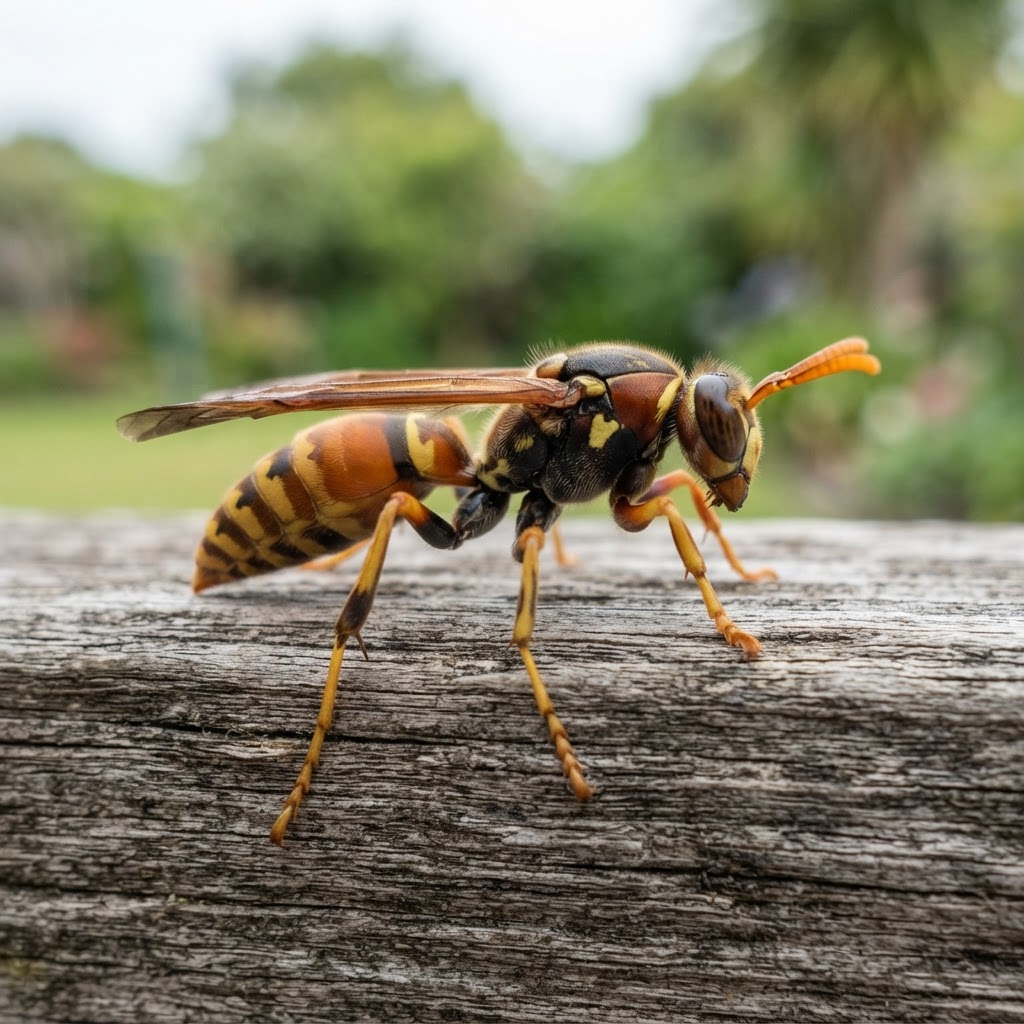
Asian Paper Wasp
Polistes chinensis
Long-legged, open-comb builder under the eaves.
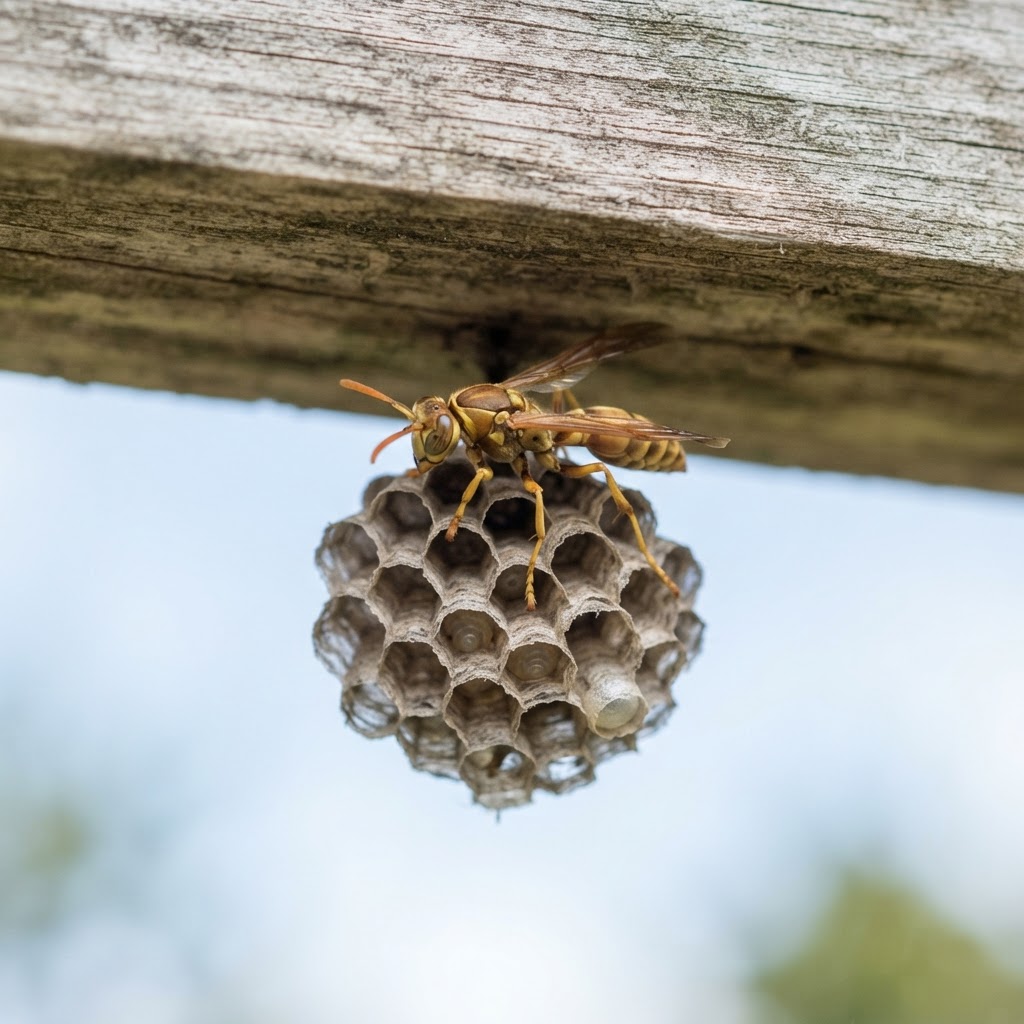
Australian Paper Wasp
Polistes humilis
An early, subtropical NZ arrival with a taste for caterpillars.
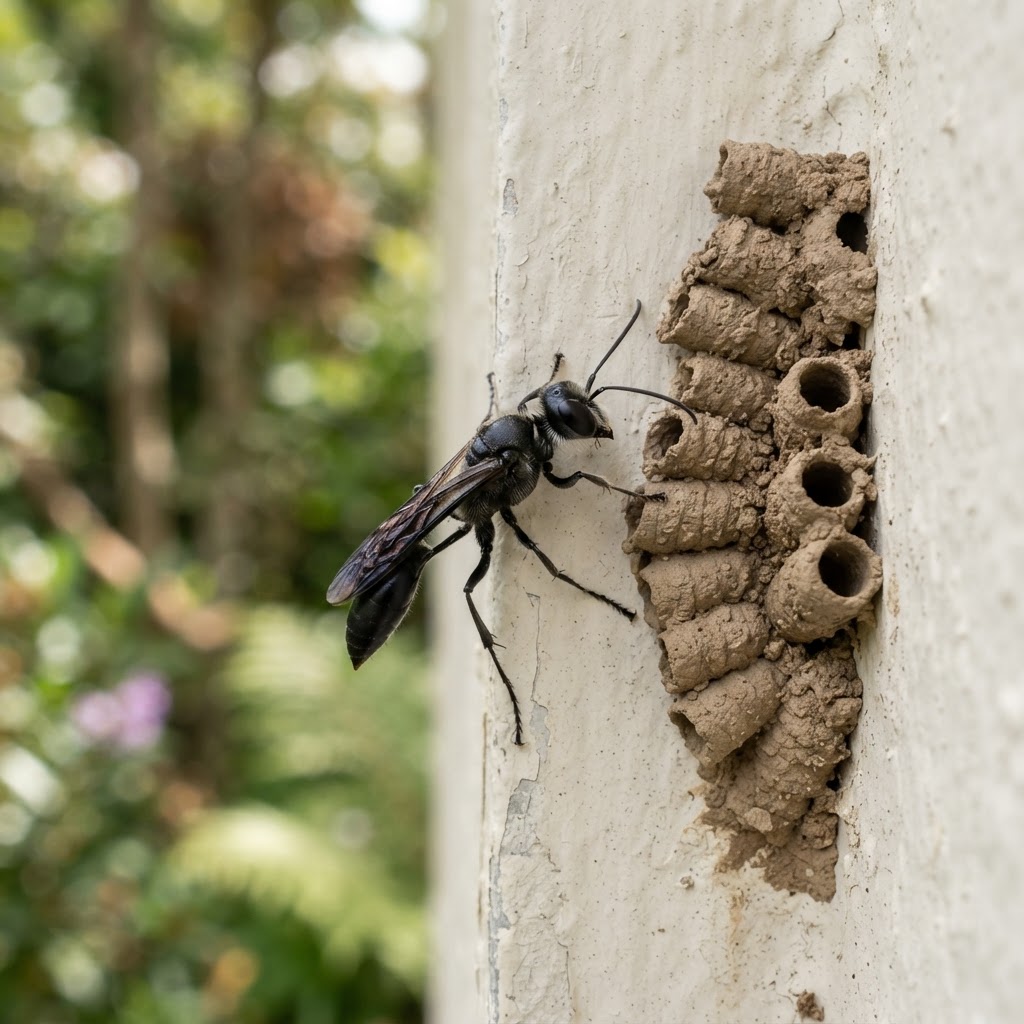
Mud Dauber Wasp
Sceliphron laetum
A solitary, mostly harmless mud-builder that hunts spiders.
Yellow Wasp
Vespula germanica & Vespula vulgaris
The bright yellow-and-black wasps every Kiwi calls a "yellow wasp".
Paper Wasp
Polistes spp.
The slender, long-legged wasps building open combs under NZ eaves.
Wasp Nest
Vespula & Polistes nests
How to find, identify and safely deal with a wasp nest in New Zealand.
Other pests we solve
Explore more NZ-specific pest guides and the bee-safe, reusable traps behind each one.
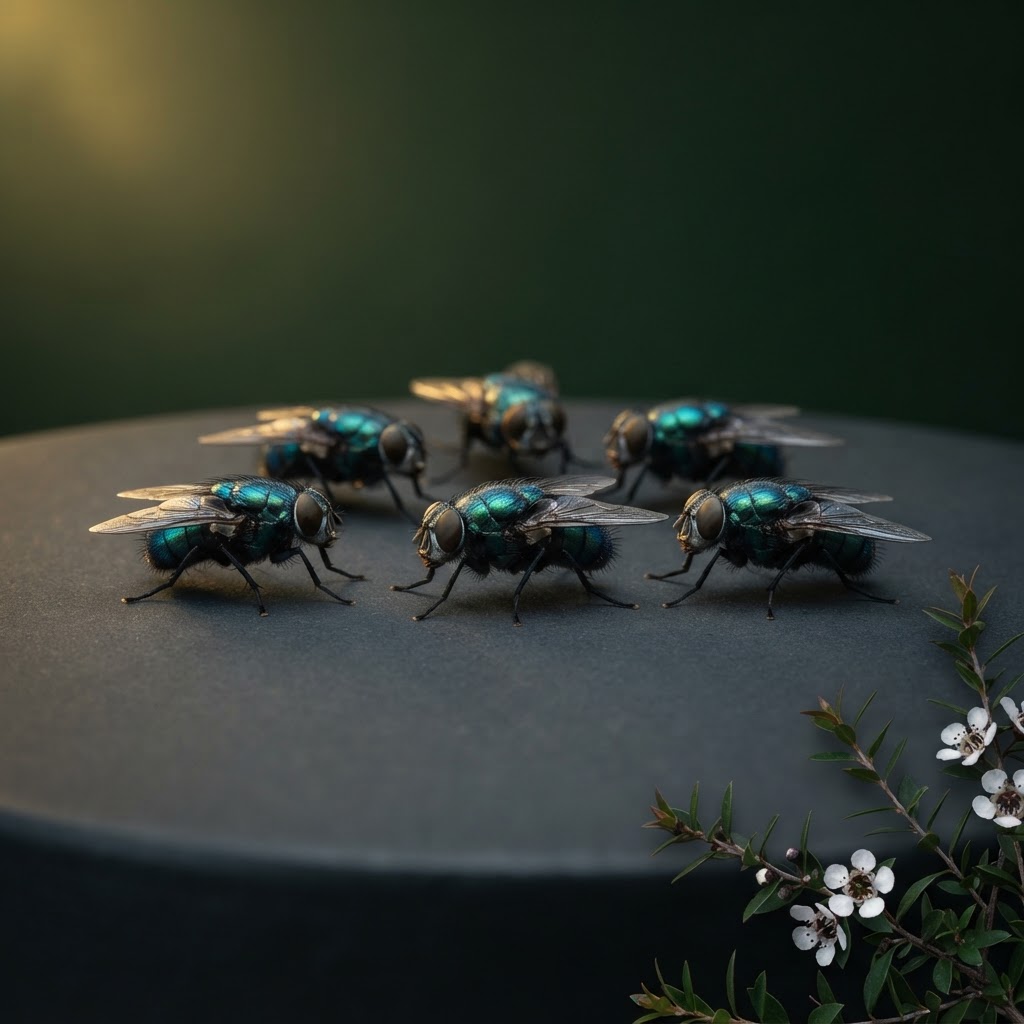
Flies
NZ-made, UV-tough traps that knock down flies without sprays.
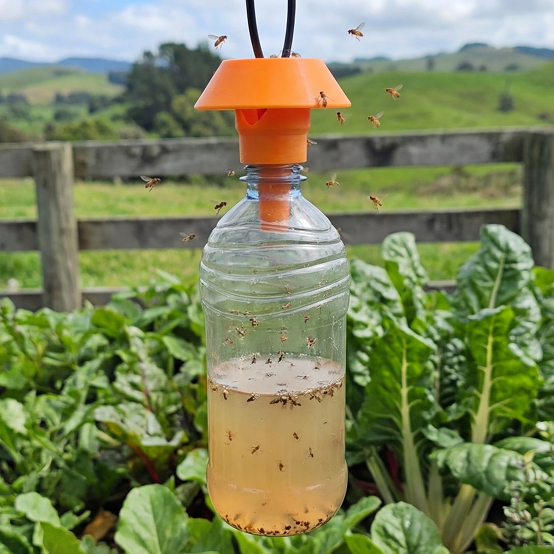
Fruit Flies
Reusable fruit fly traps using everyday pantry bait — no chemicals.
Fungus Gnats
Tiny black flies around your houseplants — beat them for good.
Mosquitoes
Reduce backyard biting with simple, chemical-free traps.
Moths
Pantry and clothes moth traps — stop the flutter, find the source.