Blow Flies in New Zealand: How to Get Rid of Them for Good
Blow flies are the big metallic buzzers that appear the moment something decays nearby. Here's how to identify, prevent and get rid of blowflies in your New Zealand home — chemical-free.
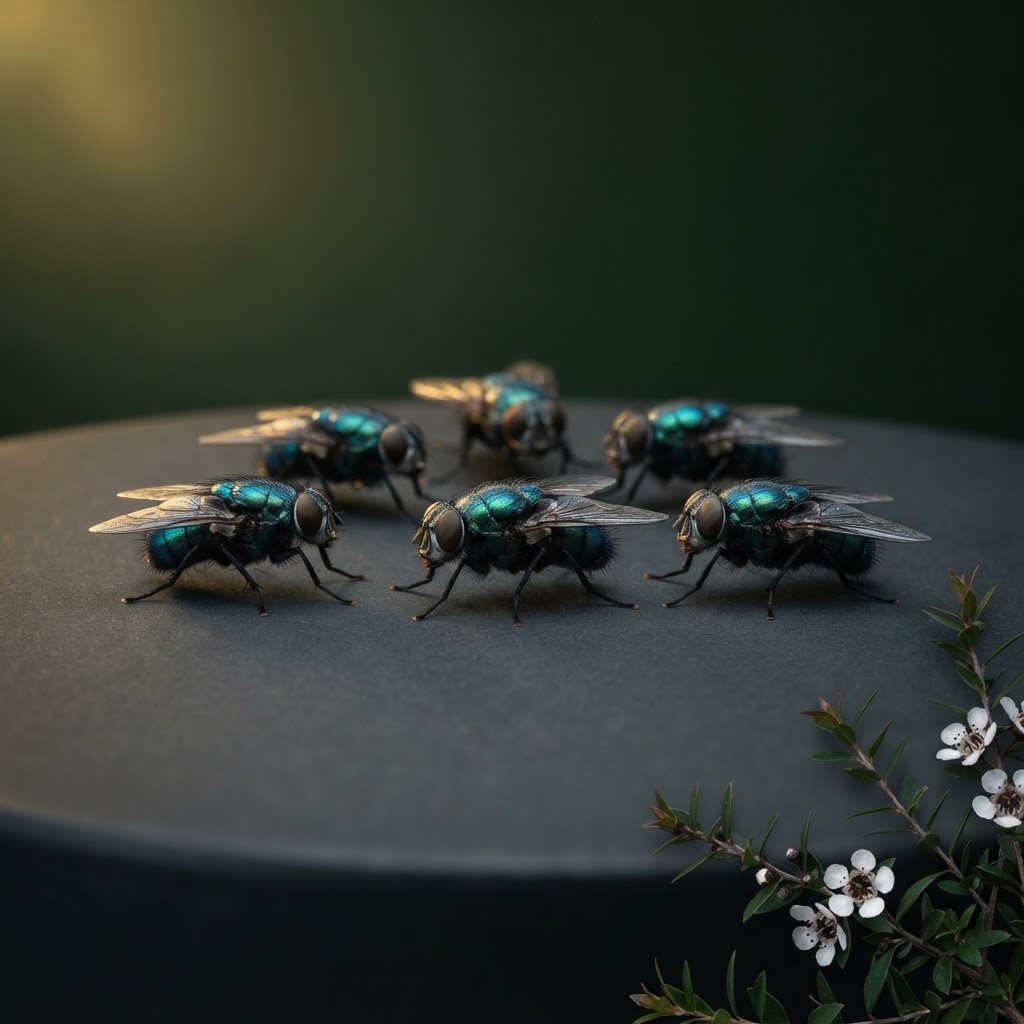
Blow flies are the big, buzzing, metallic-coloured flies that seem to appear from nowhere the moment there's a hint of something decaying nearby. In a New Zealand summer they go from occasional nuisance to full-on invasion in a matter of hours. Here's how to tell them apart from other flies, why they keep coming back, and how to shut them down without reaching for the chemical fogger.
What are blow flies?
Blow flies (family Calliphoridae) are larger than the common house fly — usually 8–12mm long — with a chunky, rounded body and a distinctly metallic sheen. In Aotearoa you'll mostly meet two groups: greenbottles (coppery-green) and bluebottles (deep blue-black). Their name comes from the old term "blown" meat, meaning meat that had been colonised by their larvae.
That's the key thing to understand: blow flies are nature's cleanup crew. The female lays her eggs on decaying animal matter — dead rodents in the ceiling, a bag of fish frames in the bin, a forgotten pet-food bowl, even a dead bird under the deck. The eggs hatch into larvae (maggots) within a day, feed for a few days, then pupate and emerge as adults. In warm weather the whole cycle can take as little as 10 days.
How to identify a blow fly problem
- Size & colour: bigger than a house fly, loud buzzer, metallic green or blue sheen.
- Sudden appearance: a dozen or more indoors within hours usually means a breeding source close by.
- Maggots: finding larvae in the bin, on the kitchen floor, or near a ceiling hatch is a dead giveaway.
- Sound: a heavy, droning buzz against windows — louder than a house fly.
Why blow flies are a problem
Beyond the obvious "ugh" factor, blow flies are a genuine hygiene risk. Because they breed on carrion and filth and then land on your food, cutlery and surfaces, they can carry bacteria including Salmonella and E. coli. In commercial kitchens and food-prep areas they're a real compliance issue, not just a nuisance.
How to get rid of blow flies
1. Find and remove the source
This is the step most people skip — and it's the only one that actually works long-term. Check bins, the ceiling cavity, under the house, behind appliances, pet feeding areas, and any dead-animal source. Remove it, bag it, and clean the area. No trap in the world will outcompete a breeding source a metre away.
2. Trap the adults
Once the source is gone, trap the remaining adults before they lay more eggs. A reusable GotchaPest fly trap with a protein-based bait placed near the problem area (but away from your entertaining space) will pull them in fast. Our traps are UV-stable and built for NZ conditions, so you can run them outdoors all summer.
3. Deny them entry
Check fly screens for tears, keep doors and windows screened where possible, and use a door curtain on high-traffic entrances. Bins should have tight-fitting lids and go out weekly in summer.
Preventing blow flies coming back
- Keep wheelie bins clean — rinse them out fortnightly and never leave food waste sitting in summer heat.
- Manage pet waste daily; it's a top blow-fly breeding site.
- Don't leave meat, fish or bones in an open indoor bin.
- If you have chickens, manage the coop litter — damp, soiled bedding is prime breeding ground.
When to get extra help
A handful of blow flies is normal in NZ summer. But if you're clearing dozens a day after removing obvious sources, you may have something in the wall or ceiling cavity. A pest controller can locate and remove it. For everyday seasonal blow-fly pressure, a well-placed reusable trap plus better bin hygiene is usually all you need.
Trap smarter with GotchaPest
UV-tough, NZ-made fly traps — reusable, chemical-free and paired with the world's first AI Trap Buddy.
Shop fly traps Ask Buzzy 🐝
Not sure which pest you're dealing with?
Snap a photo and — our NZ-made AI pest assistant will identify it from our verified species database and recommend the right trap. Free, honest, and grounded in real Kiwi catch data.
GotchaPest Team
NZ-made pest control, designed in Aotearoa for Kiwi conditions. Our traps are UV-tough, reusable and bee-safe — paired with the world's first AI Trap Buddy and the GotchaPest community pest tracker. Available at Mitre 10, Kings Plant Barn and right here online.
Trap smarter with GotchaPest
UV-tough, NZ-made traps paired with the app and Buzzy — the first ever AI Trap Buddy.