How to Spot Paper Wasp Nests in September Before They Become a Problem
September is your best window to find and deal with embryonic paper wasp nests before solitary queens build full colonies under your eaves.
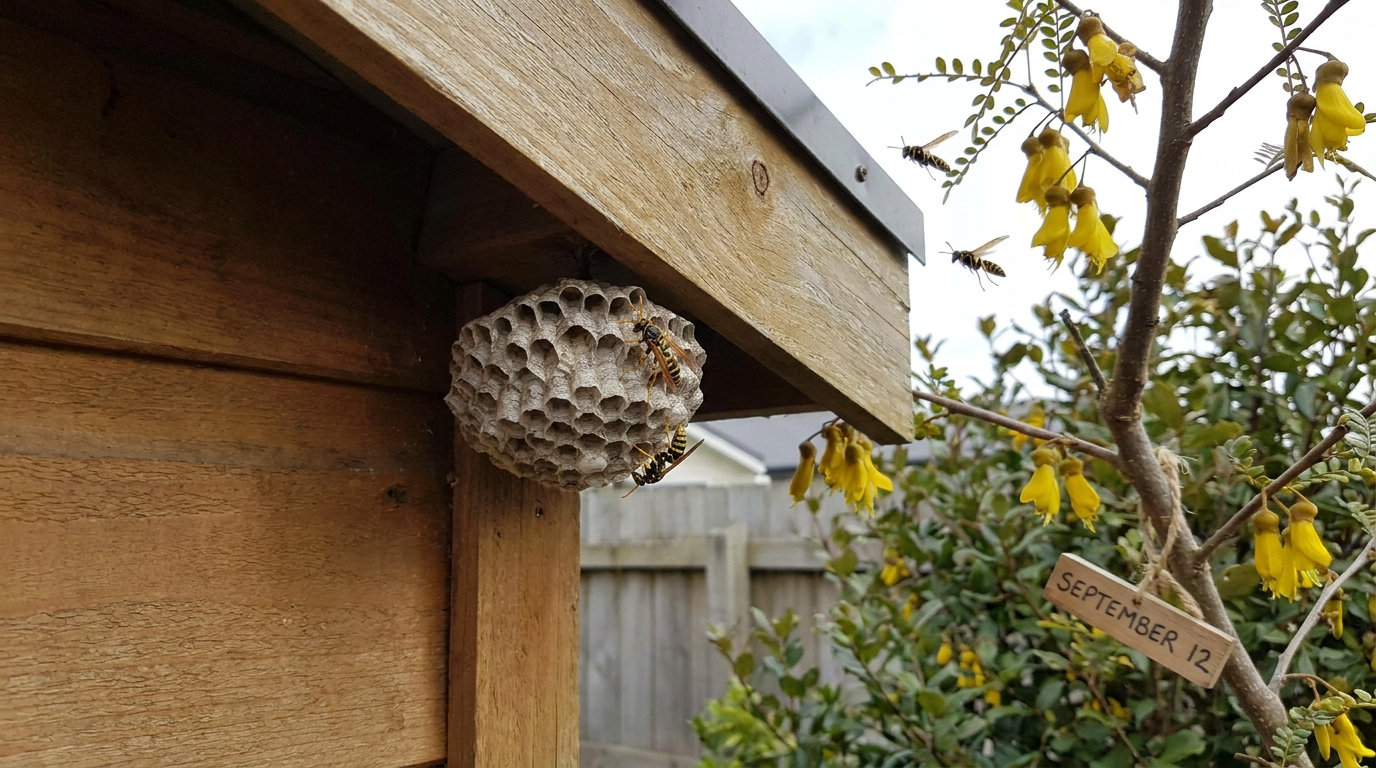
A paper wasp queen working alone is about as manageable as they get. Find her nest in September — when it's still the size of a 50-cent coin — and you've saved yourself a painful summer. Wait until January and you're looking at dozens of defensive workers and a nest the size of your fist.
What you're actually looking for
Paper wasp nests look like an upside-down umbrella made of grey papery pulp. In early spring they're tiny — sometimes just a small stalk with three or four open hexagonal cells hanging from it. No papery outer covering like a common wasp nest. Just an exposed comb.
The queen builds these entirely alone in September and October, before the first workers hatch and start helping her. That's what makes this window so useful. One queen, one small nest, far less aggression than you'd face in midsummer.
Where to check on your property
Do a slow walk around the outside of your house on a warm September morning. You're looking under horizontal surfaces where there's some shelter from rain and wind. Key spots include:
- Eaves and soffits — especially in corners and where fascia boards meet the soffit
- Shed rooflines and rafters — inside and out
- Fence rails and gate tops — flat-topped timber rails are a favourite
- Pergolas and deck beams — any horizontal timber with an underside
- Letterbox roofs and garden furniture — anywhere with a protected overhang
Bring a torch. Early nests are easy to miss because they blend into weathered timber. Look for the queen herself — she'll be sitting on the nest during the day if it's warm enough.
Not sure which pest you're dealing with? Ask Buzzy — our AI pest assistant will identify it from a photo.
What to do when you find one
A solitary queen on an embryonic nest is low risk, but she will sting if you handle the nest directly. At this stage you have a few options depending on your comfort level.
If the nest is somewhere you or your family regularly pass — over a doorway, near a kids' play area, close to the washing line — removal is reasonable. Do it at dusk or dawn when the queen is less active. Use a stick or a long-handled tool to knock it down, then move well away. She'll usually relocate rather than rebuild in the exact same spot.
If the nest is up high in an unused corner of the shed and unlikely to cause problems, you might choose to leave it. Paper wasps are predatory insects that catch caterpillars and other garden pests to feed their larvae. There's a genuine case for tolerating them at a distance.
Where paper wasps are a recurring problem on your property, trapping is the most effective long-term approach. Our reusable wasp trap uses a bee-safe lure system so you're targeting wasps without catching pollinators. Set traps near known nesting areas in September before colony numbers build. See our bee-safe wasp trap guide for the right lure and placement tips for this time of year.
Set one up now in September and intercept paper wasps before their colonies expand.
Shop wasp trapsAsk BuzzyTrack what you're seeing with the GotchaPest app
If you're noticing more paper wasp activity than usual in your area, it's worth logging it on the GotchaPest pest tracker. You can see what other Kiwis are reporting nearby, which helps you gauge whether this is a local spike or just your property. It's also handy for keeping track of where nests have appeared on your section year after year — paper wasps often return to the same structures each spring.
One thing you can do today: Walk your eaves and shed roofline this morning with a torch and spend five minutes checking the spots listed above. Early September is genuinely the easiest time to get ahead of this. The nests are small, the queens are solitary, and the risk is low. Ten minutes now can save a lot of grief in December.

Not sure which pest you're dealing with?
Snap a photo and — our NZ-made AI pest assistant will identify it from our verified species database and recommend the right trap. Free, honest, and grounded in real Kiwi catch data.
GotchaPest Team
NZ-made pest control, designed in Aotearoa for Kiwi conditions. Our traps are UV-tough, reusable and bee-safe — paired with the world's first AI Trap Buddy and the GotchaPest community pest tracker. Available at Mitre 10, Kings Plant Barn and right here online.
Trap smarter with GotchaPest
UV-tough, NZ-made traps paired with the app and Buzzy — the first ever AI Trap Buddy.