
Cluster Flies in New Zealand: Why They Swarm in Autumn
Hundreds of slow, dull-grey flies along your autumn windows? You've got cluster flies. They're not a hygiene problem — here's what actually works to get rid of them.
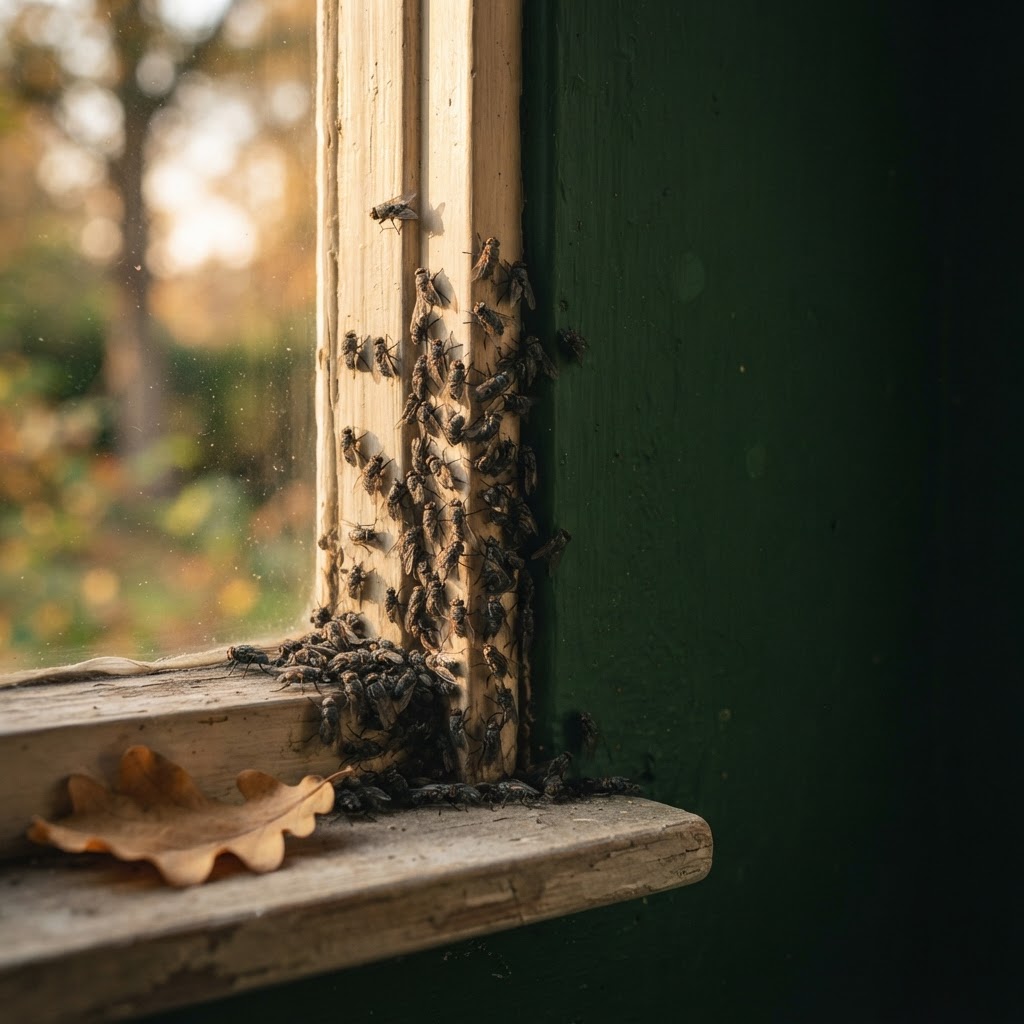
Cluster flies are the quiet achievers of the fly world — easy to ignore until, one crisp autumn morning, you find hundreds of them lined up along your north-facing windows. They don't breed in your home and they don't feed on your food, but they're one of the most stubborn seasonal fly problems in New Zealand, especially in South Island and central North Island homes.
What are cluster flies?
Cluster flies (Pollenia species) look a lot like house flies but with a few telling differences: they're slightly larger, a dull dark-grey rather than glossy, and they move sluggishly — especially in winter when they're cold. Crush one and you'll notice a distinctive sweet, "biscuity" smell.
Unlike house flies and blow flies, cluster flies aren't drawn to filth. Their larvae are parasitoids of earthworms in the soil. The adults feed on flowers and nectar. So a cluster fly problem isn't a hygiene problem — it's a shelter problem.
Why they suddenly appear in autumn
As temperatures drop in autumn, cluster flies look for a warm, dry place to overwinter. They squeeze into wall cavities, roof spaces, gaps around windows and ceilings, often on the sunniest (north-facing) side of the house. They cluster together — sometimes in their thousands — and go dormant. On warm winter days, or when the sun hits that wall, some wake up and find their way inside, buzzing at windows trying to get out.
How to tell cluster flies from house flies
- Seasonality: a sudden surge in late autumn/winter, not mid-summer, is the classic cluster fly signature.
- Sluggish movement: they're slow, especially when cool.
- Clustering: dozens grouped along window frames, in ceiling corners and at the top of walls.
- No filth attraction: they ignore your bin and your food — they just want the sun.
- Smell: a sweet, grainy odour when disturbed.
How to deal with cluster flies
Seal the entry points
The single most effective long-term fix is exclusion. In late summer, before they move in, check and seal gaps around eaves, roof-line, vents, window frames and pipe penetrations with silicone sealant or expanding foam. Even small gaps are enough for them — be thorough.
Don't rely on baited traps
Because cluster flies don't feed on protein or sugar baits while overwintering, standard fly traps catch very few of them. They're the one fly where trapping is genuinely less useful than exclusion and physical removal.
Remove the ones already inside
A vacuum is your best friend. Vacuum clusters from windows and ceilings and dispose of the bag or empty the canister outside immediately. A fly swatter works for stragglers. Avoid spraying large numbers indoors — it leaves residue and you'll still be sweeping up bodies.
Consider the roof space
If the same wall or ceiling is the recurring entry point year after year, the void behind it is likely full of dormant flies. A pest controller can treat the cavity; DIY foggers for roof spaces exist but follow the label carefully.
Do cluster flies come back every year?
Often, yes — the same house can be affected annually because the local earthworm population (and thus the cluster fly population) is established nearby, and the house offers the same warm shelter. Sealing entry points is the only real fix; once you've done it well, subsequent seasons are dramatically lighter.
Are cluster flies harmful?
Not in the way blow flies and house flies are. They don't carry the same disease risk because they don't feed on filth, and they don't breed indoors. They're a nuisance and an aesthetic problem, not a health hazard — which is some comfort when you're vacuuming your two-hundredth one off the lounge window.
Got a fly you can't identify?
Snap a photo and ask Buzzy — our AI Trap Buddy tells you which fly you're dealing with and the best fix.
Ask Buzzy 🐝 More fly guides
Not sure which pest you're dealing with?
Snap a photo and — our NZ-made AI pest assistant will identify it from our verified species database and recommend the right trap. Free, honest, and grounded in real Kiwi catch data.
GotchaPest Team
NZ-made pest control, designed in Aotearoa for Kiwi conditions. Our traps are UV-tough, reusable and bee-safe — paired with the world's first AI Trap Buddy and the GotchaPest community pest tracker. Available at Mitre 10, Kings Plant Barn and right here online.
Trap smarter with GotchaPest
UV-tough, NZ-made traps paired with the app and Buzzy — the first ever AI Trap Buddy.