Fungus Gnats in New Zealand: The Houseplant Fly That's Not a Fruit Fly
Tiny black flies rising from your houseplant soil are fungus gnats — not fruit flies. Here's how to tell them apart, why they appear, and how to break the cycle for good.
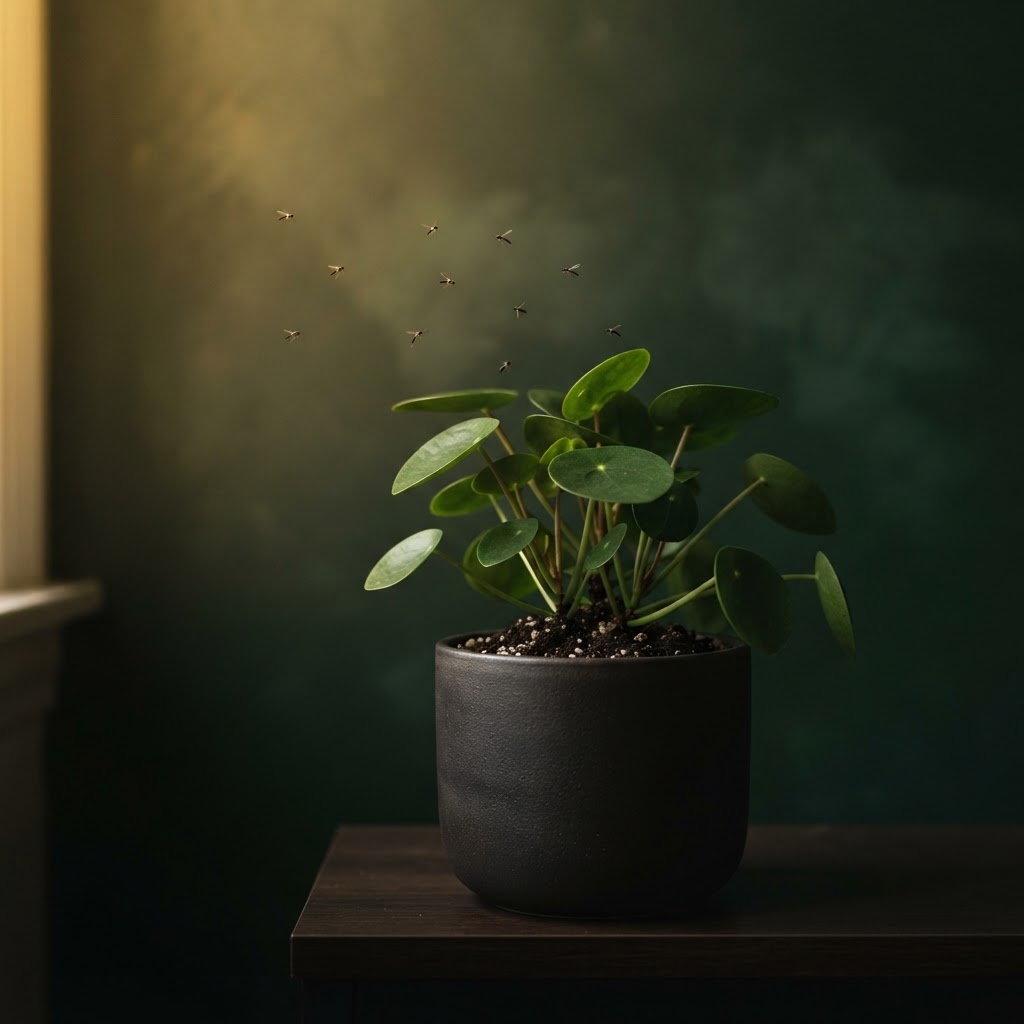
You water your houseplants, give them the right light, and then one day you notice a cloud of tiny black insects rising out of the pot every time you move the plant. Fungus gnats are one of the most common — and most misdiagnosed — indoor pest problems in New Zealand. The good news: once you understand them, they're straightforward to break.
What are fungus gnats?
Fungus gnats (also called fungus flies or sciarid flies) are tiny — 2–4mm — dark, mosquito-like flies. You'll see them crawling on the soil surface, running across windows near plants, or hovering just above the pot. They're weak fliers, so they tend to stay close to their breeding ground.
The adults are mostly a nuisance. The real problem is the larvae: translucent white maggots with black heads, living in the top few centimetres of moist potting mix, feeding on fungi and decomposing organic matter — and, when populations are high, on plant roots.
How to know it's fungus gnats and not fruit flies
People constantly confuse the two. The tell: where they hang out. Fruit flies congregate around fruit, the kitchen bench, the compost and the booze bottle. Fungus gnats congregate around soil — your pot plants, seedling trays and greenhouse. If the cloud rises from the pot when you tap it, it's fungus gnats.
Why fungus gnats appear
The single biggest driver is consistently wet potting mix. Fungus gnats lay eggs in damp, fungus-rich soil. Overwatering, pots without drainage, heavy peat-based mix, and indoor plants sitting in saucers of standing water are all open invitations. They're far more common in winter when soil stays wet longer and indoor humidity is high.
Are they damaging your plants?
A few adults are harmless. Heavy infestations can damage seedlings and root cuttings, and stressed or overwatered plants suffer most — the larvae can feed on roots and worsen root-rot conditions. Mature, healthy houseplants usually tolerate fungus gnats fine, but they're still unpleasant to live with.
How to get rid of fungus gnats
1. Dry the soil out
The cornerstone. Let the top 3–5cm of potting mix dry between waterings — fungus gnats can't complete their cycle in dry surface soil. Bottom-watering (sitting the pot in a tray for an hour) helps keep the surface dry while the root zone stays moist.
2. Trap the adults
Yellow sticky traps pushed into the soil catch egg-laying adults and break the cycle fast. They're cheap, chemical-free and very effective for indoor plants. Our reusable indoor fruit fly and gnat traps are also a good fit for catching adults near plant collections.
3. Treat the larvae if needed
For heavy infestations, a soil drench of Bacillus thuringiensis israelensis (Bti) — the same active used in mosquito dunks — kills larvae and is safe for plants and people. A 1:1 mix of hydrogen peroxide (3%) and water as a watering solution also knocks back larvae without harming most plants. Always check your plant's tolerance first.
4. Cover the surface
A layer of coarse sand, fine gravel or diatomaceous earth on the soil surface stops adults laying and larvae emerging. An inch of dry top-dressing is genuinely effective for pots you can't let dry out.
Preventing fungus gnats coming back
- Repot in a free-draining mix; add perlite or pumice to heavy peat blends.
- Never let pots sit in standing water in their saucers.
- Quarantine new plants for a couple of weeks before adding them to your collection.
- Use yellow sticky traps as an early-warning system — you'll catch the first arrivals before they multiply.
Not sure which tiny fly you've got?
Tell Buzzy where you're seeing them and get an instant ID plus the right fix.
Ask Buzzy 🐝 Shop indoor traps
Not sure which pest you're dealing with?
Snap a photo and — our NZ-made AI pest assistant will identify it from our verified species database and recommend the right trap. Free, honest, and grounded in real Kiwi catch data.
GotchaPest Team
NZ-made pest control, designed in Aotearoa for Kiwi conditions. Our traps are UV-tough, reusable and bee-safe — paired with the world's first AI Trap Buddy and the GotchaPest community pest tracker. Available at Mitre 10, Kings Plant Barn and right here online.
Trap smarter with GotchaPest
UV-tough, NZ-made traps paired with the app and Buzzy — the first ever AI Trap Buddy.