Vinegar Fly
The tiny red-eyed kitchen pest Kiwis call a "fruit fly".
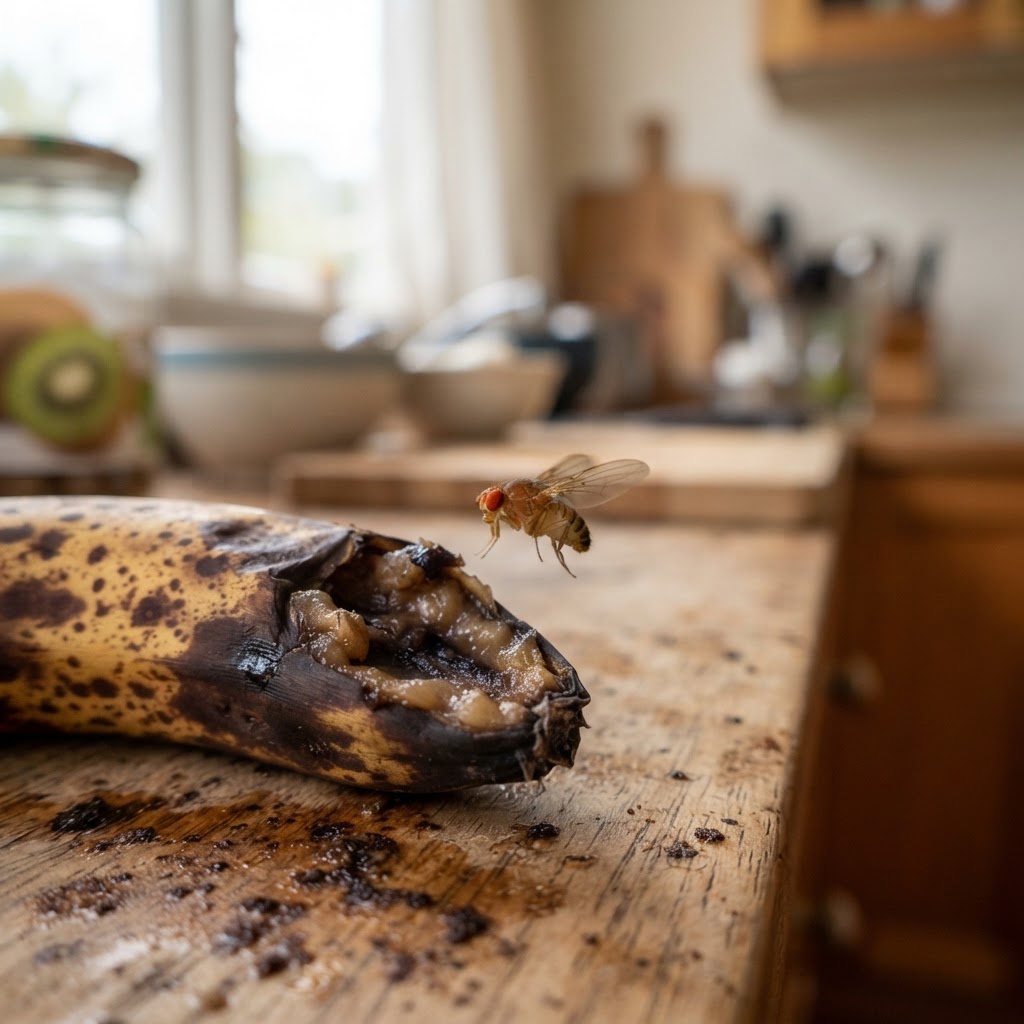
The little flies that swarm your fruit bowl in a New Zealand kitchen are almost always vinegar flies — also called fermentation flies — not true fruit flies. At just 3 mm with red eyes, they are tiny, but a single female lays up to 400 eggs and the whole cycle from egg to adult can take as little as a week in a warm kitchen.
Indoors they are active all year, which is why a reusable trap plus a few good habits is the real fix. They do not bite or sting, but they spread bacteria between rotting matter and your food and prep surfaces.
 Ask Buzzy

NZ-made, chemical-free fruit fly control for gardens, orchards and commercial growing.

NZ-made, chemical-free indoor fruit fly catcher using everyday household bait.
How to identify a vinegar fly
Tiny size and red eyes are the giveaway. They hover in tight circles around ripe produce, bins and anything fermenting — quite different from the steady wandering of a house fly.
- •Tan-brown body, 3–4 mm long, with distinctive red eyes.
- •Slow, hovering flight close to fruit, drains and bottles.
- •Larvae are tiny white maggots inside overripe fruit or damp waste.
- •Pupae look like brownish, rice-grain droppings on dry surfaces near the source.
Are vinegar flies harmful?
They do not bite or sting, but they are not harmless. They land on rotting matter and waste, then transfer bacteria to your food and surfaces — a real food-safety risk in any kitchen or café. In the garden they do not damage healthy fruit; they only follow what is already overripe.
Life cycle & fun facts
Eggs are laid just beneath the skin of ripening fruit; maggots feed, then crawl to a dry spot to pupate. The whole cycle can be 7–9 days in a warm kitchen, so a few flies can explode in a single week. Adults live about a month.
Fun fact: Vinegar flies are one of the most studied animals on earth — they have helped scientists unlock how genes, sleep and even ageing work, and they share about 75% of the genes linked to human disease.
What vinegar flies feed on
Anything fermenting or sugary: overripe fruit and veg, juice, cider, wine, beer, vinegar and damp organic sludge in drains and bins. Find the fermenting source and you have found the breeding ground.
How to prevent vinegar flies
Remove the food and moisture they breed in, then trap the adults.
Remove the attraction
- ✓Cover fruit bowls or move ripe fruit to the fridge.
- ✓Take out the kitchen bin daily and keep the lid closed.
- ✓Toss anything overripe — do not let it sit.
- ✓Wipe up juice, wine and soft-drink spills immediately.
Block them out
- ✓Keep drains clean and flushed so no sludge builds up.
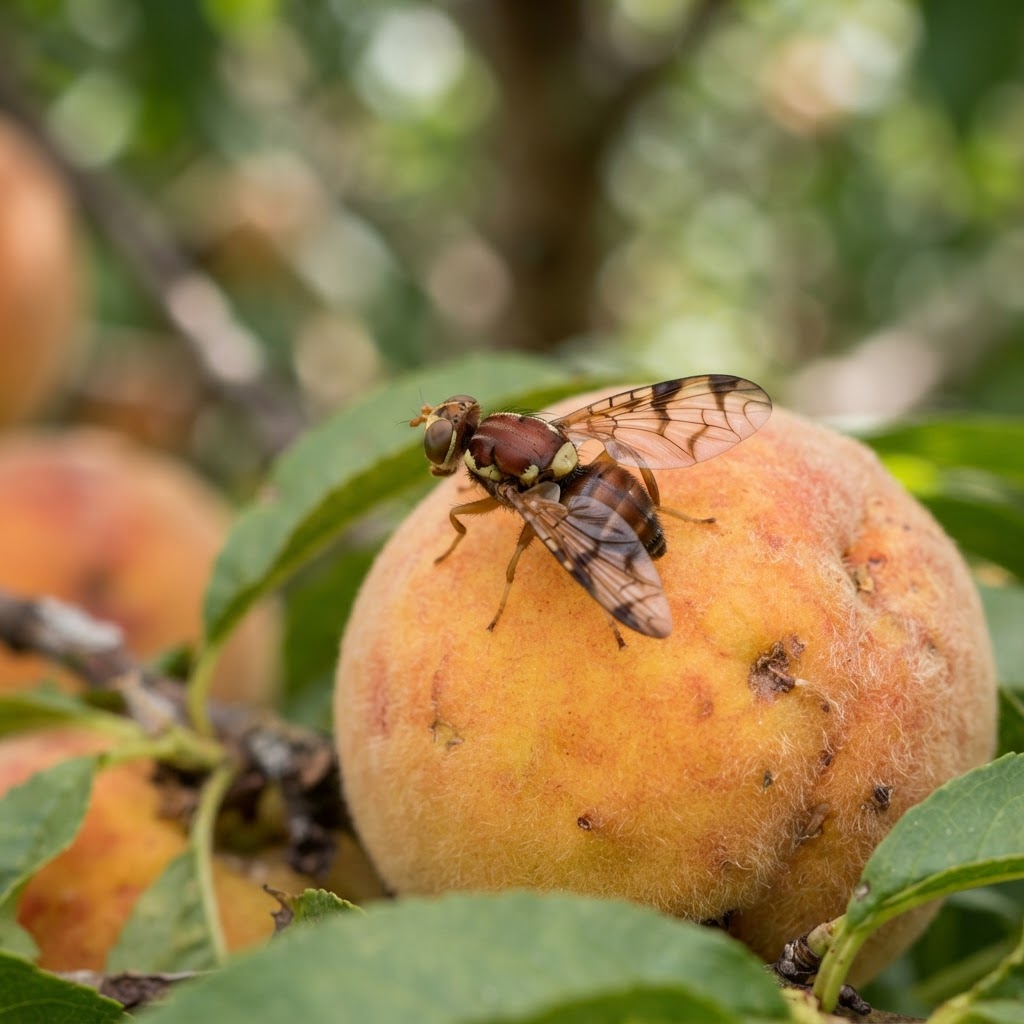
- ✓Check produce the day you buy it — one infested peach starts an outbreak.
- ✓Place a reusable GotchaPest fruit fly trap near the fruit bowl or bin.
- ✓Run the dishwasher and empty sink strainers regularly.
Frequently asked questions
Trap smarter with GotchaPest
UV-tough, NZ-made, reusable traps — paired with the app and Buzzy, the world's first AI Trap Buddy.
Other pests we solve
Explore more NZ-specific pest guides and the bee-safe, reusable traps behind each one.
Flies
NZ-made, UV-tough traps that knock down flies without sprays.
Wasps
Bee-safe wasp traps that lure wasps, not our precious pollinators.
Fungus Gnats
Tiny black flies around your houseplants — beat them for good.
Mosquitoes
Reduce backyard biting with simple, chemical-free traps.
Moths
Pantry and clothes moth traps — stop the flutter, find the source.