Paper Wasps in New Zealand: How to Identify and Handle Them
Paper wasps build those delicate open-comb nests under your eaves. They're less aggressive than German wasps — but they sting. Here's how to identify them and handle nests safely.
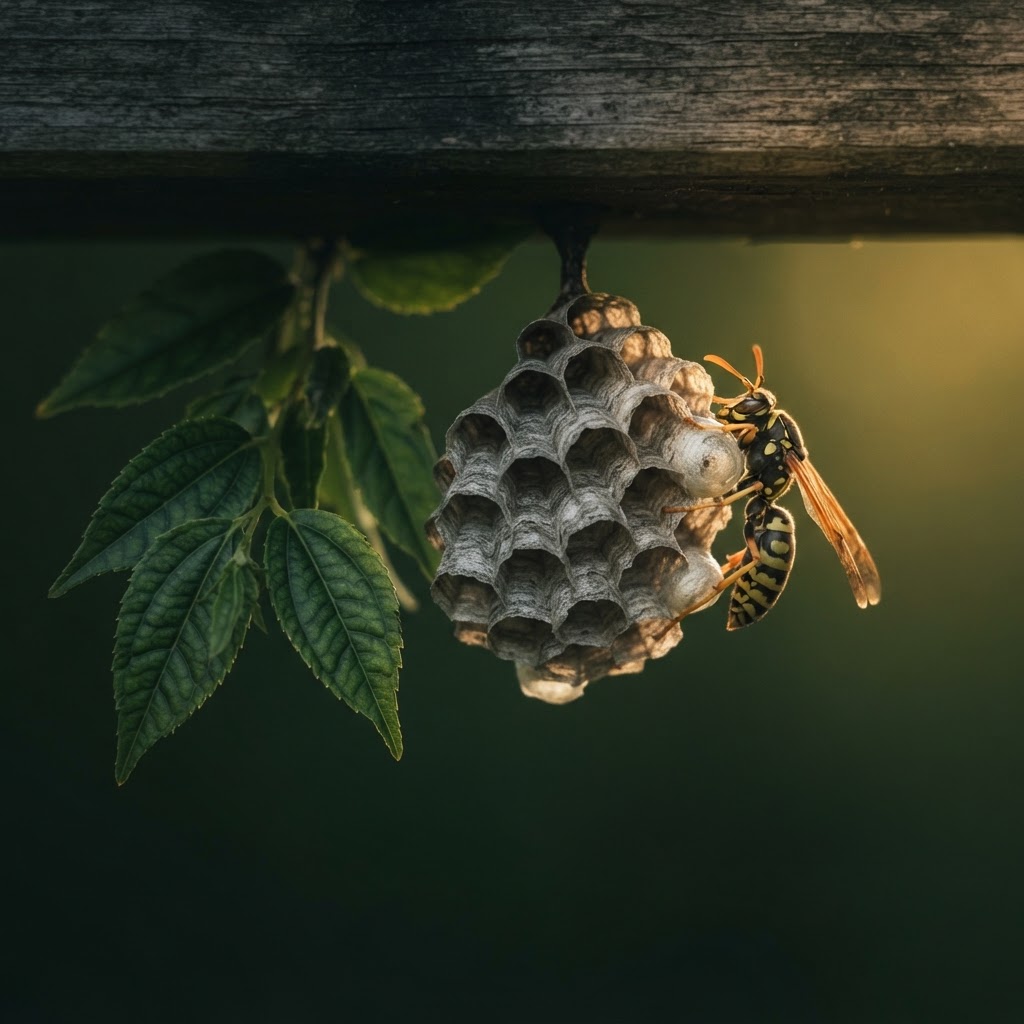
Paper wasps are the slender, long-legged, narrow-waisted wasps you see gliding around the garden and hanging their delicate grey, umbrella-like nests under eaves, fence rails and shrub branches. They're less aggressive than German and common wasps — but they sting readily when you accidentally disturb a nest, and they're a real presence in NZ backyards from spring through autumn.
Which paper wasps live in New Zealand?
Three introduced paper wasp species are established here: the Australian paper wasp, the Asian paper wasp, and the European paper wasp. All are social wasps that build open-comb nests from chewed plant fibre and saliva — that papery "hexagons underneath a leaf" structure. Unlike German and common wasps, paper wasps don't enclose their comb in a paper envelope, so the nest is always visible.
How to identify paper wasps
- Body: slender, narrow waist, longer legs that dangle in flight.
- Colour: brown-and-yellow banding, often more slender and more orange-toned than German/common wasps.
- Flight: slow, gliding, legs trailing — distinctly different from the stocky, fast German wasp.
- Nest: small, open, grey papery comb — usually 20–80 cells — hanging from a stalk under eaves, branches or fences.
Are paper wasps beneficial?
Partly, yes. Paper wasps are predators of caterpillars — including garden pests — so they do useful work in the veggie patch. The trade-off is the sting risk near walkways, decks and play areas. The sensible approach: leave nests that are well away from human traffic, and remove the ones above doorways, seating and children's play zones.
Sting risk and behaviour
Paper wasps defend the nest but don't generally chase. Most stings happen when someone brushes past or grabs a nest they didn't see — under a deck railing, inside a mailbox, on a hanging towel. The sting is sharp and painful, and like all wasp stings can cause a serious reaction in sensitive people. If you're stung in the mouth or throat, or have any breathing difficulty, call 111.
How to get rid of paper wasps
Nest removal
For small, accessible nests, removal at night or very early morning is safest — the wasps are on the comb and sluggish in the cool. Approach with a torch (red cellophane over the lens keeps them calm), wear long sleeves and gloves, and knock the comb into a sealed bag or jar. Discard or freeze it. Never remove a paper wasp nest by hitting it — vibration triggers defence.
Larger or hard-to-reach nests
High eaves, tall shrubs and roof-line nests are best left to a professional. Aerosol wasp sprays with a 2–3m jet can work for reachable nests, but follow the label and keep people and pets clear.
Don't rely on sweet-bait traps for nests
Sweet-bait wasp traps catch foraging German and common wasps well, but paper wasps are mainly protein foragers (caterpillars) and are far less attracted to sugar baits. Traps won't solve a paper wasp nest — nest removal is the fix.
Preventing paper wasps nesting
- In spring, check eaves, fence rails, shed corners and play equipment weekly — small starter nests are easy to knock down before wasps invest in them.
- Seal gaps in shed roofs and under eaves where combs are anchored.
- Keep an eye on shrubs near the house; paper wasps love building on manuka, coprosma and similar branch forks.
Paper wasps vs German and common wasps
It matters which one you've got. Paper wasps are usually a targeted nest-removal job; German and common wasps build huge enclosed nests and are aggressive, persistent and best handled with dedicated wasp strategy plus sweet-bait trapping. Not sure which is in your garden? Ask Buzzy — send a photo and our AI Trap Buddy will tell you.
Got German or common wasps too?
Sweet-bait GotchaPest wasp traps are built for those — UV-tough, reusable and NZ-made.
Shop wasp traps Ask Buzzy 🐝
Not sure which pest you're dealing with?
Snap a photo and — our NZ-made AI pest assistant will identify it from our verified species database and recommend the right trap. Free, honest, and grounded in real Kiwi catch data.
GotchaPest Team
NZ-made pest control, designed in Aotearoa for Kiwi conditions. Our traps are UV-tough, reusable and bee-safe — paired with the world's first AI Trap Buddy and the GotchaPest community pest tracker. Available at Mitre 10, Kings Plant Barn and right here online.
Trap smarter with GotchaPest
UV-tough, NZ-made traps paired with the app and Buzzy — the first ever AI Trap Buddy.