Wasps Indoors in New Zealand: Why They're There and What to Do
A wasp indoors can be a lost forager, an overwintering queen — or a sign of a nest in the wall. Here's how to tell which, and exactly what to do (and not do) about it.
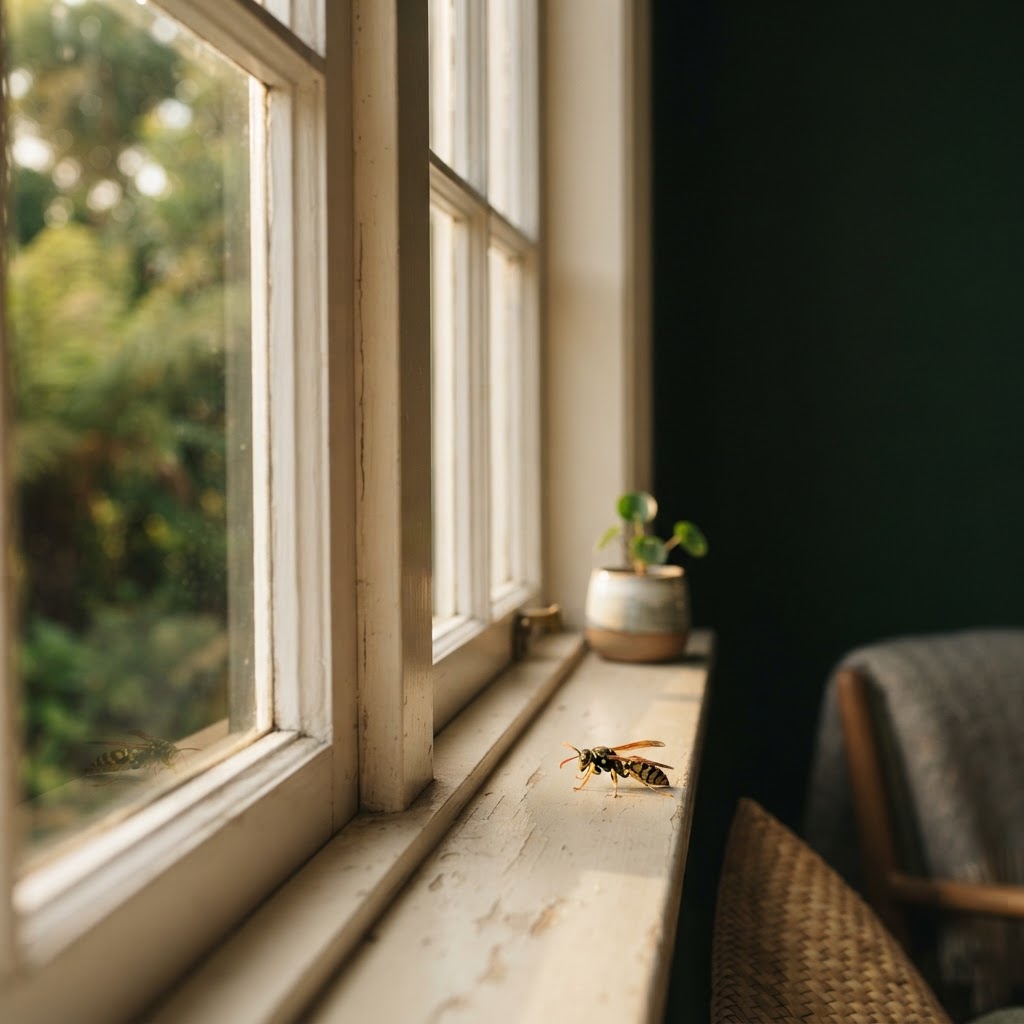
A wasp indoors in winter is almost always a queen looking for somewhere to overwinter. A wasp indoors in summer is usually a lost forager. A stream of wasps indoors every day, however, means a nest in the wall, roof or ceiling cavity — and that's a different problem entirely. Here's how to read the situation and respond.
The three scenarios
1. The lone forager (summer)
A single wasp that followed a smell in through an open door or window and can't find its way out. Open a window and let it leave, or trap it under a glass and slide a card under to carry it outside. No nest, no panic.
2. The overwintering queen (winter/early spring)
Fertilised queens find sheltered gaps in walls, roof spaces and stacked wood to hibernate, then emerge indoors on a warm day. They're large, slow and docile. Catch and release outside (away from the house) — they'll go find a new nest site. Seeing a few over winter is normal; seeing dozens suggests the house has good entry gaps worth sealing.
3. The steady stream (any season)
If wasps are appearing indoors every day, and especially if you can see them entering or leaving a single point on the exterior wall, roof line or eave, there's a nest in the cavity. This needs professional treatment — see below.
How wasps get inside
- Gaps around vents, extractor outlets and pipe penetrations.
- Cracks in cladding, under eaves or around window frames.
- Downlights and ceiling rose gaps (wasps in a ceiling cavity often drop through these).
- Open chimneys and unscreened vents.
Is there a nest in my wall or ceiling?
Signs of a cavity nest:
- Steady traffic: wasps repeatedly entering/leaving one exterior hole.
- Sound: a faint scratching or humming from the wall or ceiling on a quiet day — a large colony is audibly busy.
- Stains: a damp, brownish patch on plaster can appear as the nest moisture wicks through.
- Smell: a faint sweet/fermenting smell near the cavity.
Never plug the exterior hole to "trap" them — wasps will simply chew through plasterboard and emerge inside your home. Treat first, then seal.
What to do
For a single wasp or queen
Catch-and-release. A glass-and-card works; a purpose-built insect catcher is easier. Release queens well away from the house.
For indoor protection
Keep fly screens on windows and doors in good repair. A reusable indoor trap near the kitchen or dining area catches stray foragers before they become a hassle, especially in late summer when wasps go for sugar.
For a suspected cavity nest
Call a professional. They'll confirm the nest, treat it safely (usually with insecticide dust or foam injected into the cavity), and advise on sealing the entry afterwards so it doesn't recur. Trying to treat a wall or ceiling nest yourself is risky — German and common wasps defend aggressively and a wrong move can send dozens indoors.
Preventing wasps coming indoors
- Seal gaps around vents, pipes and eaves each spring before wasps start nest-hunting.
- Fine mesh over extractor and sub-floor vents.
- Keep outdoor food and drink covered in late summer — fewer foragers around the house means fewer that blunder indoors.
- Run outdoor wasp traps from spring to reduce overall numbers on your section.
Wasp in the house and not sure why?
Tell Buzzy how many, how often, and the season — get an instant read on whether it's a nest.
Ask Buzzy 🐝 Shop wasp traps
Not sure which pest you're dealing with?
Snap a photo and — our NZ-made AI pest assistant will identify it from our verified species database and recommend the right trap. Free, honest, and grounded in real Kiwi catch data.
GotchaPest Team
NZ-made pest control, designed in Aotearoa for Kiwi conditions. Our traps are UV-tough, reusable and bee-safe — paired with the world's first AI Trap Buddy and the GotchaPest community pest tracker. Available at Mitre 10, Kings Plant Barn and right here online.
Trap smarter with GotchaPest
UV-tough, NZ-made traps paired with the app and Buzzy — the first ever AI Trap Buddy.