Horse Fly Control for New Zealand Equestrians & Stables
Horse flies, stable flies and wasps are a welfare and comfort issue for NZ horses. Here's how to protect your horses and cut the fly load around the stable — chemical-free.
Why horse flies matter for New Zealand horses
For most Kiwi homes a fly is just a nuisance. For a horse owner it's a welfare and performance issue. Biting horse flies and stable flies cut the skin and drink blood, sending a horse into a stamping, tail-swishing panic that can lead to injury. House flies and blow flies swarm feed, water and manure, spreading bacteria between muck and your horse's eyes, mouth and wounds. And German and common wasps in the shelter belt are a real danger to riders, grooms and farriers working the yards.
The good news is that almost all of the fly load around a New Zealand stable can be cut with chemical-free traps and good yard management — and the small number of biting flies that traps won't catch can be managed with the right gear and timing.
Know your fly: horse fly, stable fly, house fly
Not every fly around a horse is a horse fly. Knowing which you've got changes how you deal with it.
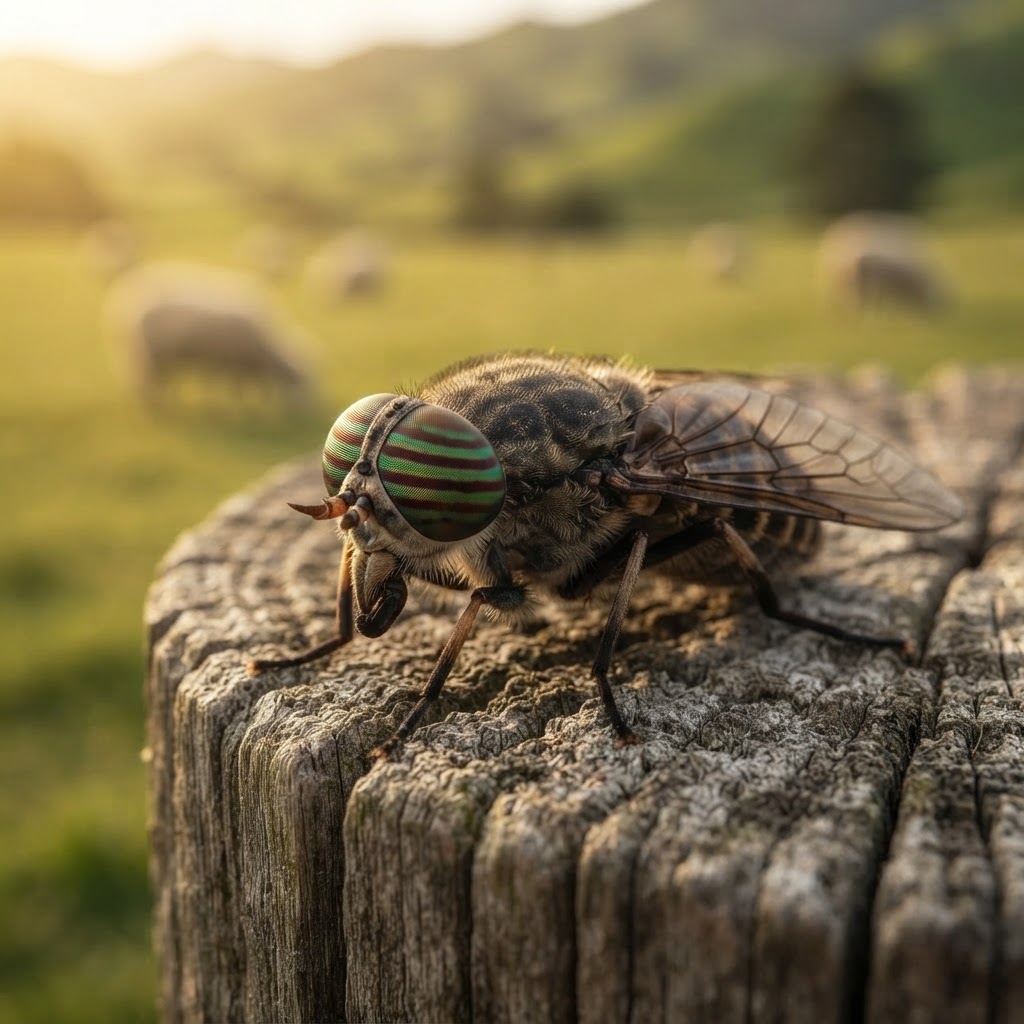
- Horse flies (Tabanidae) — large, stout flies with big striped eyes. Only the females bite, cutting the skin to lap blood. They hunt by movement, warmth and carbon dioxide, and a single fly can chase a horse for hundreds of metres. They are not reliably caught by bait traps — avoidance and protection are the answer.
- Stable flies (Stomoxys calcitrans) — look like a house fly but with a needle-like proboscis that pokes through a horse's legs and belly for a blood meal. They breed in wet, soiled bedding and spilled feed, so muck and feed management is the real control.
- House flies and blow flies — the non-biting majority around feed, water and the muck heap. These are exactly what reusable GotchaPest fly traps are built to catch, baited with simple pantry bait and emptied and reused season after season.
Where and when horse flies strike
Horse flies are most active on warm, still, sunny days, and they favour damp margins — the edges of wetlands, lakes and slow streams, and the sheltered side of paddocks near scrub. They struggle in wind, so breezy, open paddock edges give your horses a natural break. Peak season in New Zealand runs from late spring through to early autumn, with the worst biting on humid, still days.
Protecting your horses from biting flies
Because biting flies are drawn to movement, dark shapes, warmth and carbon dioxide, protection is about breaking that link:
- Fly rugs and masks — a well-fitted fly rug, mask and ear bonnet block the bites that distress a horse most, especially for thin-skinned or sensitive breeds.
- Light-coloured gear — horse flies favour dark, moving shapes, so lighter rugs and even light sheets make a horse a less obvious target.
- Stabling during peak hours — on hot, still days the worst biting is late morning to mid-afternoon. Bringing horses in during that window, with screens on stable doors and windows, sidesteps the peak.
- A repellent on exposed legs and belly — a horse-safe fly repellent on the lower legs and belly, reapplied through the day, takes the edge off when biting flies are bad.
Cut the fly load with stable management
The single biggest lever for a New Zealand stable is removing what the non-biting flies breed in. House and blow flies breed in manure, wet bedding and spilled feed, and a female can lay hundreds of eggs that hatch in a week in warm weather. A few habits break the cycle:
- Pick the muck heap and paddocks daily and keep the muck heap well away from stables and feed.
- Keep bedding dry — wet, soiled bedding is a stable fly nursery. Skip out daily and bank it separate from clean bedding.
- Clean up spilled feed and soak feed buckets; sweet feed residue draws flies fast.
- Tip out standing water in trough overflows, old tyres and ruts to cut mosquitoes at dusk.
Pair that with a reusable GotchaPest fly trap placed near the muck heap, feed room and wash-down — upwind of where horses and people gather — and the house and blow fly population drops sharply without a single chemical near your animals. The trap is UV-tough for the New Zealand sun, refillable with everyday pantry bait, and emptied and reused season after season.
Wasps in the shelter belt
Late summer is when German and common wasps turn aggressive, and a shelter belt or post-and-rail fenceline is a classic nesting spot. For riders, grooms and farriers working the yards, a disturbed wasp nest is a real danger. Hang a bee-safe GotchaPest wasp trap along the boundary, away from seating and the yards, to draw foraging wasps off the horses and people — no sprays, no residues, and pollinators left alone.
When to call the vet
Most fly bites heal on a horse within days, but call your vet if a bite site becomes hot, swollen or weeping, if a horse is stamping to the point of injury, or if you see signs of an allergic reaction around the face. Persistent eye discharge that attracts flies can also signal a deeper issue worth a vet's eye. Controlling the flies is prevention; the vet handles the complications.
The equestrian advantage: see pressure before it bites
The GotchaPest Pest Tracker maps verified fly and wasp reports across your district, so a livery yard, stud or riding school can see pressure building before horses start stamping — and get traps and rugs out a week ahead of the peak. It's the same intelligence network that powers every equestrian use case on GotchaPest, and it's free to use.
Ready to take the fly load off your horses? Shop reusable, chemical-free traps, explore the equestrian guide, or read our full horse fly identification guide.

Not sure which pest you're dealing with?
Snap a photo and — our NZ-made AI pest assistant will identify it from our verified species database and recommend the right trap. Free, honest, and grounded in real Kiwi catch data.
GotchaPest Team
NZ-made pest control, designed in Aotearoa for Kiwi conditions. Our traps are UV-tough, reusable and bee-safe — paired with the world's first AI Trap Buddy and the GotchaPest community pest tracker. Available at Mitre 10, Kings Plant Barn and right here online.
Trap smarter with GotchaPest
UV-tough, NZ-made traps paired with the app and Buzzy — the first ever AI Trap Buddy.