
Fruit-Fly Monitoring for Orchards
Traps, lures, and thresholds — data-driven monitoring so you can time control based on real fly pressure, not the calendar.
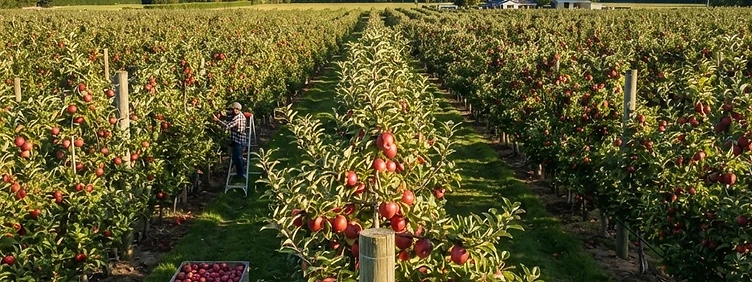
Fruit-fly monitoring is one of the most important practices in a New Zealand orchard. The goal is not to catch every fly — it is to give you data on fly pressure so you can time your control response based on what is actually happening in your block, not on a calendar. Done well, monitoring tells you when flies appear, how many there are, and when numbers cross an action threshold — so you can respond precisely and avoid unnecessary spraying.
Why monitor?
There are two main reasons to monitor fruit flies in a NZ orchard:
- Biosecurity: the Queensland fruit fly (Bactrocera tryoni) is not established in New Zealand but is a serious biosecurity threat. MPI runs a surveillance programme, and any detection triggers a response. Orchard monitoring supports early detection.
- Crop protection: vinegar flies (Drosophila) and other endemic species can damage overripe and damaged fruit. Monitoring tells you when pressure is building so you can time harvest, sanitation and trapping — not spray on a fixed schedule.
Trap placement
Place monitoring traps in the tree canopy, not on the ground or at the edge of the block. The goal is to sample the fly population where the flies actually are:
- Height: mid-canopy — about 1.5–2 metres up, where flies are active.
- Position: on the windward side of the block, where flies are likely to enter.
- Density: 1–2 traps per hectare for general monitoring; up to 5 per hectare for high-risk or high-value blocks.
- Spacing: space traps evenly across the block — do not cluster them in one corner.
Lure selection
The lure you use determines which flies you catch:
- Queensland fruit fly: MPI biosecurity monitoring uses protein-based lures (yeast autolysate) or male-specific pheromone lures (cuelure). If you are running a biosecurity monitoring programme, use MPI-approved traps and lures and follow the official protocol.
- Vinegar flies (Drosophila): apple cider vinegar with a drop of dish soap is a simple, effective lure for monitoring. Pour about 2 cm into a reusable fruit fly trap and check weekly.
- General monitoring: a protein lure (such as yeast autolysate) attracts a broad range of fruit fly species and is useful for general surveillance.
Checking and recording
Check traps weekly during the monitoring season (spring through harvest). For each trap:
- Count the total catch.
- Identify the flies to species level where possible — or send specimens to a diagnostic service if you are unsure. This is especially important for biosecurity: any suspected Queensland fruit fly must be reported to MPI immediately on 0800 80 99 66.
- Record the date, trap number, location, catch count and species.
- Refresh the lure and clean the trap.
The value is in the trend over time, not a single count. A steady rise in catches tells you pressure is building; a sudden spike tells you something has changed. Either way, you have data to make a decision — not a guess.
Action thresholds
An action threshold is the catch count at which you decide to take control action. It varies by crop, region and fly species:
- Biosecurity (Queensland fruit fly): any detection triggers an MPI response. Report immediately — do not wait.
- Endemic species: your industry body (e.g. NZ Apples & Pears, Horticulture NZ) will have recommended thresholds for your crop. The threshold may be a fixed catch count per trap per week, or a rising trend over several weeks.
The point of monitoring is to give you the data to make that decision — so you can respond precisely, avoid unnecessary spraying, and protect your crop at the right time. For more grower resources, see our grower hub and orchard solutions. To track fruit fly activity in your region, check the Pest Tracker.
Keep reading
Recommended traps


Fruit-fly monitoring — FAQs
Traps built for monitoring
Reusable, UV-tough, and cost-effective for season-long orchard monitoring.